
In 2050, the world will be vastly different from what we know today, as a result of the integration of whole range of technologies, including: quantum computing, metaverse, augmented reality, nanotechnology, human brain-computer interfaces, driverless technology, artificial intelligence, workplace automation, robotics …
What will AI look like in 2050?
By 2050, AI-powered technologies could revolutionize patient care, enabling faster and more accurate diagnoses, customized treatment plans, and the discovery of groundbreaking therapies. AI may also play a significant role in predicting and preventing diseases, leading to better population health management.
What is the prediction of people in 2050?
The current world population of 7.6 billion is expected to reach 8.6 billion in 2030, 9.8 billion in 2050 and 11.2 billion in 2100, according to a new United Nations report being launched today.
How will India look in 2050?
Predictions for India in 2050 include becoming the second-largest economy, having a high GDP per capita, a growing population, and increased life expectancy
Who will rule the world in 2050?
China, India, and the United States will emerge as the world’s three largest economies in 2050, with a total real U.S. dollar GDP of 70 percent more than the GDP of all the other G20 countries combined. In China and India alone, GDP is predicted to increase by nearly $60 trillion, the current size of the world economy.
Over the coming years and decades, the explosive rise of technology and artificial intelligence (AI) is set to revolutionise our lives, society, and even our deaths
Yesterday’s fiction is today’s reality and today’s fiction will be tomorrow’s reality.
Have you watched ‘The Matrix’ or ‘The Terminator’? Well, that might be part of our reality in coming times.
Adoption of AI-based technologies is becoming the norm. Some of the developments in the next couple of decades will revolutionise how AI will embed in every system to work with humans.
Augmented reality (AR)

All-in-one wearable smart glasses with built in augmented reality (AR) will be common. With these, we wouldn’t need to carry mobile phones, digital watches, headphones, or other tech in our pockets. The glasses would have biotech sensors, cameras, sound systems, and a complete entertainment suite that will personalise our experiences on the go.
By 2040 or even earlier, neural interfaces and AR will be so advanced that people could perceive the world in entirely new ways. AI systems will be integrated with these technologies to provide real-time translation, contextual information, and personalised recommendations.
Life in 2050: A Glimpse into the Future
The year 2050 promises a world vastly different from today. Technological advancements, societal shifts, and environmental challenges will shape our lives in profound ways. Here’s a glimpse into what life might look like:
Technology
- Artificial Intelligence (AI): AI will be deeply integrated into our daily lives, from self-driving cars and smart homes to personalized healthcare and education.
- Virtual and Augmented Reality: VR and AR experiences will become more immersive, blurring the lines between the physical and digital worlds.
- Biotechnology: Advances in biotechnology could lead to breakthroughs in medicine, agriculture, and materials science.
Society - Urbanization: Cities will continue to grow, with a focus on sustainability and smart technologies to manage resources and reduce pollution.
- Workforce Changes: Automation and AI will likely lead to significant job displacement, requiring new skills and education systems.
- Global Connectivity: The world will be more interconnected than ever, with increased cultural exchange and global challenges like climate change requiring international cooperation.
Environment - Climate Change: The impacts of climate change will be more evident, necessitating urgent action to mitigate its effects and adapt to a changing environment.
- Renewable Energy: Renewable energy sources like solar, wind, and hydro power will become more prevalent, reducing reliance on fossil fuels.
- Sustainable Living: A greater emphasis on sustainable practices, from reducing waste and conserving resources to promoting plant-based diets, will be essential.
Healthcare - Personalized Medicine: Genetic testing and data analysis will enable more personalized healthcare treatments and preventive measures.
- Lifespan Extension: Advances in medical technology could extend human lifespans and improve quality of life for older adults.
While these are just a few possibilities, the future is likely to be filled with both challenges and opportunities. The choices we make today will significantly impact the world of 2050 and beyond.
Flying cars 🚘 in 2050
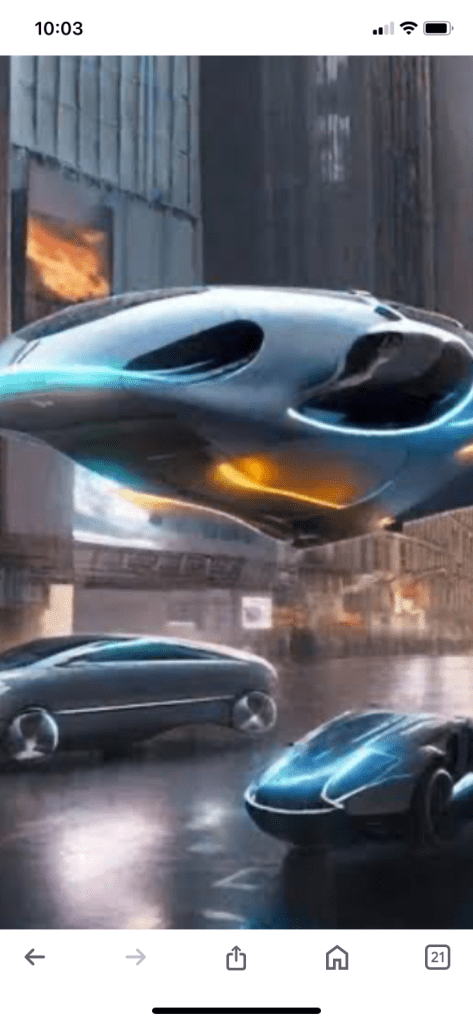
Flying Cars in 2050: A Reality or a Distant Dream?
The concept of flying cars has captured our imaginations for decades, with popular culture often depicting them as a futuristic mode of transportation. While the idea of personal aerial vehicles may seem like science fiction, significant advancements in technology suggest that flying cars could become a reality by 2050.
Challenges and Potential Solutions:
- Safety: Ensuring the safety of flying cars is paramount. This would require robust air traffic control systems, collision avoidance technologies, and stringent regulations.
- Infrastructure: Building the necessary infrastructure for flying cars, including landing pads and charging stations, would be a significant undertaking.
- Noise and Pollution: Addressing the noise and environmental impact of flying cars would be crucial to their widespread adoption.
- Cost: The initial cost of flying cars is likely to be high, potentially limiting their accessibility.
Technological Advancements: - Battery Technology: Improvements in battery technology would be essential for powering flying cars, providing sufficient range and reducing charging times.
- Autonomous Flight: Autonomous flight systems could greatly enhance safety and reduce the need for pilot training.
- Lightweight Materials: The use of lightweight materials would help to reduce the weight of flying cars, improving efficiency and reducing fuel consumption.
Potential Benefits: - Reduced Traffic Congestion: Flying cars could alleviate traffic congestion on roads, especially in urban areas.
- Increased Accessibility: Flying cars could provide access to remote areas that are currently difficult to reach by road.
- Faster Travel Times: Flying cars could significantly reduce travel times, especially for shorter distances.
While there are still significant challenges to overcome, the potential benefits of flying cars make them a tantalizing prospect. As technology continues to advance, it is possible that we will see these futuristic vehicles become a common sight in our skies
Nanotechnology in 2050

Nanotechnology in 2050: A World of Tiny Possibilities
Nanotechnology, the manipulation of matter at the atomic and molecular scale, has the potential to revolutionize countless industries. By 2050, nanotechnology could be a pervasive force in our lives, impacting everything from medicine to electronics.
Potential Applications of Nanotechnology:
- Medicine:
- Nanomedicine: Nanoparticles could deliver drugs directly to cancer cells, reducing side effects and improving treatment outcomes.
- Tissue Engineering: Nanotechnology could be used to create artificial organs and tissues, addressing organ shortages and improving transplant success rates.
- Electronics:
- Quantum Computing: Nanotechnology could enable the development of quantum computers, which would be capable of solving complex problems that are currently intractable.
- Flexible Electronics: Nanotechnology could lead to the creation of flexible, wearable electronics that can be integrated into clothing or other objects.
- Materials Science:
- Self-Healing Materials: Nanotechnology could be used to create materials that can repair themselves when damaged, extending their lifespan and reducing waste.
- Stronger, Lighter Materials: Nanotechnology could enable the development of materials that are stronger, lighter, and more durable than traditional materials.
- Energy:
- Nanobatteries: Nanotechnology could lead to the development of batteries with significantly higher energy density and longer lifespans.
- Solar Cells: Nanotechnology could improve the efficiency and cost-effectiveness of solar cells, making solar energy more accessible.
Challenges and Considerations: - Safety: Ensuring the safe development and use of nanotechnology is crucial. This includes understanding the potential health and environmental risks associated with nanomaterials.
- Ethical Implications: The widespread use of nanotechnology raises ethical questions about issues such as privacy, surveillance, and the potential for unintended consequences.
- Economic Impact: The development and commercialization of nanotechnology could have significant economic implications, including job creation and disruption of existing industries.
As nanotechnology continues to advance, it is likely to play an increasingly important role in our lives. By addressing the challenges and carefully considering the ethical implications, we can harness the potential of nanotechnology to create a better future for all.
3d printer in 2050

3D Printers in 2050: A Revolution in Manufacturing
3D printing, or additive manufacturing, has already made significant strides in recent years. By 2050, it is likely to be an even more integral part of our lives, revolutionizing industries from manufacturing to healthcare.
Advances in 3D Printing Technology:
- Materials: The range of materials that can be used in 3D printing will continue to expand, including metals, ceramics, and even biological materials.
- Speed and Accuracy: 3D printers will become faster and more precise, allowing for the production of complex and intricate objects with greater efficiency.
- Cost-Effectiveness: As 3D printing technology matures, the cost of producing objects will continue to decrease, making it more accessible to individuals and businesses.
Applications of 3D Printing in 2050: - Manufacturing: 3D printing will be used to produce a wide range of products, from customized consumer goods to spare parts for industrial machinery.
- Healthcare: 3D printing will revolutionize healthcare by enabling the production of personalized prosthetics, implants, and even organs.
- Architecture and Construction: 3D printing could be used to create custom-designed buildings and structures, reducing construction time and waste.
- Space Exploration: 3D printing could enable the production of tools, equipment, and even structures on other planets, reducing the need to transport materials from Earth.
Challenges and Considerations: - Intellectual Property: Protecting intellectual property rights in the context of 3D printing will be a significant challenge.
- Environmental Impact: The environmental impact of 3D printing, particularly in terms of energy consumption and material waste, will need to be carefully considered.
- Ethical Implications: The widespread use of 3D printing raises ethical questions about issues such as counterfeiting, weaponization, and the potential for job displacement.
As 3D printing technology continues to evolve, it is likely to have a profound impact on our lives in the coming decades. By addressing the challenges and carefully considering the ethical implications, we can harness the potential of 3D printing to create a more sustainable and innovative environment
Space technology in 2050
Space Technology in 2050: A New Frontier
Space exploration has always captivated humanity’s imagination. By 2050, advancements in technology could make our dreams of interplanetary travel and colonization a reality.
Key Developments in Space Technology:
- Space Tourism: Commercial space travel could become more accessible, allowing individuals to experience the thrill of space exploration.
- Lunar Bases: Establishing permanent lunar bases could serve as stepping stones for further exploration of the solar system and provide valuable scientific data.
- Mars Colonization: Efforts to colonize Mars could gain momentum, with the goal of establishing self-sustaining human settlements on the Red Planet.
- Asteroid Mining: The extraction of valuable resources from asteroids could become a viable economic activity, providing essential materials for space exploration and Earth-based industries.
- Advanced Propulsion Systems: Breakthroughs in propulsion technology, such as nuclear propulsion or solar sails, could significantly reduce travel times to distant destinations.
Challenges and Considerations: - Radiation Exposure: Protecting astronauts from the harmful effects of radiation during long-duration space missions will be a critical challenge.
- Psychological Factors: The psychological impact of prolonged isolation and confinement in space environments will need to be carefully studied and addressed.
- Technological Limitations: Current technological limitations, such as the ability to generate sufficient power and life support systems for long-duration missions, will need to be overcome.
- International Cooperation: International cooperation will be essential for achieving ambitious space exploration goals, as the costs and complexities of such endeavors are significant.
As space technology continues to advance, the possibilities for human exploration and colonization of the solar system are becoming increasingly real. By addressing the challenges and fostering international cooperation, we can pave the way for a future where humanity becomes a multi-planetary species
All good things can happen in 2050 but humanity has to learn cooperation and peace with no wars we are in in a new age of space and various technology 🧑💻 we can make our planet 🌍 a place like heaven with technology on the right path
Please like subscribe comment your precious thoughts on universe discoveries
sk-mania-blogs.in
Full article source google
https://www.buymeacoffee.com/Satyam55
Buy me a coffee!” (your opportunity to say thanks for the free stuff and to encourage me to do even more)
<!– /wp:heading https://www.amazon.in/b?_encoding=UTF8&tag=555101-21&link
“If you like my work or the free stuff on this website and want to say thanks, or encourage me to do more, you can buy me a coffee!
Contribute to my coffee fund with any amount you are comfortable to pay.
The coffee will give me the ‘kick’ to work even harder to empower creative entrepreneurs
 Universe discoveries
🙏🌹
Aum Shanti
LikeLike
It’s not likely I’ll be alive then, and maybe I’m ok with that.
LikeLike
In 2050 I will be 91 years old and I sure hope not to see that world
LikeLike