
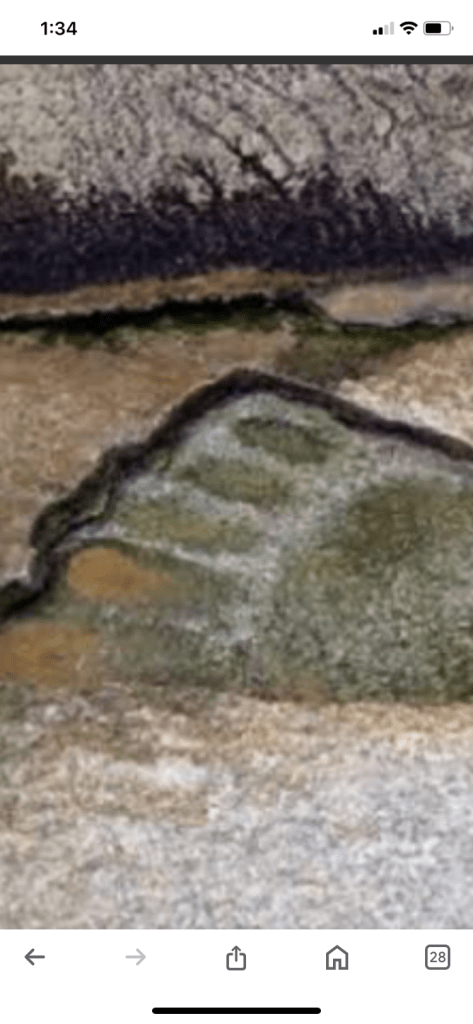
The existence of Lord Shri Ram and Ramayana are not unimaginable. It is real and authentic. Now India’s neighboring country China has also discovered the footprints of Lord Shri Ram. China has also accepted the Ramayana saga and the existence of Shri Ram as real. Chinese scholars have also accepted the existence of Lord Shri Ram in Buddhism.
Beijing: Lord Shri Ram and his Ramayana saga is not imaginary. Now China has also claimed to have discovered the footprints of Lord Shri Ram. Earlier, in many other reports including NASA, the existence of Lord Shri Ram has been proved through other evidences including Shri Ram Setu. Now Chinese scholars have also confirmed the real existence of Shri Ram, the worshipable god among Hindus. This makes it clear that Lord Shri Ram had actually incarnated on earth in Treta Yuga and his Ramayana saga was not imaginary.
Chinese scholars have said China has traces of Ramayana stories hidden in Buddhist scriptures for centuries, perhaps bringing to light for the first time the influence of Hinduism in the country’s checkered history. At the “Ramayana – A Timeless Guide” symposium organized by the Indian Embassy in Beijing on Saturday, several Chinese scholars with a long history of research on religious influences gave candid presentations tracing the historical routes through which the Ramayana reached China and the Chinese It had an impact on people. Chinese scholars have authentically claimed to have discovered the footprints of Lord Shri Ram during their research.
Increased influence of Ramayana
Arts and Literature Dr. Jiang Jingkui, professor and dean of the Institute for International and Area Studies at Tsinghua University, said, “The impact of the Ramayana as a classic bridging the religious and secular worlds is further enhanced by this discovery as a means of intercultural transmission.” The medium has increased even more.” He said, “China has also absorbed elements of this epic, which not only left traces in Chinese (majority) Han culture, but also reinterpreted and gave new meanings to it in Chinese Xizang (Tibetan) culture.” Let us tell you that China officially calls Tibet Xizang.
Buddhist scriptures also accepted the existence of Shri Ram
“This cultural migration and adaptation demonstrates the openness and flexibility of the Ramayana as a classic and worldly text,” Jiang said. The earliest material related to the Ramayana in China was introduced into the Han cultural sphere, primarily through Buddhist scriptures. However it was not included as a complete work in the Han cultural sphere. Parts of the Ramayana epic were incorporated into Buddhist scriptures, he said, citing Chinese translations of Buddhist scripts, in which “key figures such as Dasharatha and Hanuman were treated as Buddhist characters”.
Hanuman has been described as the king of monkeys
Jiang said, “A famous example of the realism of the Ramayana is that Hanuman was depicted as the Monkey King, who blended in with classic Buddhist moral narratives and who followed Buddhist teachings. Known as Sun Wukong.” The Monkey King with human characteristics remains one of the best-loved and most enduring characters in Chinese literature and folklore. Professor Liu Jian of the National Institute of International Strategies of the Chinese Academy of Social Sciences said in his presentation that many Chinese scholars agree that

Sun Wukong can be traced back to Hanuman. Chinese scholars generally agree that the image of Sun Wukong is similar to that of Hanuman Ji. Therefore Sun Wukong is a character from India.
What did China say on Ram’s footprints?
Speaking on the topic ‘Footprints of Ram in China’, Professor Qiu Yonghui, Chief Expert and Deputy Director of China South Asian Studies Center of Sichuan University, in his presentation displayed photographs of a wide variety of different Hindu deities at the Museum in Quanzhou. He also showed a photo of a Buddhist temple managed by a Hindu priest in China’s Fujian province. “It was mainly through Buddhism that Indian culture gained its foothold in China. That is why Hinduism has a negligible place in the history of India-China cultural relations.” He said, “Multidimensional Indian culture – both Buddhist and non-Buddhist – left its mark on Chinese soil.”
Chinese scholar Xuanzang had also given proof of the existence of Shri Ram.
In his speech, Jiang also recalled how the famous seventh-century Chinese scholar Xuanzang visited India, studied at Nalanda University and read several Buddhist scriptures that provided detailed descriptions of the Ramayana stories he heard during his pilgrimage. Had brought back. “However, due to the Hindu background of the Ramayana and the predominance of Buddhism in China, its text was neither fully translated nor widely circulated within Han culture. The first Chinese translation of the Ramayana from Sanskrit was done by Ji Jianlin in 1980. The translation, Jiang said, was “an important breakthrough for Chinese academia, giving Chinese readers
Ramayana’s relation with China and Tibet
Provided access to an Indian literary classic and established a new bridge for China-India cultural exchange.” He said, Ji devoted almost a decade to translating this mammoth work of twenty-four thousand verses and his edition was released in China. Jiang said the Ramayana has a more extensive and long-term history of influence in Tibet, where it was first introduced during the period of the Tubo Empire. Since then, the Ramayana has not only become a subject of intense study among Tibetan scholars, but has also gained wide popularity among the common people in Tibet.
The epic Ramayana is an explanation of the ideal personality.
“It demonstrates the powerful vitality of the Ramayana as a cross-cultural classic,” Jiang said. “Ramayana is not only an epic but also a profound explanation of the ideal personality and ideal society. He said that through the actions and words of Shri Ram as well as the establishment of ‘Ram Rajya’ the epic presents many dimensions of the concept of ‘ideal’ in Indian culture. (Input-AP)
The story of the Ramayana is about Prince Rama who has been exiled from his kingdom of ([Ayodhya]) with his wife Sita and his brother Lakshman.He goes on to kill [king] Ravana of Lanka in a long battle to get back his wife Sita. Seven different versions of the book are available
What is the main message of Ramayana?
… qualities of compassion and kindness, his readiness to lend a helping hand to all, his nature to pardon the faults in people, and his adherence to truth
Duty, Honor, and Loyalty – The characters in the Ramayana place a great deal of importance on honor, loyalty, and behaving dutifully to their family members
What is the moral of the story of Ramayana?
What Lesson Did Your Child Learn From This Story? The Ramayana story teaches kids the crucial lesson of “Victory of good over evil
Finally, the story of Ramayana teaches the importance of forgiveness and compassion.
What is the main theme of Ramayana?
The theme of the Ramayana is dharma. Dharma is the Hindu concept of the right way of living or respecting one’s duty so that the cosmos remains in order
What is the conclusion of Ramayana?
After great battles and acts of heroism, the siege was completed and Ravana defeated. Sita was rescued. Many versions of the Ramayana end thus with return of Sita and Rama to their kingdom after fourteen years of exile, and the commencement of Ram Rajya, the glorious time of the rule of Ram
What is the life lesson in Ramayana?
One of the most well-known and celebrated lessons from Ramayana is that no matter how strong and powerful Evil may look or be, eventually it is always defeated by Good. This important lesson is cemented by the grand event of Shri Rama slaying the evil Ravana
What is Ramayan in short paragraph?
It was written by Valmiki in Sanskrit. It tells the story of Rama, an incarnation of Lord Vishnu. It contains ideal characters like Rama, Lakshmana, Bharata, Hanuman and Sita. It describes the war between Rama and Ravana, the ruler of Lanka
What is the basic knowledge of Ramayana?
The story of the Ramayana is about Prince Rama who has been exiled from his kingdom of ([Ayodhya]) with his wife Sita and his brother Lakshman. He goes on to kill [king] Ravana of Lanka in a long battle to get back his wife Sita. Seven different versions of the book are available.
What is the principle of Ramayana?
Perseverance: The Ramayana teaches us the importance of perseverance. Lord Rama faced many challenges and obstacles in his journey, but he persevered until he achieved his goal. Similarly, in the corporate world, perseverance is essential to overcome challenges and achieve success
What are the unknown facts of Ramayana?
Unknown Facts About the Ramayana
- Was Rama born on Ram Navami?
- Did Rama rule for 11,000 years?
- Was the Pushpak Vimana real?
- Did Ravana have many vimanas?
- Was the Ram Setu truly built?
- What did Kaushalya tell Rama before He left for exile?
- Did Valmiki meet Rama when writing the Ramayana?
Is there scientific proof of Ramayana?
Readers can enjoy watching how the sky looked bright with five planets in their exalted positions when Shri Ram was born. Evidences from archaeology and archaeobotany, geology and oceanography, remote sensing and genetic studies have also been beautifully woven into the story to support this astronomical date sequence.
Please like subscribe comment your precious thoughts on universe discoveries sk-mania-blogs.in
Full article source google

https://www.buymeacoffee.com/Satyam55
Buy me a coffee!” (your opportunity to say thanks for the free stuff and to encourage me to do even more)
<!– /wp:heading https://www.amazon.in/b?_encoding=UTF8&tag=555101-21&link
“If you like my work or the free stuff on this website and want to say thanks, or encourage me to do more, you can buy me a coffee!
Contribute to my coffee fund with any amount you are comfortable to pay.
The coffee will give me the ‘kick’ to work even harder to empower creative entrepreneurs
 Universe discoveries
🙏🌹👍🌹
Aum Shanti
LikeLike