
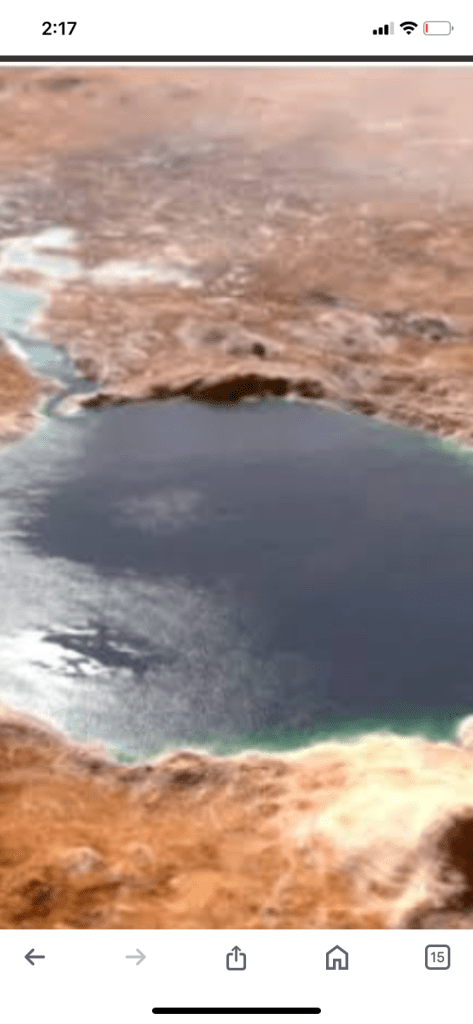
Clues to life on Mars: Indian researchers discover Martian lake that may have once sustained life. Researchers discovered that chloride-rich depressions in Mars’ Terra Sirenum region likely harbored water, creating potential conditions favorable for ancient microbial life.
A groundbreaking study by researchers at the Physical Research Laboratory in Ahmedabad has unveiled new insights into the potential for ancient microbial life on Mars. The study focuses on chloride-rich depressions, particularly within the Terra Sirenum region, which may have once harbored water—a vital component for life as we know it. These findings are part of ongoing efforts to unravel the mysteries of Mars’ wet history and its habitability. The study, published in JGR Planet, reveals that these depressions were likely part of an extensive sedimentary basin that experienced repeated cycles of wetting and drying, creating conditions potentially favorable for microbial life.
Chloride-rich areas on Mars have long intrigued scientists due to their ability to retain moisture and the implications this has for ancient water on the planet. These deposits are believed to have formed during Mars’ early history, possibly under conditions that supported liquid water. The study highlights the geochemical significance of these chlorides:
- Moisture absorption: Chlorides can absorb and retain moisture, making them potential reservoirs of water in an otherwise arid environment.
- Microbial potential: On Earth, microbial life thrives in similar mineral-rich environments, suggesting that Martian chlorides might have once supported life.
Recent discoveries in the Terra Sirenum region of Mars have revealed compelling evidence for the possibility of ancient microbial life. Here are the key findings:
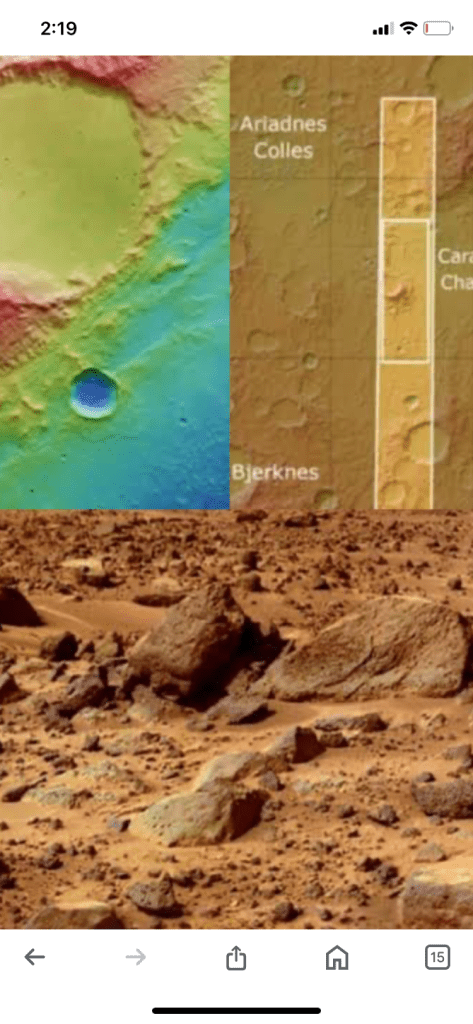
- Chloride-Rich Depressions:
- Researchers from the Physical Research Laboratory in Ahmedabad have identified chloride-rich depressions in Terra Sirenum that likely once harbored water.
- These depressions were part of a larger sedimentary basin that experienced cycles of wetting and drying, creating conditions potentially favorable for microbial life.
- The presence of these depressions suggests that the region had a more watery past than previously thought.
- Alunite Discovery:
- The detection of alunite in Cross Crater, located within Terra Sirenum, indicates the presence of acidic, sulfurous waters in the past.
- Alunite formation requires specific environmental conditions, including the presence of water and acidic environments.
- This finding further supports the idea that Terra Sirenum was once a more habitable region.
Implications for Future Exploration:
These discoveries highlight the importance of the Terra Sirenum region for future Mars missions. By studying this area, scientists can gain valuable insights into the planet’s history, the potential for past life, and the possibility of future human exploration.
Additional Information: - Terra Sirenum is a large highland region on Mars, located in the southern hemisphere.
- It is characterized by heavily cratered terrain and ancient volcanic features.
- The region has been extensively studied by various Mars missions, including Mars Express and Mars Reconnaissance Orbiter.
These recent findings in Terra Sirenum offer exciting possibilities for understanding the evolution of Mars and the potential for life beyond Earth. Further research and exploration of this region are crucial to unraveling the mysteries of the Red Planet.
Recent discoveries in the Terra Sirenum region of Mars have sparked renewed interest in the possibility of ancient microbial life on the Red Planet. Researchers have identified chloride-rich depressions within this region, which were likely once filled with water. These depressions were part of a larger sedimentary basin that experienced cycles of wetting and drying, creating conditions potentially favorable for microbial life.
Additionally, the detection of alunite in Cross Crater, located within Terra Sirenum, indicates the presence of acidic, sulfurous waters in the past. Alunite formation requires specific environmental conditions, including the presence of water and acidic environments, further supporting the idea that Terra Sirenum was once a more habitable region.
These findings suggest that sedimentary basins on Mars, like Terra Sirenum, could have provided suitable environments for the development of microbial life in the past. While no direct evidence of past life has been found yet, these discoveries offer promising avenues for future exploration and research.
Key Points:
- Water-rich past: Sedimentary basins on Mars, such as Terra Sirenum, once contained water, a crucial ingredient for life as we know it.
- Favorable conditions: The cycles of wetting and drying in these basins could have created environments conducive to microbial growth.
- Potential for preservation: Sedimentary rocks can preserve biosignatures, such as fossilized microorganisms or chemical traces of life.
- Future exploration: These findings highlight the importance of exploring sedimentary basins on Mars to search for signs of past life.
While these discoveries are exciting, it’s important to note that further research is needed to confirm the presence of past life on Mars. Future missions to Mars, equipped with advanced instruments, will play a crucial role in investigating these sedimentary basins and unraveling the mysteries of the Red Planet’s past.
Please like subscribe comment your precious thoughts on universe discoveries
sk-mania-blogs.in
Full article source google
https://www.buymeacoffee.com/Satyam55
Any freinds who love my article can have drink 🍸 me coffee to encourage me I will be obliged that they love my work and I am successful in spreading universe discoveries knowledge and educate new kid’s going in school and become future scientists and contribute in our species become interstellar
 Universe discoveries
🙏🌹
Aum Shanti
LikeLike
Nice information.
LikeLike
Very interesting!
LikeLike