
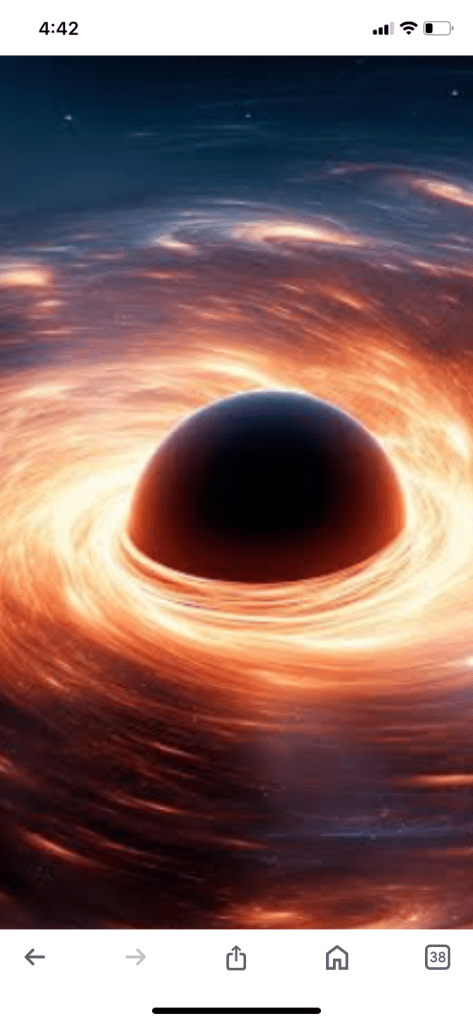
Recent observations suggest that the unusual behavior of stars within the globular cluster Omega Centauri might be explained by the presence of a swarm of stellar-mass black holes rather than a single intermediate-mass black hole. This discovery challenges our understanding of black hole formation and evolution in dense stellar environments.
According to the team’s modeling and calculations with the added pulsar data, the motions of the stars in the center of Omega Centauri can best be explained by a swarm of small, stellar-mass black holes – those that form from the collapsed cores of massive stars when they die
Omega Centauri has been studied to determine if its high star velocities are caused by an intermediate mass black hole or multiple smaller black holes. Recent data from pulsaraccelerations suggest the latter, advancing our understanding of black hole formation.
Omega Centauri’s Mysteries
Omega Centauri, a massive star cluster with nearly ten million stars, is located in the constellation Centaurus. Astronomers have long been puzzled by the unusually high velocities of stars near its center. Two main theories emerged to explain this: the presence of an intermediate-mass black hole (IMBH), weighing about 100,000 times the mass of the Sun, or a cluster of smaller, stellar-mass black holes, each only a few times the Sun’s mass.
Stellar evolution suggests that black holes should naturally form at the cluster’s center. However, astronomers believed that most of these black holes would be ejected over time due to gravitational slingshot interactions with nearby stars. This assumption made the existence of a single IMBH seem more plausible. The IMBH theory gained further support when researchers observed even faster-moving stars near Omega Centauri’s core, which could be explained by interactions with a massive central black hole.
exploring Intermediate Mass Black Holes
Intermediate mass black holes (IMBHs) are exciting to astronomers because they may be the “missing link” between stellar mass black holes and supermassive black holes. Stellar-mass black holes form from the death of massive stars and have already been found via a variety of different techniques. Supermassive black holes are found at the centers of large galaxies and can weigh millions to billions of times the mass of the Sun. We do not currently know how supermassive black holes form or whether they begin their lives as stellar mass black holes. Finding an IMBH could solve this cosmic puzzle.
Pulsars: Precision Clocks in Space
Pulsars are natural clocks, almost as accurate as atomic clocks on Earth. By carefully measuring the change in the rate of their spin, astronomers can calculate how the pulsars are accelerating, directly probing the gravitational field strength at the center of Omega Centauri. Combining these new acceleration measurements with the stellar velocities, researchers from Surrey, the Instituto de Astrofísica de Canarias (IAC, Spain) and the Annecy-le-Vieux Laboratoire de Physique Théorique LAPTh in Annecy (France) were able to tell the difference between an IMBH and a cluster of black holes, favoring the latter.
Is there a black hole in Omega Centauri?
Images obtained with the Hubble Space Telescope’s Advanced Camera for Surveys and data from the GMOS spectrograph on the Gemini South telescope in Chile show that Omega Centauri appears to harbour an elusive and rare intermediate-mass black hole in its centre.
What is the mystery of the black hole?
Black holes are regions in space where an enormous amount of mass is packed into a tiny volume. This creates a gravitational pull so strong that not even light can escape. They are created when giant stars collapse, and perhaps by other methods that are still unknown.
Who is the closest black hole to Earth?
Closest. The nearest known black hole, called Gaia BH1, is about 1,500 light-years away
Astronomers analyzing 500 Hubble Space Telescope images over two decades discovered seven fast-moving stars in Omega Centauri, the largest globular cluster, providing new evidence of an intermediate-mass black hole (IMBH). This black hole, potentially the closest IMBH to Earth, challenges our understanding of such celestial bodies and suggests a new home for IMBHs in dense star clusters.
Observations from the Southern Skies
Omega Centauri is visible from Earth with the naked eye and is one of the favorite celestial objects for stargazers in the southern hemisphere. Although the cluster is 17,700 light-years away, lying just above the plane of the Milky Way, it appears almost as large as the full Moon when seen from a dark rural area. The exact classification of Omega Centauri has evolved through time, as our ability to study it has improved. It was first listed in Ptolemy’s catalog nearly two thousand years ago as a single star. Edmond Halley reported it as a nebula in 1677, and in the 1830s the English astronomer John Herschel was the first to recognize it as a globular cluster.
Unveiling Star Motions in Omega Centauri
Omega Centauri consists of roughly 10 million stars that are gravitationally bound. An international team has now created an enormous catalog of the motions of these stars, measuring the velocities for 1.4 million stars by studying over 500 Hubble images of the cluster. Most of these observations were intended to calibrate Hubble’s instruments rather than for scientific use, but they turned out to be an ideal database for the team’s research efforts. The extensive catalog, which is the largest catalog of motions for any star cluster to date, will be made openly available (more information is available
“We discovered seven stars that should not be there,” explained Maximilian Häberle of the Max Planck Institute for Astronomy in Germany, who led this investigation. “They are moving so fast that they should escape the cluster and never come back. The most likely explanation is that a very massive object is gravitationally pulling on these stars and keeping them close to the center. The only object that can be so massive is a black hole, with a mass at least 8200 times that of our Sun.”
This discovery is the most direct evidence so far of an IMBH in Omega Centauri,” added team lead Nadine Neumayer, also of the Max Planck Institute for Astronomy, who initiated the study with Anil Seth of the University of Utah in the United States. “This is exciting because there are only very few other black holes known with a similar mass. The black hole in Omega Centauri may be the best example of an IMBH in our cosmic neighborhood.”
Please like subscribe comment your precious thoughts on universe discoveries
Sk-mania-blogs.in
Full article source google
https://www.buymeacoffee.com/Satyam55
Any freinds who love my article can have drink 🍸 me coffee to encourage me I will be obliged that they love my work and I am successful in spreading universe discoveries knowledge and educate new kid’s going in school and become future scientists and contribute in our species become interstellar
 Universe discoveries
Nice information
LikeLiked by 1 person
Thanks sir🎅
LikeLiked by 1 person
🙏🎅
Aum Shanti
LikeLiked by 1 person
The discovery of a swarm of stellar-mass black holes in Omega Centauri, rather than a single intermediate-mass black hole, offers new insights into black hole formation and behavior in dense stellar environments.
LikeLike
Your articles are very, very interesting to Aut me a lot what goes on in space in the atmosphere?
LikeLike