
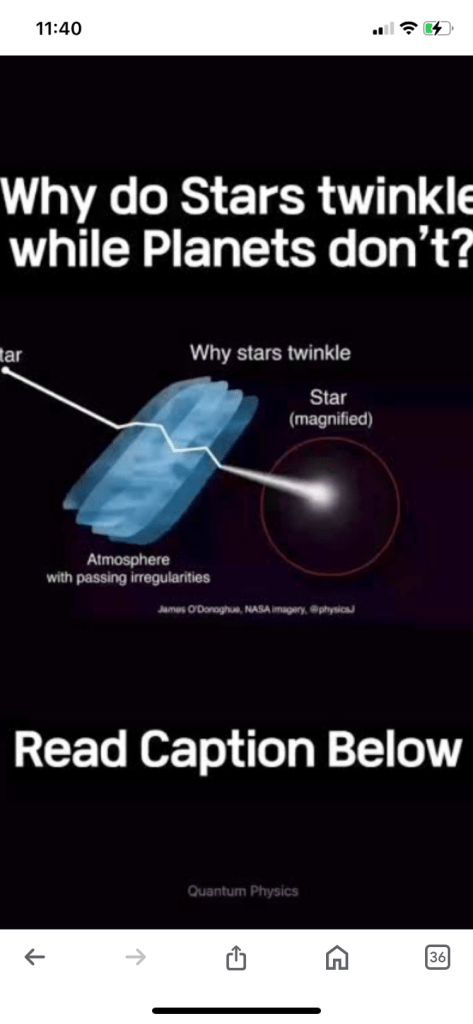
The reason stars twinkle and planets don’t lies in their distance from Earth and how their light interacts with our atmosphere.
- Stars: Stars are incredibly far away from us. When their light reaches Earth’s atmosphere, it has to travel through a vast expanse of air. This air isn’t uniform; it has pockets of varying temperatures and densities. As the starlight passes through these pockets, it gets refracted (bent) slightly. Since stars appear as single points of light to us, this refraction causes their light to flicker and change color, making them appear to twinkle.
- Planets: Planets, on the other hand, are much closer to Earth. They appear as tiny disks in the sky rather than points of light. When their light passes through Earth’s atmosphere, it gets refracted as well. However, because the light comes from a larger area (the disk of the planet), the effects of atmospheric refraction tend to cancel each other out. This means that the overall brightness and color of the planet remain relatively steady, making them appear to shine steadily rather than twinkle.
In summary: The vast distance of stars causes their light to be more affected by Earth’s atmospheric distortions, leading to twinkling. The closer proximity of planets and their larger apparent size minimize these effects, resulting in a steady shine.
Planets appear more prominent
Planets appear more prominent than stars, and the light seems to come from more than one point source. The dimming effect of some points of light is nullified by the brightening effect of light coming from other points
Why can we see stars and not planets?
Bottom line. The main difference between planets and stars is that the latter can generate their own light and heat. This is why we can see them in the vastness of space, even with the naked eye, while planets outside of the Solar System are not visible
Stars do not really twinkle, they just appear to twinkle when seen from the surface of Earth. The stars twinkle in the night sky because of the effects of our atmosphere. When starlight enters our atmosphere it is affected by winds in the atmosphere and by areas with different temperatures and densities. This causes the light from the star to twinkle when seen from the ground
What are stars made of?
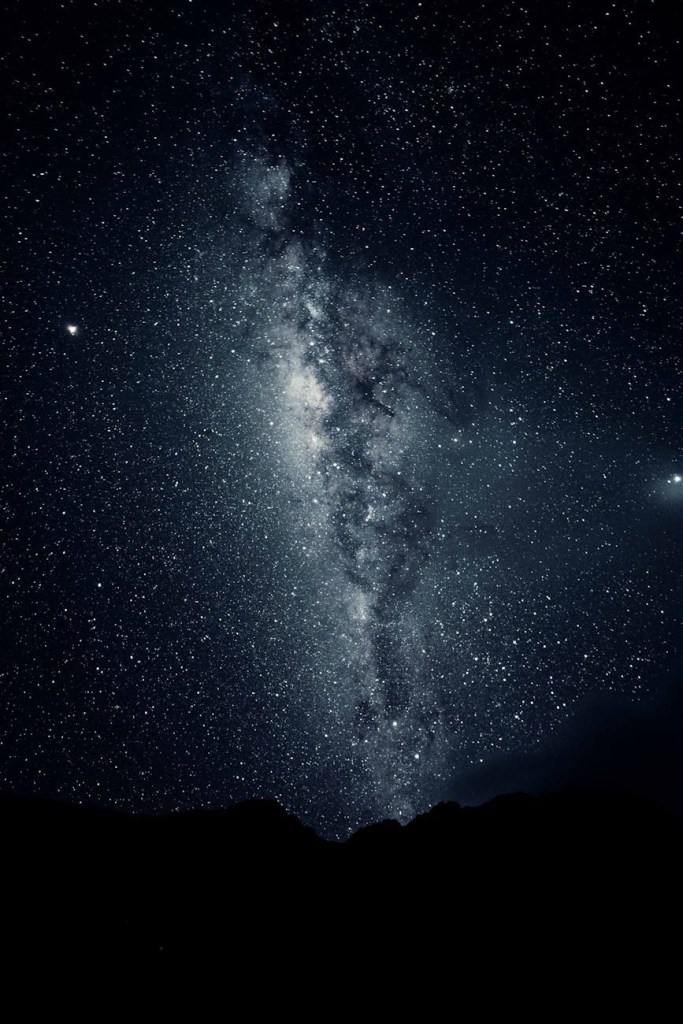
Stars are giant balls of hot gas – mostly hydrogen, with some helium and small amounts of other elements. Every star has its own life cycle, ranging from a few million to trillions of years, and its properties change as it ages
Why do stars shine only at night?
The stars are in the sky both day and night. During the day our star, the Sun, makes our sky so bright that we cannot see the much dimmer stars. At night, when the sky is dark, the light of the stars can be seen
What is the correct reason for blinking of stars?
Atmosphere is unstable due to changing density and temperature of air hence refractive index of air keeps changing continuously. The position and brightness of the star keep changing continuously and the star appears to be twinkling
Do planets blink in the sky?
As such, a beam of light coming from a star appears much smaller than a beam of light from a nearby planet. The star’s smaller light beam is more noticeably bent in the atmosphere, causing twinkling, whereas the light beam from a planet does not appear to move at all. This is why stars twinkle and planets do not
Can the human eye see planets?
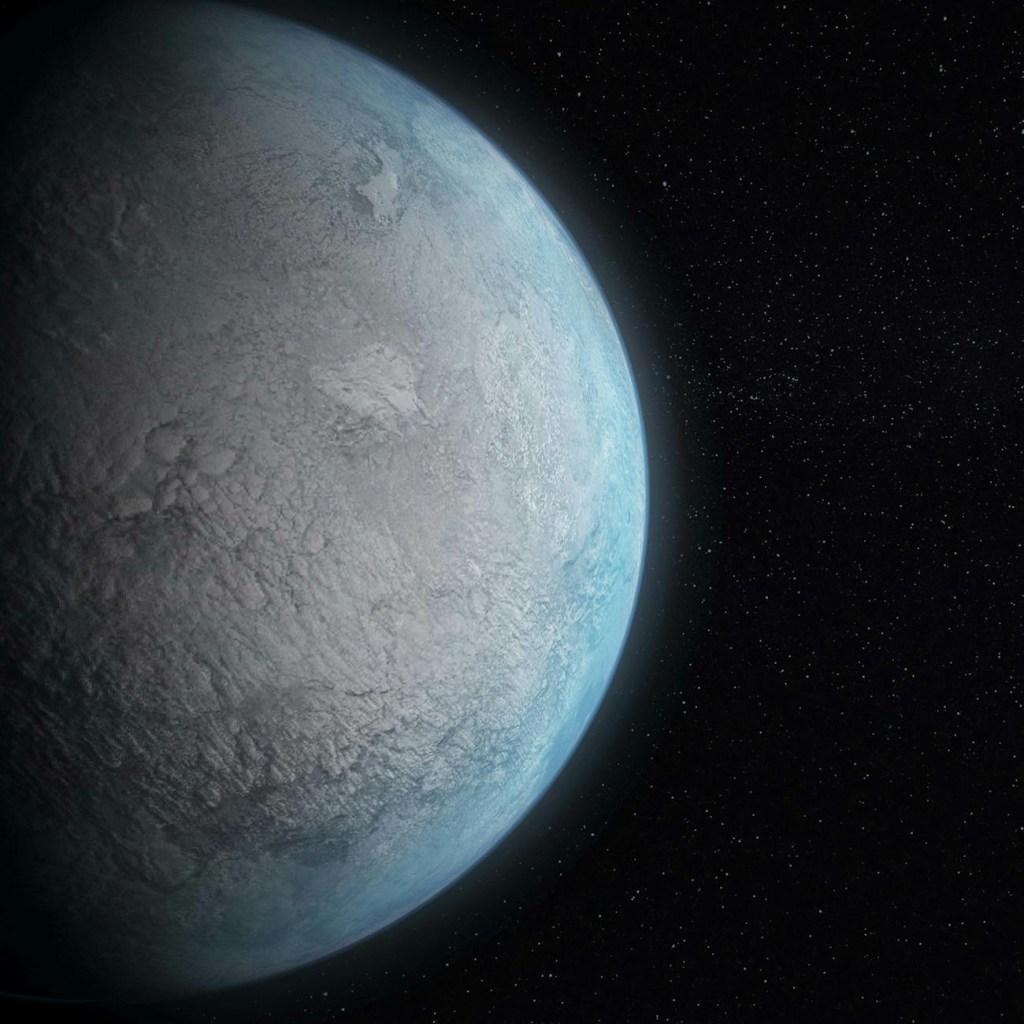
The five brightest planets are Mercury, Venus, Mars, Jupiter and Saturn. So long as you know when and where to look you can spot all five of these spectacular planets, just as people have enjoyed doing since ancient times
What is the shining of stars called?
The twinkling of stars is due to atmospheric refraction of star-light. The refraction of light caused by the earth’s atmosphere having air layers of varying optical density is called atmospheric refraction
How are stars formed?
Stars form from collapsing clouds of gas and dust.
What is a brightest star called?
Sirius: The brightest star in the earth night sky
What is the most beautiful star?
The brightest stars in the night sky, including Sirius, Canopus, and Arcturus, captivate stargazers with their remarkable luminosity and unique characteristics. Sirius, the brightest, shines at an apparent magnitude of -1.46 and is located in Canis Major
What is the rarest star?
Each is classified as an O-type star — and O-type stars are the rarest main sequence stars in the universe, comprising just 0.00003% of known stars. They’re extremely prone to going supernova and collapsing into black holes or neutron stars.
there any diamond star?

The diamond-star, described in a study published in The Astrophysical Journal, is among the coldest white dwarfs astronomers have found
You might see planets twinkling if you spot them low in the sky. That’s because, in the direction of any horizon, you’re looking through more atmosphere than when you look overhead.
If you could see stars and planets from outer space, both would shine steadily. There’d be no atmosphere to disturb the steady streaming of their light.
Can you figure out which objects are stars and which are planets just by looking for the twinklers vs the non-twinklers? Experienced observers often can, but, at first, if you can recognize a planet in some other way, you might notice the steadiness of its light by contrasting it to a nearby star
Please like subscribe comment your precious thoughts on universe discoveries
sk-mania-blogs.in
Full article source google
https://www.buymeacoffee.com/Satyam55
If you like my website universe discoveries please donate me a coffee freinds
 Universe discoveries
🙏🌹
Aum Shanti
LikeLike
Aum shanti 🌅🌅
LikeLiked by 1 person
Nice information
LikeLike