
That’s a fascinating and increasingly discussed topic! The idea of using DNA in quantum computing is indeed generating a lot of excitement, and potentially could be a major leap beyond silicon-based quantum computers. Here’s a breakdown of why:
- What’s the problem with silicon? While silicon has been the workhorse of classical computing, it faces significant challenges in the quantum realm. Building and maintaining stable qubits (the quantum equivalent of bits) with silicon is incredibly difficult and expensive. They are very susceptible to noise and decoherence (loss of quantum information). Scaling up silicon-based quantum computers to a practical size is proving extremely challenging.
- Why DNA? DNA offers some intriguing advantages:
- Natural Qubits: The inherent properties of DNA molecules, particularly the different bases (adenine, guanine, cytosine, and thymine), can be used to represent quantum information. These bases can exist in superposition (a combination of states) and entanglement, crucial for quantum computation.
- Self-Assembly: DNA has the remarkable ability to self-assemble into complex structures. This could be used to create and manipulate qubits more easily and efficiently than with traditional fabrication methods. Imagine building a quantum computer by essentially “growing” it!
- Stability: Some researchers believe that DNA-based qubits might be more stable and less prone to decoherence than silicon qubits, although this is still a subject of ongoing research.
- Density: DNA is incredibly dense, meaning you can pack a lot of information into a small space. This could lead to much more powerful quantum computers.
- How would it work (in theory)? The basic idea is to use DNA’s properties to encode quantum information. Researchers are exploring different ways to do this, such as using the spin of electrons in DNA molecules or manipulating the physical structure of the DNA itself. Quantum gates, the building blocks of quantum circuits, would be implemented by manipulating the DNA molecules using techniques like lasers or magnetic fields.
- Challenges: While promising, DNA quantum computing is still in its very early stages. There are significant hurdles to overcome:
- Error correction: Quantum computers are inherently prone to errors. Developing effective error correction methods for DNA-based qubits is crucial.
- Control and manipulation: Precisely controlling and manipulating individual DNA molecules is extremely challenging.
- Scalability: Building large-scale, fault-tolerant DNA quantum computers is a long way off.
- Decoherence (still an issue): While potentially more stable than silicon, DNA qubits are still susceptible to decoherence.
- The Future: Despite the challenges, the potential of DNA quantum computing is enormous. It could revolutionize fields like medicine, materials science, and artificial intelligence. While it’s unlikely to replace silicon-based quantum computers in the near future, it’s definitely a field worth watching. It’s a high-risk, high-reward area of research with the potential to reshape the future of computing.
DNA quantum computing is a combination of DNA computing and quantum computing that could lead to new breakthroughs in computational power. Both DNA and quantum computing have the potential to solve problems that are currently difficult for classical computers.
DNA computing
- Uses DNA molecules to perform computations
- Encodes information in the sequence of nucleotides in DNA strands
- Can store and process large amounts of data
- Can be used for data storage and health innovations
- Can be used to solve optimization problems
Quantum computing
- Uses quantum mechanical concepts like superposition and entanglement to process information
- Can process information much faster than classical computers
- Can be used for scientific simulations, machine learning, and cryptography
DNA quantum computing
- Could combine the evolvability of DNA with the power of quantum computers
- Could use DNA to self-assemble quantum logic circuits
- Could use proton nuclear spins to interact with nitrogen atoms to facilitate computation
What is the difference between DNA computing and quantum computing?
In DNA computing[Garzon and Deaton, 1999], biomolecules and biomolecular reactions are designed to implement computational algorithms. In quan- tum computing, computation is done at a scale where quantum mechanical effects are important
Who is the father of DNA computing?
Leonard Adleman
Leonard Adleman (born December 31, 1945) is an American computer scientist. He is one of the creators of the RSA encryption algorithm, for which he received the 2002 Turing Award. He is also known for the creation of the field of DNA computing and coining the term computer virus
Decoding the Spin Patterns in DNA
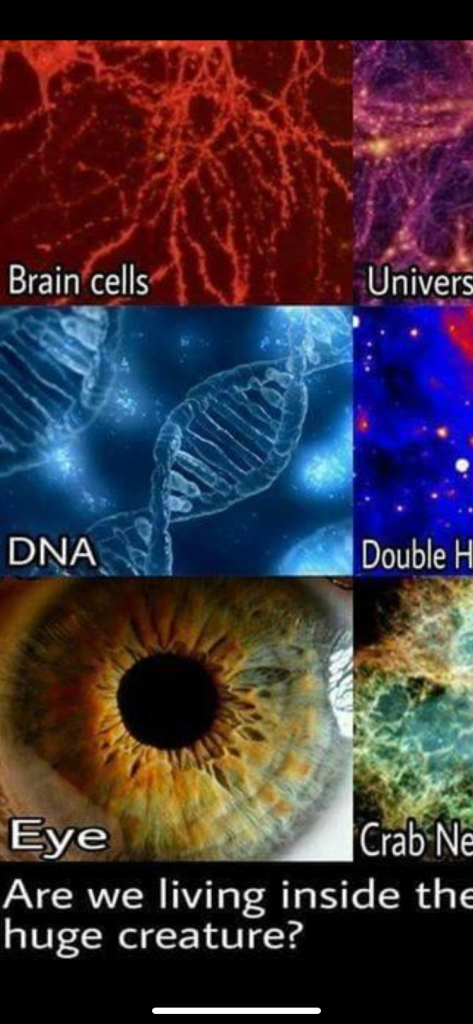
“Our research has unveiled the patterns of the principal axis directions of the electric field gradient at the nitrogen atom sites in DNA molecules, demonstrating that these directions are closely associated with the types of bases and the 3D structure of DNA,” the authors said. Essentially, the nuclear spin orientations of nitrogen atoms store information about both DNA’s sequence and its 3D form. This insight opens the door to the possibility of using DNA as a data storage system in quantum computing.
Building on the Past: Expanding Quantum Frontiers
The study follows on the authors’ previous research, which focused on the potential of nuclear electric resonance to control the nuclear spins of sodium ions on phospholipid membranes using electric field gradients
This new study extended previous findings, uncovers the intricate relationships between electric field gradients, nitrogen atom orientations, and DNA base structures, deepens the understanding of performing DNA computation through artificial intervention at the molecular level, and paves the way for innovative approaches to future quantum computer design and genetic information processing.
Please like subscribe comment your precious thoughts on universe discoveries
Full article source google
https://www.buymeacoffee.com/Satyam55
If you like my website universe discoveries please donate me a coffee freinds
 Universe discoveries
🙏🌹
Aum Shanti
LikeLike
Very nice
LikeLike