

Rosatom scientists have created a laboratory prototype of a plasma electric rocket engine based on a magnetic plasma accelerator. Rosatom scientists have announced the development of a plasma electric rocket engine that they claim could send spacecraft to Mars in just one to two months
As reported by Russia’s Izvestia newspaper, unlike traditional rocket engines that rely on fuel combustion, this innovative propulsion system utilizes a magnetic plasma accelerator and promises to significantly reduce interplanetary travel time, Interesting Engineering reported.
“A plasma rocket motor is a type of electric motor. It is based on two electrodes. Charged particles are passed between them, and at the same time a high voltage is applied to the electrodes,” Egor Biriulin, a junior researcher at Rosatom’s scientific institute in Troitsk, told Izvestia.
“As a result, the current creates a magnetic field that pushes the particles out of the engine. Thus, the plasma receives directional motion and creates thrust.”
What is plasma engine

A plasma engine is a type of electric propulsion that uses plasma to generate thrust. Plasma is a state of matter that occurs when a gas is heated to the point that its atoms and molecules break apart into positively charged ions and negatively charged electrons.
How it works
- Plasma engines use electromagnetic fields to convert electrical energy into kinetic energy
- The electromagnetic fields can be configured to maximize efficiency for different flight conditions
- Plasma engines can be used in space to correct satellite orbits, study solar system objects, and intercept potentially dangerous space bodies
Types of plasma engines
- Pulsed plasma thruster (PPT)Also known as a plasma jet engine (PJE) or pulsed plasma rocket (PPR), this is the simplest form of electric spacecraft propulsion
- Plasma fueled engine (PFE)Uses electron beam ionization to achieve adequate conductivity for MHD acceleration
Applications
- SpacecraftPlasma engines are used in spacecraft to correct satellite orbits, study solar system objects, and intercept potentially dangerous space bodies
- Hypersonic vehiclesPlasma engines can be used in hypersonic vehicles to convert power to thrust
Are plasma engines possible?
Some plasma engines have seen active flight time and use on missions. The first use of plasma engines was a Pulsed plasma thruster on the Soviet Zond 2 space probe which carried six PPTs that served as actuators of the attitude control system.
What fuel does a plasma engine use?
They are used as orbital boosters or can be used as the main propelling engine in deep space maneuvers. Unlike a conventional rocket engine operating with chemical based solid or liquid fuels, these systems use plasma as their fuel.
How is plasma made?
When a neutral gas is heated such that some of the electrons are freed from the atoms or molecules, it changes state and becomes a plasma
How Plasma Rockets Work

Five. Four. Three. Two. One. Blast off! Into the sky shoots a rocket ship, quickly moving beyond our atmosphere and into outer space. In the last half-century, people have gone from just looking up in amazement at the stars glimmering in the night sky to actually living for months at a time on the International Space Station among the celestial bodies. And while humans have set foot on the moon, landing anywhere farther away has been reserved only for unmanned craft and robots.
One place people are very interested in visiting is Mars. Aside from the actual challenges of landing and spending any time in a place as unwelcoming as the red planet, there’s the big hurdle of actually getting there. On average, Mars is about 140 million miles (225.3 million kilometers) from Earth. Even when at its closest point, it’s still some 35 million miles (56.3 million kilometers) away from our planet [source: St. Fleur]. Using the conventional chemical rockets that typically carry us into outer space would take at least seven months to get there — not exactly a short amount of time [source: Verhovek]. Is there any way we might be able to do it faster? Enter the plasma rocket!
Plasma propulsion offers unprecedented speeds
Under this approach, hydrogen is used as fuel, and the engine accelerates charged particles – electrons and protons – to a speed of 100 km/s (62 miles/s).
In traditional power units, the maximum velocity of matter flow is about 4.5 km/s, which is due to the conditions of fuel combustion. In contrast, in our engine, the working body is charged particles that are accelerated by an electromagnetic field,” said Alexei Voronov, first deputy general director for science at the Troitsk Institute, as reported by Izvestia.
A faster journey to Mars would not only increase efficiency but also minimize the risks associated with prolonged exposure to cosmic radiation for astronauts.
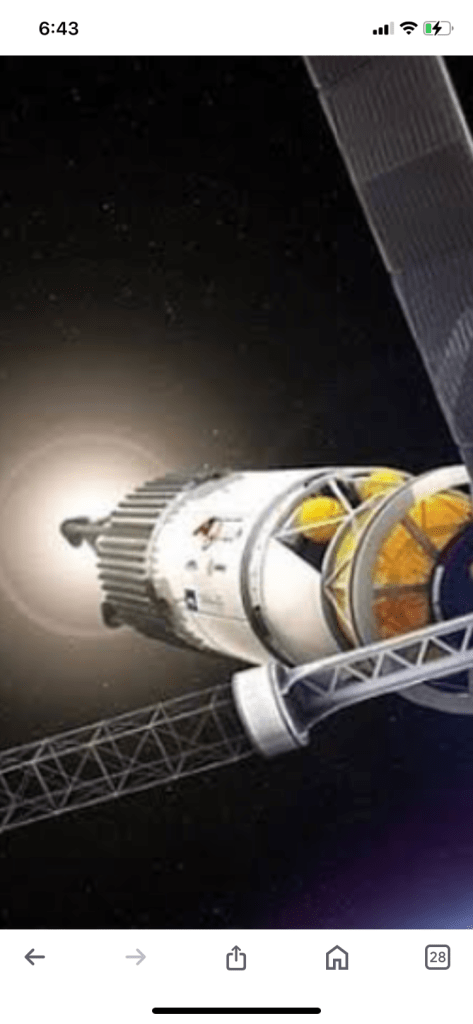
Testing of plasma engine
A specialized experimental stand has been built to simulate the conditions of space, reported World Nuclear News. This 4-meter diameter, 14-meter long chamber is equipped with advanced sensors, vacuum pumping systems, and heat removal mechanisms.
While the initial launch into orbit will rely on traditional chemical rockets, the plasma engine will be activated once the spacecraft reaches its designated orbit. This technology could also be incorporated into space tugs used for transporting cargo between planets.
Another positive feature of the new installation – in the proposed mechanism, the plasma does not need to be strongly heated. As a result, parts and components of the engine do not experience temperature overloads, and the electrical energy used for its operation is almost completely converted into motion,” concluded Biriulin.
With a calculated thrust of approximately 6N, the highest among comparable projects, the engine is expected to enable smooth acceleration and deceleration phases during interplanetary travel.
Please like subscribe comment your precious thoughts on universe discoveries
Full article source google
https://www.buymeacoffee.com/Satyam55
Please donate me a coffee if you like my website universe discoveries
 Universe discoveries
Interesting!
LikeLiked by 1 person
Nice information.
LikeLiked by 1 person
🙏🌹
Aum Shanti
LikeLiked by 2 people