
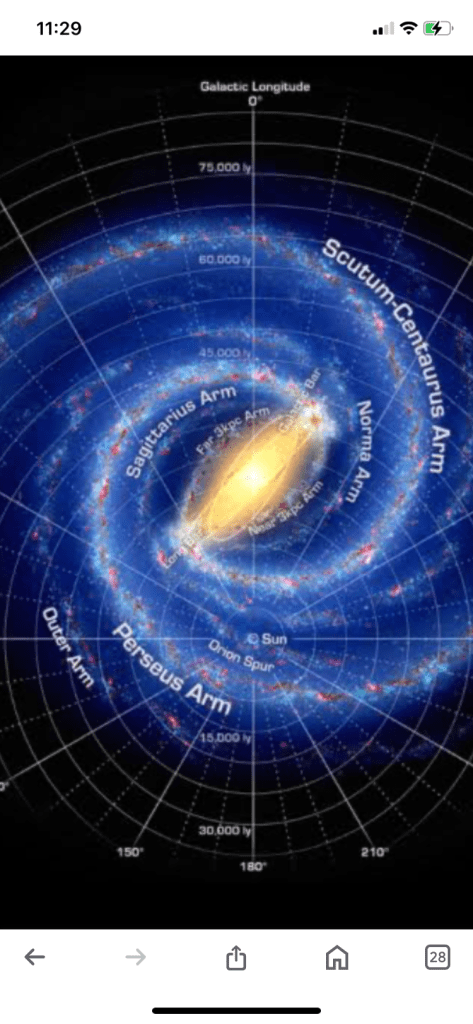
It’s important to clarify some terminology:
- “Solar System”: Strictly speaking, “Solar System” refers to our own star system, with the Sun at its center.
- “Planetary Systems”: When we talk about other stars with planets, we’re referring to other planetary systems.
With that in mind, here’s what we know about the number of planetary systems in the Milky Way: - Scientists estimate that there are billions of planetary systems in our galaxy.
- The Milky Way contains an estimated 100 to 400 billion stars, and a significant percentage of those stars are believed to have planets.
- Astronomers have discovered thousands of exoplanets (planets outside our Solar System), and this number continues to grow as technology improves.
- It is estimated that there could be tens of billions, and possibly even up to 100 billion planetary systems.
Therefore, while we only have one “Solar System,” our galaxy is teeming with countless other star systems that host planets.
When discussing “types of solar systems” within the Milky Way, it’s more accurate to talk about the diversity of planetary systems we’ve discovered. These systems vary significantly from our own. Here’s a breakdown of the variations:
- Variations in Star Types:
- Planetary systems can orbit various types of stars, including:
- Red dwarfs: These are smaller, cooler stars, and many exoplanets have been found orbiting them.
- Sun-like stars: Similar to our Sun, these stars can also host planetary systems.
- Larger, hotter stars: These stars can also have planets, though their lifespans are typically shorter.
- Variations in Planetary Arrangements:
- Unlike our Solar System, where smaller rocky planets are closer to the Sun and gas giants are farther out, exoplanetary systems exhibit a wide range of arrangements:
- “Hot Jupiters”: These are gas giants that orbit very close to their stars.
- Systems with multiple planets: Many star systems have multiple planets, and their orbits can be quite different from those in our Solar System.
- Systems with super-Earths: These are rocky planets larger than Earth.
- Variations in Planetary Composition:
- Exoplanets also vary in their composition, including:
- Rocky planets: Similar to Earth and Mars.
- Gas giants: Similar to Jupiter and Saturn.
- “Water worlds”: Planets with vast oceans.
- “lava worlds”: planets that are covered in lava.
- Key points:
- The search for exoplanets has revealed a remarkable diversity of planetary systems, far exceeding what we initially imagined.
- It is very difficult to find a solar system that is exactly like ours.
In essence, the Milky Way is filled with a vast array of planetary systems, each with its unique characteristics.
Can there be life in Milky Way
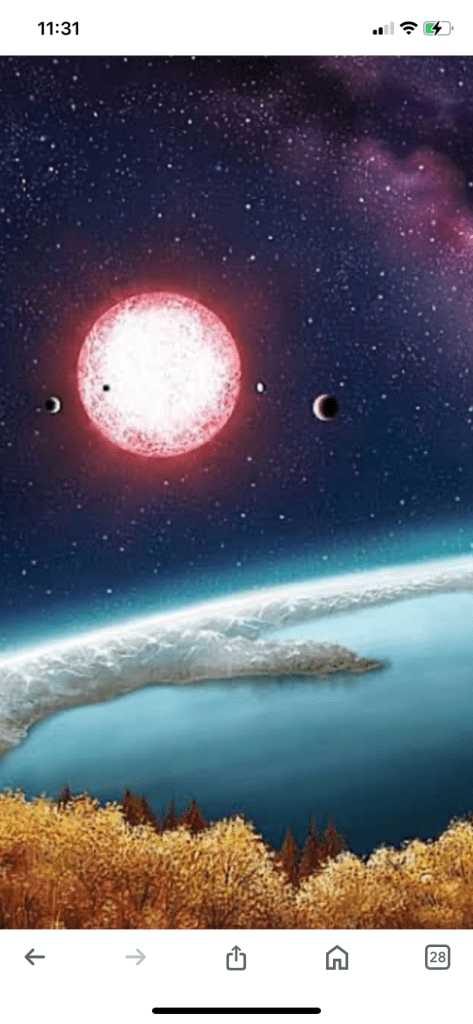
The question of whether there’s life elsewhere in the Milky Way is one of the most compelling in science. Here’s what we know:
- The Possibility Is High:
- The sheer number of stars and planets in the Milky Way suggests that the potential for life is significant.
- Astronomers have discovered numerous exoplanets within the habitable zones of their stars, where liquid water could exist.
- The building blocks of life, such as organic molecules, have been found throughout the galaxy.
- Challenges and Uncertainties:
- While the conditions for life may exist, we don’t yet know how common it is for life to actually arise.
- The definition of “habitable” is complex, and many factors beyond the presence of liquid water could influence whether a planet can support life.
- Detecting signs of life on exoplanets is extremely challenging, and current technology has limitations.
- Ongoing Research:
- Scientists are actively searching for biosignatures in the atmospheres of exoplanets, which could indicate the presence of life.
- Missions like the James Webb Space Telescope are providing valuable data that will help us to better understand the potential for life beyond Earth.
- Astrobiology is a field of science that is growing rapidly, and new discoveries are being made all the time.
- Habitable zones:
- It is known that the milky way it self has habitable zones. Meaning there are areas of the galaxy that are more likely to contain planets that can sustain life.
In summary, while we don’t have definitive proof of life beyond Earth, the possibility is very real. The search for extraterrestrial life is an ongoing and exciting endeavor that could revolutionize our understanding of the universe.
Please like subscribe comment your precious comment on universe discoveries
Full article source google
Please donate me a coffee freinds to help my website grow if you like my website universe discoveries
https://www.amazon.in/b?_encoding=UTF8&tag=555101-21&link
This is Amazon link if you want to buy anything from Amazon you can click on that it will help my website grow freinds
 Universe discoveries
🙏🌹
Aum Shanti
LikeLike
Very interesting information
LikeLike
Thanks Thomas 🙏
LikeLiked by 1 person