

The understanding of gravity has evolved significantly over centuries, moving from early philosophical ideas to the complex theories of modern physics. Here’s a summary of that evolution:
- Early Philosophical Ideas:
- Aristotle:
- He believed that objects fell because they were seeking their “natural place.” He thought heavier objects fell faster than lighter ones.
- This view dominated for centuries, despite its inaccuracies.
- Early Indian and Islamic Scholars:
- Scholars like Brahmagupta in India recognized gravity as an attractive force.
- Islamic scholars also made contributions to understanding mechanics and the motion of celestial bodies.
- Newtonian Gravity:
- Isaac Newton (17th Century):
- Newton formulated the law of universal gravitation, which described gravity as a force of attraction between any two objects with mass.
- He provided a mathematical framework to explain the motion of planets and falling objects.
- Newton’s theory was incredibly successful and remained the dominant explanation for centuries.
- Einstein’s General Relativity:
- Albert Einstein (Early 20th Century):
- Einstein revolutionized our understanding of gravity with his theory of general relativity.
- He proposed that gravity is not a force, but a curvature of spacetime caused by mass and energy.
- This theory explained phenomena that Newtonian gravity could not, such as the bending of light by gravity and the precession of Mercury’s orbit.
- General relativity has been repeatedly confirmed by experiments and observations.
- Modern Challenges and Ongoing Research:
- Quantum Gravity:
- One of the biggest challenges in modern physics is to reconcile general relativity with quantum mechanics.
- Scientists are working on theories of quantum gravity, such as string theory and loop quantum gravity, to understand gravity at the quantum level.
- Dark Matter and Dark Energy:
- Observations of the universe have revealed the existence of dark matter and dark energy, which are not yet fully understood.
- These mysterious entities play a significant role in the large-scale structure and evolution of the universe, and their relationship to gravity is a subject of ongoing research.
- Gravitational Waves:
- The detection of gravitational waves has opened up a new window to observe the universe. This has helped confirm aspects of Einsteins theory, and is allowing scientist to study extremely energetic cosmic events.
In essence, our understanding of gravity has progressed from early philosophical ideas to the sophisticated theories of modern physics. And research continues to push the boundaries of knowledge.
What is gravity in universe
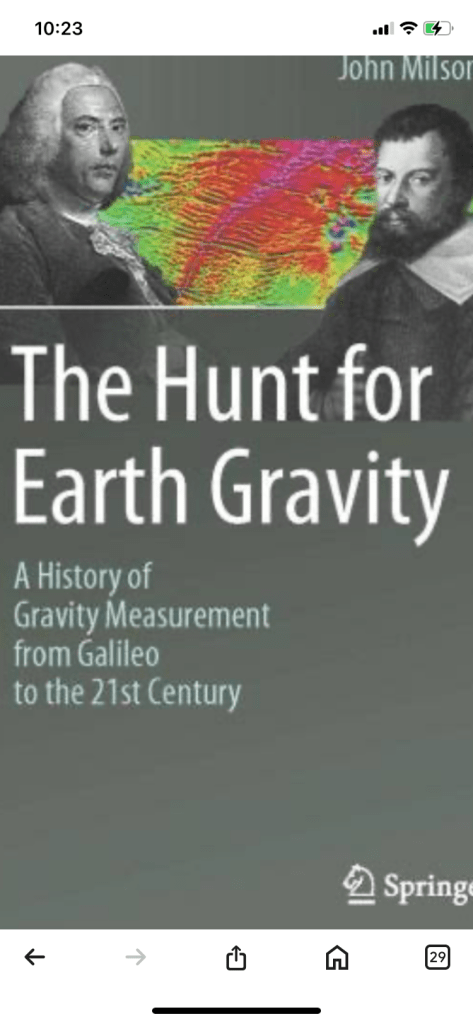
Gravity is a fundamental force that plays a crucial role in shaping the universe. Here’s a breakdown of its significance:
- Universal Attraction:
- Gravity is the force of attraction between any two objects that have mass. The more mass an object has, the stronger its gravitational pull.
- This force acts across vast distances, influencing the motion of everything from atoms to galaxies.
- Shaping Cosmic Structures:
- Gravity is responsible for the formation of stars, planets, and galaxies.
- It pulls together clouds of gas and dust, causing them to collapse and form these celestial bodies.
- It also holds galaxies together, preventing them from flying apart.
- Orbits and Motion:
- Gravity governs the orbits of planets around stars, moons around planets, and stars within galaxies.
- It dictates the paths that objects take through space.
- Einstein’s Perspective:
- According to Albert Einstein’s theory of general relativity, gravity is not simply a force, but a curvature of spacetime caused by mass and energy.
- This curvature influences the motion of objects, causing them to follow curved paths.
- Key roles in the Universe:
- Holds planets in orbit around stars.
- Holds stars together in galaxies.
- Influences the large scale structure of the universe.
- Is a key component in the formation of Black holes.
In essence, gravity is a pervasive and essential force that shapes the structure and evolution of the universe.
Please like subscribe comment your precious thoughts on universe discoveries
Full article source google
https://www.amazon.in/b?_encoding=UTF8&tag=555101-21&link
This is Amazon link if you want to buy anything from Amazon you can click on that it will help my website grow freinds
https://www.buymeacoffee.com/Satyam55
Please donate me a coffee freinds to help my website grow if you like my website universe discoveries
 Universe discoveries
nice post 🌷👌🏻
LikeLike
Thanks Krishna 🙏
LikeLiked by 1 person
🙏🌹☯️
Aum Shanti
LikeLike
🎉👍🌷
LikeLike
It is a very interesting blog post. I am quite interested in gravitation and relativity.
LikeLike
Thanks dear freind Thomas 🙏
LikeLiked by 1 person