
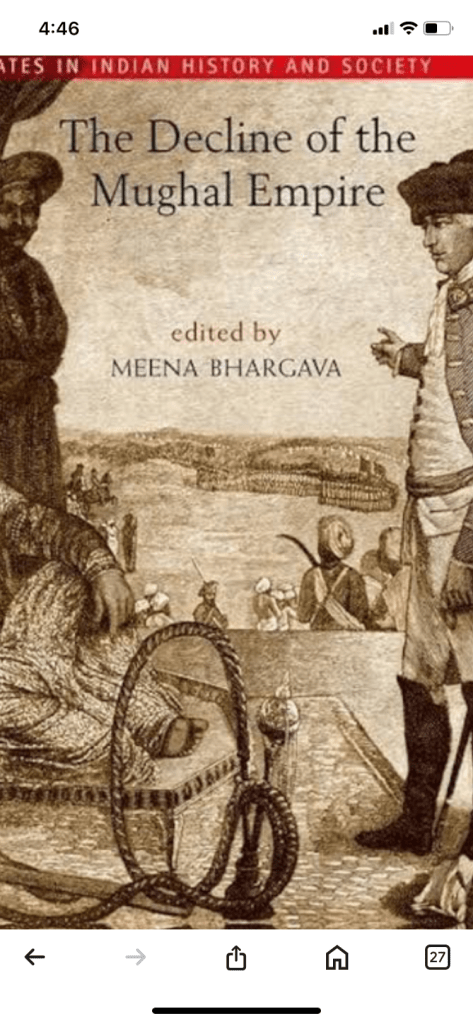
The decline of the Mughal Empire and the concurrent rise of the East India Company is a pivotal period in Indian history. Here’s a breakdown of the key factors:
Downfall of the Mughal Empire:
- Weakening of Central Authority:
- Following the death of Emperor Aurangzeb in 1707, the Mughal Empire faced a succession of weaker rulers.
- This led to increased infighting among nobles and a loss of central control over the vast empire.
- Regional Rebellions:
- Various regional powers, such as the Marathas, Sikhs, and Rajputs, asserted their independence and challenged Mughal authority.
- These rebellions further fragmented the empire and drained its resources.
- Economic Decline:
- The empire’s financial stability was weakened by costly wars, corruption, and inefficient administration.
- This made it difficult to maintain a strong military and effectively govern the empire.
- External Invasions:
- Invasions by Nadir Shah of Persia in 1739 and Ahmad Shah Durrani of Afghanistan further weakened the Mughal Empire and exposed its vulnerability.
Rise of the East India Company: - Initial Trading Presence:
- The East India Company was established in 1600 with the primary goal of trading with India.
- Initially, they focused on establishing trading posts and securing commercial privileges.
- Exploitation of Political Instability:
- As the Mughal Empire weakened, the East India Company took advantage of the political instability and internal conflicts.
- They formed alliances with local rulers and gradually expanded their political and military influence.
- Military Superiority:
- The East India Company possessed a well-organized and disciplined army, equipped with advanced weaponry.
- This military superiority allowed them to defeat local rulers and establish their dominance.
- Battle of Plassey (1757):
- This decisive battle marked a turning point, as the East India Company defeated the Nawab of Bengal and gained control over a significant territory.
- This victory provided the company with vast resources and solidified their position as a major political power.
- Gradual Expansion:
- Through a combination of military force, political manipulation, and economic dominance, the East India Company gradually expanded its control over much of the Indian subcontinent.
In essence, the decline of the Mughal Empire created a power vacuum that the East India Company was able to exploit. The company’s focus on trade gradually shifted to political and military control, ultimately leading to the establishment of British rule in India.
East India company to British 🇬🇧 raj
The transition from East India Company rule to the British Raj represents a significant shift in the nature of British control over India. Here’s a concise overview:
East India Company Rule:
- Trading to Ruling:
- The East India Company began as a trading enterprise in 1600.
- Over time, it gained political and military power, eventually becoming the dominant force in much of India.
- Its rule was characterized by a focus on maximizing profits, which often led to exploitation and disregard for local populations.
- Growing Discontent:
- The company’s policies and actions generated increasing resentment among Indians.
- This discontent culminated in the Indian Rebellion of 1857.
The British Raj: - The 1857 Rebellion:
- The Indian Rebellion of 1857 (also known as the Sepoy Mutiny) was a watershed moment.
- It exposed the weaknesses of the East India Company’s rule and led the British government to take direct control of India.
- Government of India Act 1858:
- This act transferred power from the East India Company to the British Crown.
- India became a formal colony of Britain, ruled by a Viceroy appointed by the British government.
- Direct Imperial Rule:
- The British Raj marked a period of direct imperial rule, with the British government implementing policies and administrative structures.
- The East India company was eventually dissolved in 1874.
- Impact:
- The British Raj had a profound impact on India, shaping its political, economic, and social landscape.
In essence, the 1857 rebellion served as the catalyst for the shift from company rule to direct British imperial control.
What were the reasons of India 🇮🇳 becoming British 🇬🇧 colony
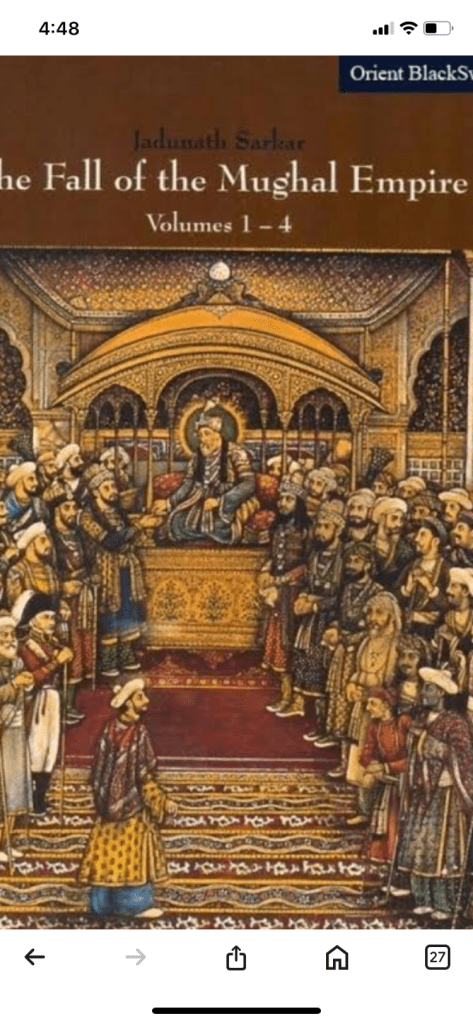
The establishment of British colonial rule in India was a complex process driven by a confluence of factors. Here’s a breakdown of the key reasons:
- Economic Motivations:
- Trade and Resources:
- The East India Company’s initial purpose was to exploit India’s rich resources, including spices, textiles, and other valuable commodities.
- The desire to create new markets for British goods also played a significant role.
- Financial Gain:
- The company sought to maximize profits through trade and, later, through the extraction of revenue from conquered territories.
- Political and Military Factors:
- Decline of the Mughal Empire:
- The weakening of the Mughal Empire created a power vacuum that the East India Company was able to exploit.
- Internal conflicts and regional rebellions further fragmented the subcontinent.
- Military Superiority:
- The British possessed a well-organized and technologically advanced military, which gave them a decisive advantage over local rulers.
- Strategic Expansion:
- The British sought to expand their global empire and establish strategic control over key trade routes.
- Political Manipulation:
- The East India company became very skilled at making alliances with local rulers, and then manipulating those alliances to their own advantage.
- Socio-Political Conditions in India:
- Political Fragmentation:
- The lack of a unified political power in India made it easier for the British to establish their dominance.
- Internal Conflicts:
- Rivalries between different Indian rulers and factions provided opportunities for the British to intervene and expand their influence.
- The East India Company’s Transformation:
- From Trade to Rule:
- The East India Company gradually transitioned from a trading enterprise to a political and military power.
- This transformation was driven by a combination of ambition, opportunity, and the need to protect its commercial interests.
In essence, a combination of economic ambition, political opportunity, and military strength allowed the British to establish and consolidate their colonial rule in India.
Please like subscribe comment your precious thoughts on universe discoveries
Full article source google
https://www.amazon.in/b?_encoding=UTF8&tag=555101-21&link
This is Amazon link if you want to buy anything from Amazon you can click on that it will help my website grow freinds
https://www.buymeacoffee.com/Satyam55
Please donate me a coffee freinds to help my website grow if you like my website universe discoveries
 Universe discoveries
Well researched post. Thanks for sharing.
LikeLike
Thanks sir 🙏
LikeLike
🙏🌹
Aum Shanti
LikeLike
Your effort in presenting this historical analysis is truly commendable! The breakdown of key factors contributing to the decline of the Mughal Empire and the rise of British rule is well-structured and informative. The inclusion of economic, political, and military aspects provides a well-rounded perspective for readers.
The images/paintings you’ve included add a nice visual appeal, making the content more engaging. One suggestion for improvement would be to ensure consistent formatting throughout—such as uniform bullet points and spacing—to enhance readability. Additionally, citing specific sources for historical claims could further strengthen the credibility of your work.
Overall, this is a well-researched and insightful piece. Keep up the great work, and I look forward to more of your writings!🎉
LikeLike
Thanks ☺️ dear Jhon for your inspiring words you are a great freind and very good 👍 writer ✍️ I will folllow your instructions dear freind🙏
LikeLiked by 1 person
👏🌷
LikeLike