
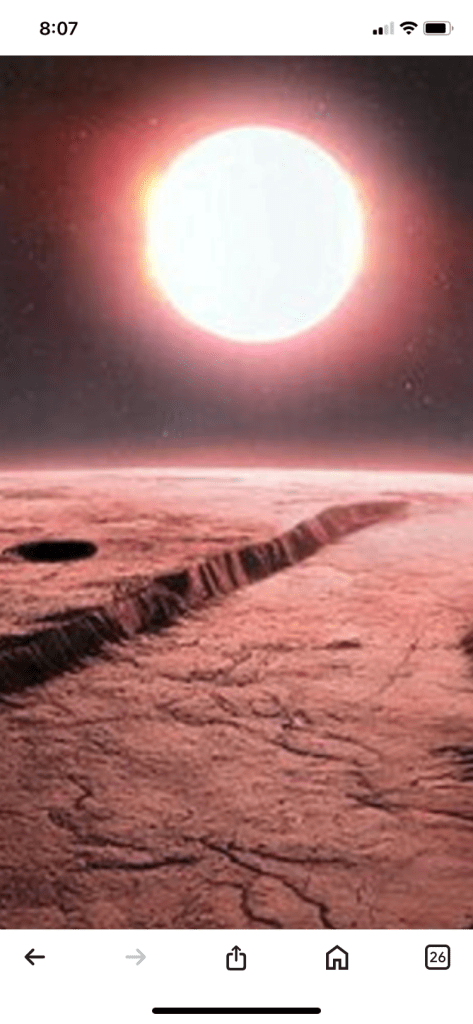
It’s exciting to hear about the confirmation of planets around Barnard’s Star! Here’s a summary of the key points:
- Long Search:
- Astronomers have been searching for planets around Barnard’s Star for about a century, making this confirmation a significant achievement.
- Four Planets Confirmed:
- Recent research has confirmed the existence of four small planets orbiting Barnard’s Star.
- These planets are described as sub-Earths, meaning they are smaller than our own planet.
- Close Orbits:
- These planets orbit very close to their star, resulting in very short orbital periods (just a few days).
- Because of these close orbits, the planets are expected to be very hot, and therefore unlikely to be habitable.
- Technological Advancement:
- The confirmation is a testament to the advancements in astronomical observation technology, particularly in the radial velocity method.
- The use of multiple instruments, such as ESPRESSO and MAROON-X, and independant verification of the data, increased the confidence in the findings.
- Significance:
- Barnard’s Star is one of the closest star systems to Earth, making these findings particularly interesting for studying exoplanets.
- The detection of such small planets pushes the boundaries of exoplanet detection capabilities.
This discovery adds valuable information to our understanding of planetary systems and the distribution of planets in our galaxy.
Barnard star
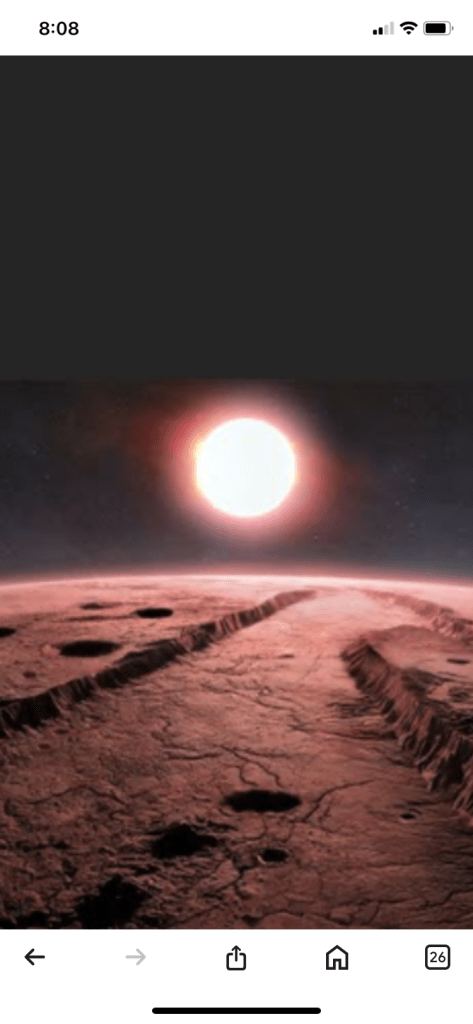
Barnard’s Star is a fascinating celestial object, and here’s a breakdown of its key characteristics:
- Proximity:
- It’s one of the closest stars to our Sun, located approximately 6 light-years away.
- Specifically, it’s the fourth-nearest individual star, following the Alpha Centauri system.
- Type of Star:
- It’s a red dwarf star, which means it’s smaller and cooler than our Sun.
- Because of this, it’s quite dim and not visible to the naked eye.
- Movement:
- Barnard’s Star is known for its relatively high proper motion, meaning it appears to move across the sky faster than most other stars.
- Age:
- It’s a very old star, significantly older than our Sun.
- Planetary System:
- Recent research has confirmed the presence of multiple planets orbiting Barnard’s Star. These are sub-Earth sized planets, orbiting very close to the star.
- Discovery:
- It’s named after Edward Emerson Barnard, the astronomer who discovered its high proper motion in 1916.
In essence, Barnard’s Star is a close, old, and relatively quiet red dwarf that has recently been confirmed to host a system of exoplanets.
It’s a really exciting find—Barnard’s Star is our cosmic neighbor, and yet we know so little about it,” said Ritvik Basant, Ph.D student at the University of Chicago and first author on the study. “It’s signaling a breakthrough with the precision of these new instruments from previous generations.
Hunting Planets With Star Wobbles
One such effort was led by UChicago Prof. Jacob Bean, whose team created and installed an instrument called MAROON-X, which is attached to the Gemini Telescope on a Hawaiian mountaintop and designed specifically to search for distant planets
More Than Just Gas Giants
These planets are likely rocky planets, rather than gas planets like Jupiter, the scientists said. That will be difficult to pin down with certainty; the angle we see them from Earth means we can’t watch them cross in front of their star, which is the usual method to find out if a planet is rocky. But by gathering information about similar planets around other stars, we can make better guesses about their makeup.
Really Exciting’
Barnard’s Star has been called the “great white whale” for planet hunters; several times over the past century
An Exciting Future for Discovery
These are among the smallest planets yet found with this observing technique. The scientists hope this will mark a new era of finding more and more planets in the universe
Most of the rocky planets we’ve found so far are much larger than Earth, and they appear to be fairly similar across the galaxy. But there are reasons to think the smaller planets will have more widely varied compositions. As we find more of them, we can begin to tease out more information about how these planets form—and what makes planets likely to have habitable conditions.
A lot of what we do can be incremental, and it’s sometimes hard to see the bigger picture,” he said. “But we found something that humanity will hopefully know forever. That sense of discovery is incredible.”
Please like subscribe comment your precious thoughts on universe discoveries
Full article source google
https://www.amazon.in/b?_encoding=UTF8&tag=555101-21&link
This is Amazon link if you want to buy anything from Amazon you can click on that it will help my website grow freinds
https://www.buymeacoffee.com/Satyam55
Please donate me a coffee to help grow my website universe discoveries freinds
Please donate me a coffee to help grow my website universe discoveries freinds
 Universe discoveries
🙏🌹
Aum Shanti
LikeLike
It must be something to be the one that finds a new star, but then to have it named after you would be such an honor!
LikeLike