
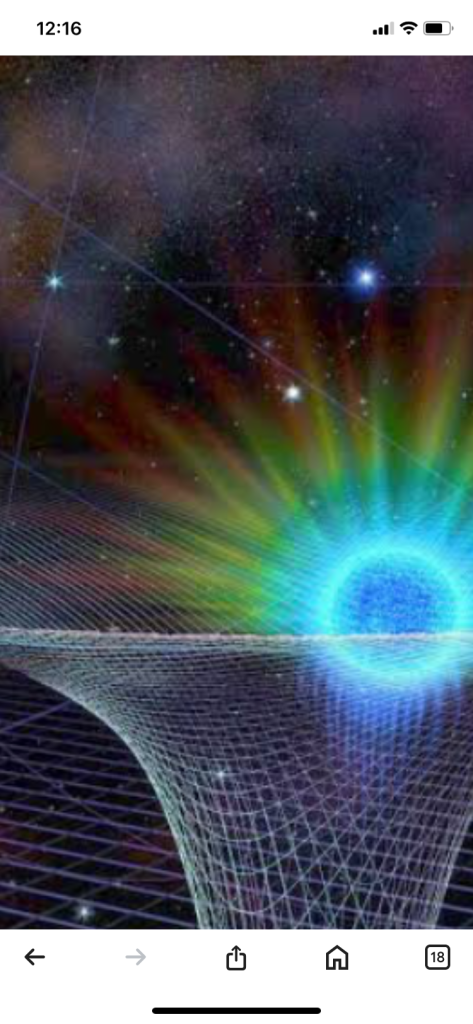
It’s true that there are ongoing and exciting developments challenging some of the established theories about the universe’s expansion. Here’s a breakdown of what’s happening:
- Challenging the Standard Model:
- The prevailing model of cosmology includes the idea that the universe’s expansion is accelerating, driven by a mysterious force called dark energy.
- However, recent research is proposing alternative theories that challenge this view.
- One key area of focus is the “Hubble tension,” which refers to the discrepancy between different measurements of the universe’s expansion rate. This discrepancy suggests that our current understanding may be incomplete.
- New Theories and Ideas:
- Some researchers are exploring the possibility that dark energy is not constant, but rather changes over time.
- Others are investigating the “timescape” hypothesis, which suggests that the universe’s expansion may be more “lumpy” than previously thought, and that dark energy may not be necessary to explain it.
- Also there are theories that propose that the expansion could reverse.
- Key Points:
- These new theories are based on observations of galaxies, supernovae, and the cosmic microwave background.
- The goal is to develop a more accurate and complete understanding of the universe’s evolution.
- It is very important to remember that science is a process, and these new ideas are being tested and debated.
In essence, the scientific community is actively working to refine our understanding of the cosmos, and these new theories represent a significant step in that direction.
For years, scientists have used a well-established model to explain how the universe evolves. The standard theory, called the Lambda Cold Dark Matter model (ΛCDM), is the prevailing cosmological framework that describes the large-scale structure and evolution of the universe.
ΛCDM combines two key components: Lambda (Λ), which represents dark energyresponsible for the accelerated expansion of the universe, and Cold Dark Matter (CDM), a form of non-relativistic, unseen matter that provides the gravitational scaffolding for galaxy formation.
This model is crucial because it successfully explains a wide range of observational data, including the cosmic microwave background (CMB) radiation, the large-scale distribution of galaxies, the expansion history of the universe as measured by Type Ia supernovae and the faint glow left over from the Big Bang.
However, some measurements don’t fit neatly into the expected patterns. Two major inconsistencies, known as the Hubble tension and the sigma-8 tension, suggest there could be missing pieces in our understanding of dark energy.
The ΛCDM model also provides the foundation for modern precision cosmology, offering a framework that aligns with Einstein’s general relativity and accounts for approximately 95% of the universe’s total energy density—though the nature of dark matter and dark energy remains unknown.
However, some measurements don’t fit neatly into the expected patterns. Two major inconsistencies, known as the Hubble tension and the sigma-8 tension, suggest there could be missing pieces in our understanding of dark energy.
The ΛCDM model also provides the foundation for modern precision cosmology, offering a framework that aligns with Einstein’s general relativity and accounts for approximately 95% of the universe’s total energy density—though the nature of dark matter and dark energy remains unknown.
What is new bold theory of expansion
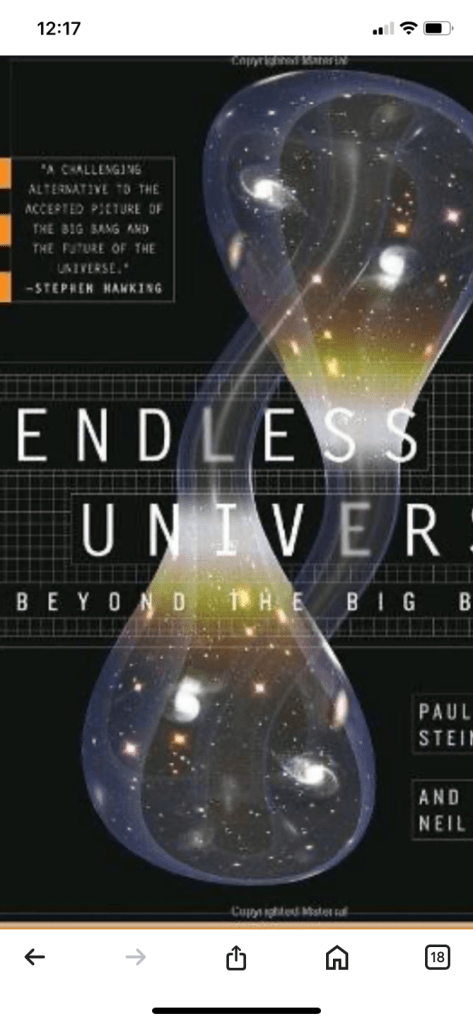
It’s important to understand that “new bold theories” in cosmology are often about refining and challenging aspects of the existing, widely accepted model (the ΛCDM model). So, it’s not always about throwing everything out and starting over. Here’s a breakdown of some of the key areas where bold new theories are emerging:
- Dark Energy Dynamics:
- The standard model posits that dark energy is a constant, driving the accelerating expansion. However, some new theories suggest that dark energy might be dynamic, meaning its strength could change over time.
- Specifically, some researchers propose that dark energy could undergo “phase transitions,” potentially even reversing the expansion of the universe. This is a very bold claim.
- The Hubble Tension:
- This is a major driver of new theories. Measurements of the universe’s expansion rate (the Hubble constant) vary depending on the method used. This discrepancy suggests that our current understanding may be flawed.
- New theories are trying to resolve this tension by proposing alternative models of the universe’s expansion history.
- Alternative Explanations for Acceleration:
- Some researchers are exploring alternatives to dark energy altogether. These include:
- Modifying Gravity: Some theories suggest that our understanding of gravity may be incomplete, and that modifications to Einstein’s theory of general relativity could explain the observed acceleration.
- Wormhole theory: There are even theories that microscopic wormholes could be the cause of the expansion.
- Holographic Dark Energy:
- Researchers are also working on theories such as “holographic dark energy” models, that view the universe as a hologram, and attempt to explain dark energy through quantum gravity.
In essence, the “boldness” comes from the willingness to challenge fundamental assumptions about the nature of dark energy, gravity, and the universe itself.
Please like subscribe comment your precious thoughts on universe discoveries
Full article source google
https://www.amazon.in/b?_encoding=UTF8&tag=555101-21&link
This is Amazon link if you want to buy anything from Amazon you can click on that it will help my website grow freinds
https://www.buymeacoffee.com/Satyam55
Please donate me a coffee to help grow my website universe discoveries freinds
 Universe discoveries
Nice post with information on new bold theories”
LikeLike
🙏🌹
Aum Shanti
LikeLike