
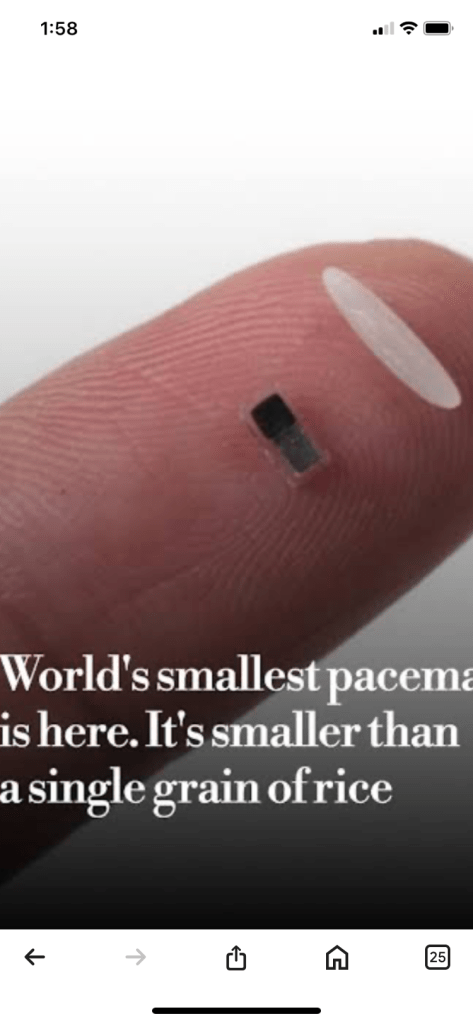
Measuring just 1.8 millimeters wide, 3.5 millimeters long and one millimeter thick, this tiny device is smaller than a grain of rice but still functions like a full-sized pacemaker.
This is indeed very exciting news! Here’s a summary of the key details regarding this groundbreaking medical advancement:
- Miniature Size:
- Scientists at Northwestern University have developed a pacemaker that is remarkably small, smaller than a grain of rice.
- Specifically it measures 1.8 millimeters in width and 3.5 millimeters in length.
- Minimally Invasive Implantation:
- A significant advantage of this device is that it can be injected into the body using a syringe, eliminating the need for traditional, invasive surgical procedures.
- Dissolvable Technology:
- This pacemaker is designed to dissolve naturally within the body, which is particularly beneficial for patients who require temporary pacing, such as newborns with congenital heart defects. This elimates the need for a second surgery to remove the device.
- Power Source:
- Instead of traditional power sources, this tiny pacemaker utilizes a galvanic cell, that uses the bodies biofluids to create the electrical energy needed to stimulate the heart.
- Potential Benefits:
- This technology holds immense potential for revolutionizing the treatment of heart conditions, especially in vulnerable populations like newborns.
- It also opens up possibilities for other medical applications.
This development represents a significant step forward in bioelectronic medicine, offering a less invasive and potentially safer alternative for patients requiring pacemakers.
What is pacemaker
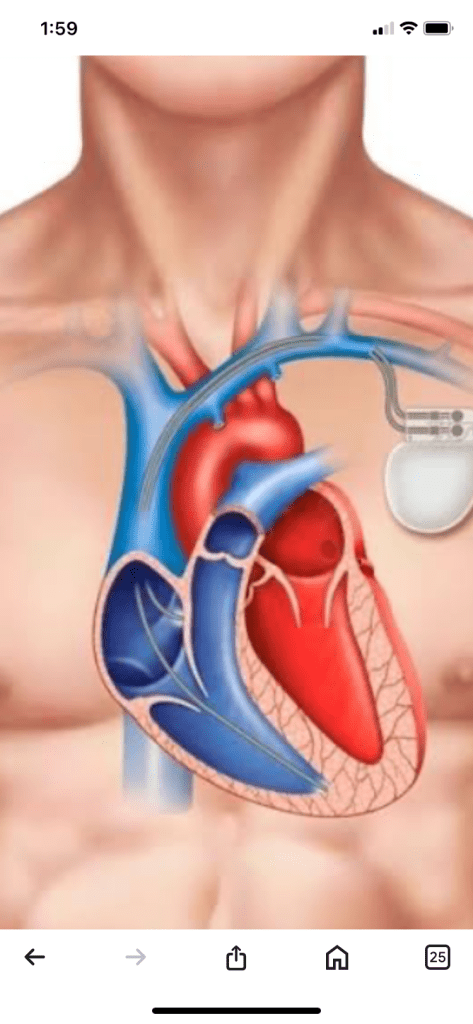
A pacemaker is a small, battery-operated device that helps the heart beat in a regular rhythm. It’s used to treat conditions where the heart’s natural electrical system isn’t working correctly, causing it to beat too slowly, too fast, or irregularly. Here’s a breakdown:
- Purpose:
- To regulate the heartbeat, ensuring it maintains a consistent and appropriate pace.
- To help the heart pump blood effectively throughout the body.
- How it works:
- The pacemaker sends out electrical impulses that stimulate the heart muscle to contract.
- It monitors the heart’s natural electrical activity and only intervenes when needed.
- Components:
- Pulse generator: Contains the battery and electronic circuitry.
- Leads (wires): These are placed in the heart chambers and carry the electrical impulses. Some newer pacemakers are “leadless”.
- Why someone might need a pacemaker:
- Slow heart rate (bradycardia).
- Irregular heart rhythms (arrhythmias).
- Heart block (disruption of the electrical signals in the heart).
- Heart failure.
In essence, a pacemaker acts as an artificial electrical system for the heart, ensuring it beats at a healthy rhythm.
Please like subscribe comment your precious thoughts on universe discoveries
Full article source google
https://www.amazon.in/b?_encoding=UTF8&tag=555101-21&link
This is Amazon link if you want to buy anything from Amazon you can click on link to help my website universe discoveries grow freinds
https://www.buymeacoffee.com/Satyam55
Please donate me a coffee to help grow my website universe discoveries freinds
 Universe discoveries
🙏🌹
Aum Shanti
LikeLike
Incredible!
LikeLike