
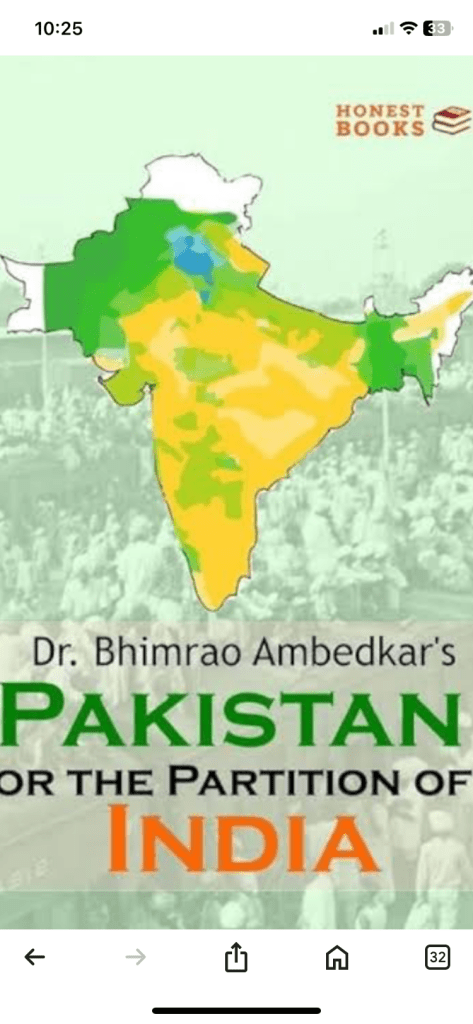
The partition of India in August 1947 was the division of British India into the independent dominion states of India and Pakistan. This pivotal event reshaped the subcontinent and left a lasting legacy of political tension, social upheaval, and economic consequences.
Causes of the Partition:
Several factors contributed to the partition:
- The Two-Nation Theory: This ideology, championed by the Muslim League and its leader Muhammad Ali Jinnah, asserted that Hindus and Muslims were distinct nations with separate cultural, religious, and political interests, thus requiring separate homelands.
- British “Divide and Rule” Policy: Some historians argue that British colonial policies exacerbated existing religious and communal tensions to maintain control over the subcontinent. The introduction of separate electorates for Muslims in the early 20th century is often cited as a key step in fostering separatist tendencies.
- Rise of Religious Nationalism: As the Indian independence movement gained momentum, both Hindu and Muslim nationalist sentiments grew. The Muslim League increasingly advocated for a separate Muslim state to protect minority rights and interests, fearing marginalization in a Hindu-majority India.
- Failure of Political Negotiations: Despite numerous attempts to reach a power-sharing agreement between the Indian National Congress and the Muslim League, deep mistrust and conflicting visions for the future of India ultimately led to a deadlock. The Cabinet Mission Plan of 1946, aimed at maintaining a unified India with a federal structure, failed to gain acceptance from both parties.
- Direct Action Day: In August 1946, the Muslim League called for “Direct Action Day” to press their demand for Pakistan, resulting in widespread communal violence, particularly in Calcutta. This event further deepened the existing divide and made a unified India seem increasingly untenable.
The Process of Partition: - The Mountbatten Plan: Lord Louis Mountbatten, the last Viceroy of India, presented the partition plan on June 3, 1947. The plan outlined the division of British India into two independent dominions and the mechanism for demarcating the borders.
- Border Demarcation: Sir Cyril Radcliffe, a British barrister with no prior knowledge of India, was tasked with drawing the borders between India and Pakistan. The Radcliffe Line, hastily drawn and based on limited data, often divided villages, families, and agricultural lands, leading to immense displacement and hardship.
- Division of Assets: The partition also involved the division of the British Indian Army, the civil service, railways, and the central treasury between the two new nations.
Consequences and Impact of the Partition:
The partition had profound and devastating consequences: - Mass Migration: Millions of Hindus, Sikhs, and Muslims were forced to leave their homes and migrate across the newly established borders in one of the largest mass migrations in human history.
- Communal Violence: The partition was accompanied by widespread communal riots and violence on both sides of the border. Estimates of the death toll range from several hundred thousand to over a million people.
- Refugee Crisis: The massive displacement of people created overwhelming refugee crises in both India and Pakistan, with immense challenges in providing shelter, food, and resources to the displaced populations.
- Economic Disruption: The division disrupted trade, commerce, and agricultural systems, leading to economic instability in the newly formed nations.
- Political Tension and Conflict: The partition created a lasting legacy of tension and conflict between India and Pakistan, including several wars and ongoing disputes, most notably over the region of Kashmir.
- Social and Cultural Impact: The partition caused deep social and cultural wounds, severing long-standing community ties and creating a sense of loss and trauma that continues to affect generations.
The partition of India remains a significant and painful chapter in the history of the subcontinent, with its repercussions still felt in the political and social landscape of India and Pakistan today.
Can Nehru reunite India
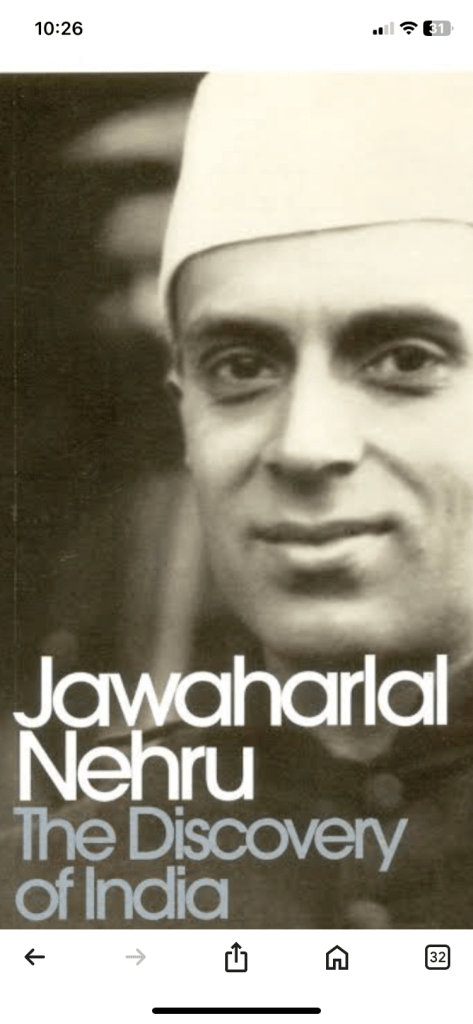
The possibility of Nehru reuniting India and Pakistan after Jinnah’s death in September 1948 is a complex question with multiple perspectives.
Arguments against the possibility of reunification:
- The Ideological Divide: The creation of Pakistan was based on the two-nation theory, asserting that Hindus and Muslims were distinct nations with separate homelands. This foundational ideology remained strong even after Jinnah’s death.
- Entrenched Political Structures: By 1948, both India and Pakistan had established their own governments, constitutions, and national identities. These separate political structures would have resisted any move towards reunification.
- The Kashmir Issue: The conflict over Kashmir had already begun in 1947 and remained a major point of contention. This territorial dispute would have been a significant obstacle to any reunification efforts.
- Leadership Vacuum in Pakistan: Jinnah’s death created a leadership vacuum in Pakistan. His successors faced the challenge of consolidating the new nation, making any radical policy shift like reunification unlikely.
- Public Sentiment: The partition was accompanied by widespread communal violence and displacement. Deep-seated mistrust and animosity existed on both sides, making public support for reunification difficult to garner.
Arguments suggesting a slim possibility (though unlikely): - Nehru’s Stance: Jawaharlal Nehru, India’s first Prime Minister, was known to be personally against the partition. Some historians believe that he might have explored avenues for reconciliation, though perhaps not a full reunification in the immediate aftermath of Jinnah’s death.
- Initial Instability in Pakistan: In the early years after independence, Pakistan faced significant economic and political challenges. Some observers at the time believed that Pakistan might not survive as an independent nation, leading to speculation about potential reunification. However, this instability ultimately led to a focus on consolidating Pakistan’s sovereignty rather than seeking reunification.
- Mahatma Gandhi’s Efforts: While he was assassinated in January 1948, Mahatma Gandhi had wished to work towards Indian reunification. His moral influence, had he lived longer, might have created some space for dialogue, though the prevailing political climate makes large-scale reunification improbable.
Overall Assessment:
Despite Nehru’s personal views against partition, the prevailing political realities, the ideological basis of Pakistan, the Kashmir conflict, and the charged public sentiment on both sides made the possibility of a swift reunification after Jinnah’s death highly improbable. Pakistan was focused on establishing its national identity and consolidating its statehood. While some level of cooperation or a softer border policy might have been conceivable in an alternate historical scenario, a full reunification in the immediate post-Jinnah era was not a realistic prospect. The deep divisions created by the partition and the subsequent political trajectories of both nations solidified their separate identities.
Please like subscribe comment your precious thoughts on universe discoveries
Full article source google
https://www.amazon.in/b?_encoding=UTF8&tag=555101-21&link
This is Amazon link if you want to buy anything from Amazon you can click on link to help my website universe discoveries grow freinds
https://www.buymeacoffee.com/Satyam55
Please donate me a coffee to help grow my website universe discoveries freinds
 Universe discoveries
🙏🌹
Aum Shanti
LikeLike
Nice information.
LikeLike
Thanks sir🙏🙏
LikeLiked by 1 person
Western media are reporting the news on the eve of a new war, is it true?
LikeLike
It’s not still there
LikeLiked by 1 person
Great information.
LikeLike