
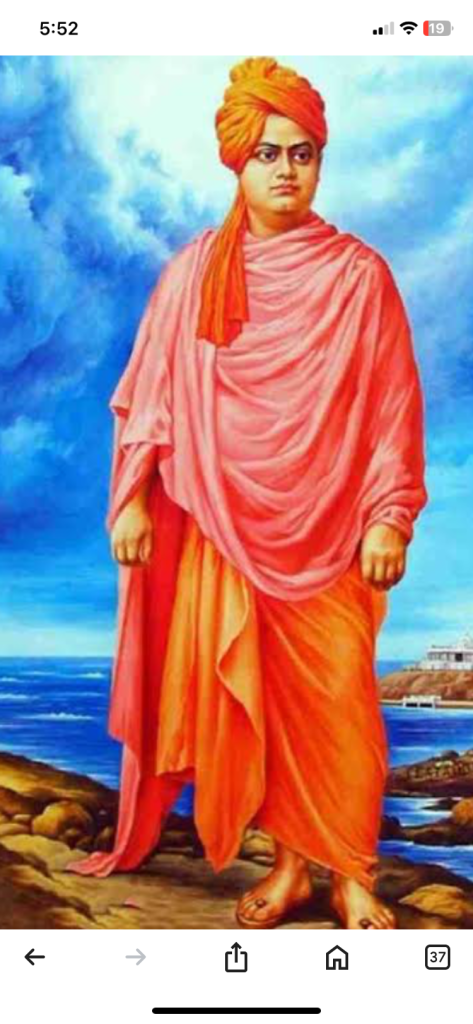
Swami Vivekananda (1863-1902), born Narendranath Datta, was a highly influential Indian Hindu monk, philosopher, author, and religious teacher. He was the chief disciple of the 19th-century mystic Ramakrishna and a pivotal figure in introducing Vedanta and Yoga to the Western world.
Here are some key aspects of his life and teachings:
Early Life and Influences:
- Born in Calcutta to an aristocratic Bengali family, Vivekananda showed an early inclination towards spirituality.
- He was deeply influenced by his guru, Ramakrishna, who taught him the unity of all religions and the divinity of all beings.
Introduction of Hinduism to the West: - Vivekananda is best known for his groundbreaking speech at the 1893 World’s Parliament of Religions in Chicago, where he eloquently introduced Hinduism to America and advocated for religious tolerance. His opening words, “Sisters and brothers of America,” were met with a standing ovation.
- He subsequently traveled extensively in the West, giving lectures on Vedanta philosophy and Yoga, and establishing Vedanta Societies in several countries.
Key Teachings and Philosophy: - Divinity of the Soul: Vivekananda emphasized that every individual possesses a divine essence. His core message was to awaken this inner divinity.
- Unity of Religions: He believed that all religions are different paths leading to the same ultimate reality. He advocated for universal acceptance and understanding between faiths.
- Practical Vedanta: Vivekananda stressed the practical application of Vedanta in daily life, urging people to see God in all beings and to serve humanity selflessly. He linked spirituality with social upliftment, advocating for the application of Vedantic principles to address poverty and inequality.
- Importance of Action (Karma Yoga): He highlighted the significance of selfless work as a path to spiritual realization.
- Power of the Mind: Vivekananda emphasized the power of thought and the importance of self-belief. He famously said, “We are what our thoughts have made us; so take care about what you think.”
- Education: He believed that education should focus on character development, strength of mind, and intellectual expansion, enabling individuals to stand on their own feet. He advocated for the dissemination of education to all sections of society.
Legacy and Influence: - Vivekananda founded the Ramakrishna Math and the Ramakrishna Mission, organizations dedicated to spiritual training, education, and social service.
- He is considered a major force in the Hindu reform movements and the development of nationalism in colonial India.
- His teachings continue to inspire people worldwide, particularly the youth, fostering a spirit of self-reliance, service, and the realization of their inner potential.
- His birthday, January 12th, is celebrated as National Youth Day in India.
Swami Vivekananda’s powerful message of universalism, the divinity of humanity, and the importance of selfless service continues to resonate deeply, making him a highly revered spiritual and intellectual figure.
What is swami Vivekananda message to the world 🌎 and how it’s relevant in 2025

Swami Vivekananda’s message to the world is a powerful and multifaceted one, centered on several key principles that remain remarkably relevant in 2025:
Core Messages of Vivekananda:
- The Divinity of Humanity: Vivekananda emphatically declared that every human being possesses an inherent divine nature. He urged individuals to recognize this divinity within themselves and others, fostering self-respect and respect for all.
- The Unity of All Religions: He stressed that all religions are essentially different paths leading to the same ultimate truth. His message called for universal tolerance, acceptance, and mutual respect among faiths, rejecting fanaticism and promoting harmony.
- Practical Vedanta: Vivekananda emphasized the practical application of spiritual principles in everyday life. He believed that Vedanta, the core philosophy of Hinduism, should not be confined to intellectual understanding but should be lived and experienced through selfless action and service.
- Selfless Service (Karma Yoga): He advocated for Karma Yoga, the path of selfless action, as a means to spiritual growth and social upliftment. He believed that serving others with dedication and without seeking personal reward is a form of worship and a way to realize one’s own divinity.
- The Power of the Mind and Self-Belief: Vivekananda highlighted the immense potential of the human mind and the importance of unwavering self-belief. His famous call, “Arise, awake, and stop not till the goal is reached,” encouraged individuals to have faith in their capabilities and strive relentlessly towards their goals.
- Education for All: He championed education as a tool for empowerment, emphasizing character development, intellectual growth, and the ability to be self-reliant. He advocated for spreading education to all sections of society, particularly the marginalized.
- Strength and Fearlessness: Vivekananda urged individuals and the nation to cultivate strength – physical, mental, and moral – and to be fearless in the face of challenges.
Relevance in 2025:
In the year 2025, Vivekananda’s message continues to hold profound relevance in addressing many of the challenges and complexities of the modern world: - Combating Intolerance and Division: In an increasingly interconnected yet often polarized world, his message of religious harmony and universal acceptance is crucial. It provides a philosophical framework for fostering understanding and peaceful coexistence among diverse communities and nations.
- Promoting Human Dignity and Equality: His emphasis on the inherent divinity of every individual directly confronts issues of social injustice, discrimination, and inequality. It calls for treating everyone with respect and recognizing their inherent worth, regardless of their background.
- Finding Meaning and Purpose: In a fast-paced and materialistic world, Vivekananda’s teachings offer a deeper sense of purpose beyond material pursuits. His focus on inner divinity and selfless service can provide individuals with a sense of meaning and fulfillment.
- Addressing Social Issues: His concept of Practical Vedanta encourages individuals to actively engage in addressing social problems like poverty, inequality, and lack of education. It inspires a spirit of service and social responsibility.
- Empowering the Youth: Vivekananda had immense faith in the power of youth. His message of self-belief, determination, and the pursuit of high ideals continues to resonate with young people, encouraging them to become agents of positive change. National Youth Day in India, celebrated on his birth anniversary (January 12th), underscores the enduring importance of his message for the younger generation. The theme for National Youth Day 2025 is “Youth for a Sustainable Future: Shaping the Nation with Resilience and Responsibility,” reflecting his emphasis on the role of youth in building a better future.
- Fostering Holistic Development: His advocacy for an education that builds character and empowers individuals holistically remains vital in an era focused on narrow academic achievements.
- Cultivating Inner Strength and Resilience: In a world facing numerous challenges, from personal struggles to global crises, Vivekananda’s emphasis on mental and moral strength provides a pathway to resilience and inner peace.
In conclusion, Swami Vivekananda’s message to the world, emphasizing the divinity of humanity, the unity of religions, selfless service, and the power of the mind, remains remarkably pertinent in 2025. It offers a timeless guide for individuals and societies to navigate the complexities of the modern world with wisdom, compassion, and a spirit of unity. His teachings continue to inspire and empower people to strive for personal growth and contribute to a more just and harmonious world.
Please like subscribe comment your precious thought on universe discoveries
Full article google
 Universe discoveries
🙏🌹🕉️
Aum Shanti
LikeLike
Nice information shared on Swamiji.
LikeLiked by 1 person