

There have been exciting and significant breakthroughs in abiogenesis research, the scientific study of how life on Earth could have arisen from non-living matter. Scientists are indeed getting closer to understanding and even recreating some of the crucial first steps.
Here’s a summary of some of the key areas and recent progress:
- Formation of Building Blocks (Prebiotic Chemistry):
- Amino Acids and Peptides: Researchers have shown that amino acids, the building blocks of proteins, can form spontaneously under conditions thought to exist on early Earth, such as in water droplets at air-water interfaces (like sea spray) or through “microlightning” in water sprays. Importantly, peptides (chains of amino acids) have also been shown to form readily in these conditions.
- Nucleic Acid Components: While the famous Miller-Urey experiment showed the formation of amino acids, more recent research has explored other pathways for the creation of nucleobases (components of DNA and RNA) and other key biomolecules, often under different atmospheric conditions than initially hypothesized for early Earth. There’s ongoing debate and research regarding the “formose reaction” and its ability to produce linear sugars like ribose, essential for RNA.
- Lipids and Membranes: The formation of lipid molecules that can spontaneously self-assemble into cell-like membranes (protocells) is another area of active research. These protocells are crucial for compartmentalization, a fundamental characteristic of life.
- Self-Replication and Catalysis (The RNA World Hypothesis):
- Many scientists believe in the “RNA World Hypothesis,” which posits that RNA, not DNA or proteins, was the primary genetic and catalytic molecule in early life. RNA can store genetic information and also act as an enzyme (ribozyme).
- Recent work has demonstrated the ability of synthetic RNA molecules to replicate parts of other RNA molecules, and even to evolve catalytic capabilities. This is a significant step towards understanding how self-replicating systems could have emerged.
- Compartmentalization (Protocells):
- A major breakthrough has been the demonstration of self-reproducing coacervate droplets. These tiny clusters of molecules can hold and organize biomolecules and have now shown the ability to reproduce themselves in the lab. This is seen as a potential “missing link” between lifeless matter and the first living cells, providing a plausible mechanism for how primitive molecular assemblies could proliferate and evolve.
- Early Earth Conditions:
- Research continues to refine our understanding of the early Earth’s atmosphere, oceans, and geological conditions. This includes investigating the role of hydrothermal vents, ancient soda lakes, and even cosmic dust particles in providing the necessary environment and chemical ingredients for abiogenesis.
What does “first step in evolution of life” mean in this context?
It refers to the transition from non-living matter to the first forms of self-replicating, evolving biological systems. This isn’t about creating a complex, multi-cellular organism, but rather understanding how the fundamental properties of life – like metabolism, self-organization, and heredity – could have emerged from simple chemistry.
While there’s still a long way to go to fully understand the origin of life, the progress in these areas is indeed bringing us closer to recreating and comprehending those initial, crucial steps.
Life in lab
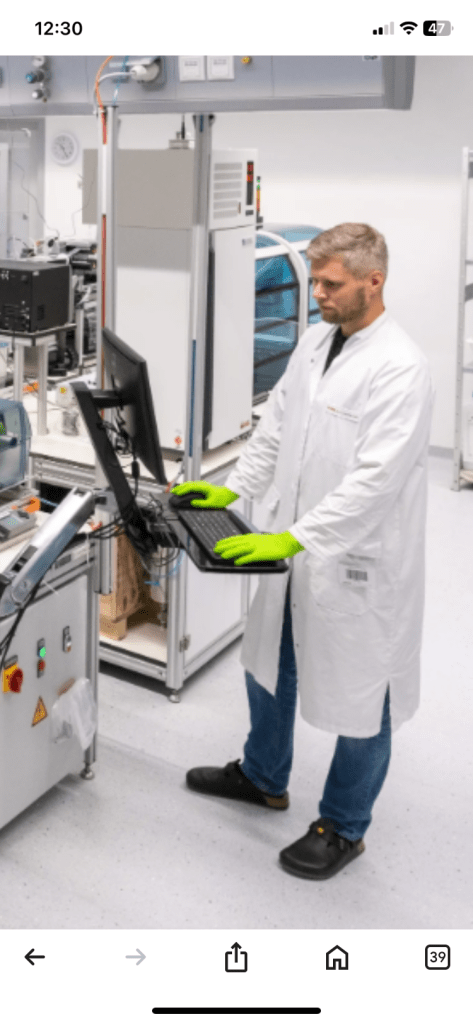
Life is thought to have begun when RNA began replicating itself, and researchers have got close to achieving this in the lab
The goal of understanding how inert molecules gave rise to life is one step closer, according to researchers who have created a system of RNA molecules that can partly replicate itself. They say it should one day be possible to achieve complete self-replication for the first time.
RNA is a key molecule when it comes to the origins of life, as it can both store information like DNA and catalyse reactions like proteins. While it isn’t as effective as either of these, the fact that it can do both means many researchers believe life began with RNA molecules that were capable of replicating themselves. “This was the molecule that ran biology,” says James Attwater at University College London
But creating self-replicating RNA molecules has proved difficult. RNA can form double helices like DNA and can be copied in the same way, by splitting a double helix in two and adding RNA letters to each strand to create two identical helices. The problem is that RNA double helices stick together so strongly that it is hard to keep the strands separate for long enough to allow replication.
Now, Attwater and his colleagues have found that sets of three RNA letters – triplets – bind strongly enough to each strand to prevent this rezipping. Three is the sweet spot, says Attwater, as longer sets are likely to introduce errors. So, in the team’s system, an RNA enzyme in double-helix form is mixed with triplets.
The solution is made acidic and warmed to 80°C (176°F) to separate the helix, allowing the triplets to pair up and form the “rungs” of the double helix. The solution is then made alkaline and cooled to -7°C (19°F). As the water freezes, the remaining liquid becomes highly concentrated and the RNA enzyme becomes active and joins up the triplets, forming a new strand.
So far, the researchers have only been able to replicate up to 30 letters of the 180-letter-long RNA enzyme, but they think that by improving the efficiency of the enzyme, they can achieve complete replication.
Life on earth arisen from non living matter
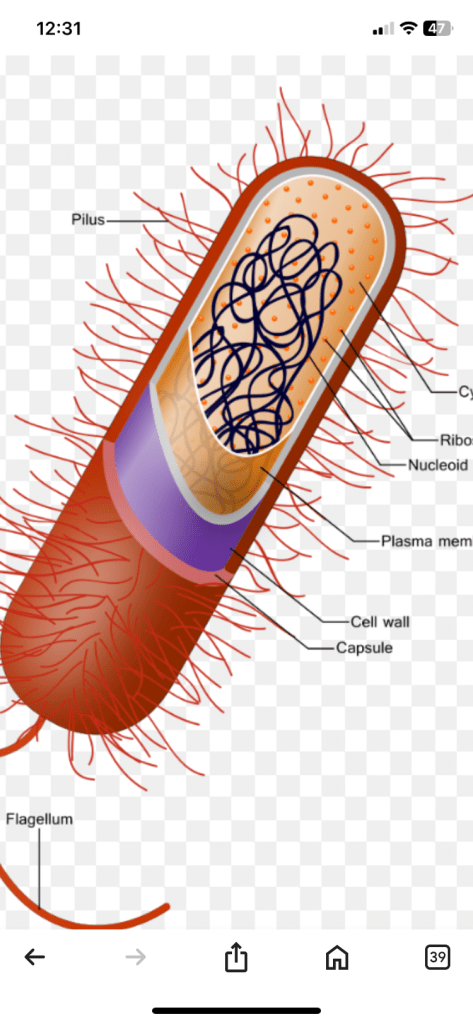
Yes, the scientific consensus is that life on Earth arose from non-living matter through a process called abiogenesis. This is distinct from evolution, which describes how life diversified and changed after its initial appearance.
While we can’t rewind time and observe the exact steps, scientists have made significant strides in understanding plausible pathways through laboratory experiments and theoretical models. Here’s a breakdown of the key concepts and progress:
The Core Idea: From Simple to Complex
Abiogenesis proposes a gradual progression from simple inorganic molecules to complex organic molecules, which then assembled into self-replicating, self-sustaining systems that could undergo natural selection.
Key Theories and Recent Discoveries:
- Primordial Soup Theory (Oparin-Haldane Hypothesis):
- Original Idea: This classic theory suggested that early Earth’s atmosphere, thought to be rich in gases like methane, ammonia, water vapor, and hydrogen, combined with energy sources like lightning and UV radiation, led to the formation of organic molecules in the oceans (the “primordial soup”).
- Miller-Urey Experiment (1952): Famously demonstrated that amino acids (building blocks of proteins) could form under such simulated early Earth conditions.
- Modern Updates: While the exact composition of the early Earth’s atmosphere is still debated (some now suggest a less reducing atmosphere), subsequent experiments have shown that organic molecules can form under various plausible early Earth conditions, including volcanic activity and even in water droplets at air-water interfaces (like sea spray). Researchers have even shown the spontaneous formation of peptides (chains of amino acids) in these conditions.
- The RNA World Hypothesis:
- The “Chicken and Egg” Problem: DNA stores genetic information, and proteins carry out most cellular functions. Which came first?
- RNA as the Solution: RNA can do both! It can store genetic information (like DNA) and also catalyze chemical reactions (like proteins, in the form of “ribozymes”).
- Recent Breakthroughs: Scientists have created synthetic RNA molecules in the lab that can self-replicate and even evolve new catalytic functions. This provides strong support for the idea that RNA could have been the primary genetic and catalytic molecule in early life, paving the way for DNA and proteins.
- Hydrothermal Vents Hypothesis:
- Alternative to the “Warm Little Pond”: This theory suggests that life may have originated not in surface ponds but around deep-sea hydrothermal vents.
- Conditions: These vents provide a continuous supply of chemical energy (e.g., hydrogen sulfide), minerals that can act as catalysts, and temperature gradients, which could have driven the formation of organic molecules and the development of metabolic pathways.
- Evidence: Modern hydrothermal vent ecosystems thrive on chemosynthesis (using chemical energy) rather than photosynthesis, demonstrating a plausible early energy source for life. Experiments have shown that organic molecules can form under simulated vent conditions.
- Protocells and Compartmentalization:
- The Need for Boundaries: For life to evolve, molecules need to be enclosed within a boundary (a cell membrane) to concentrate reactions and protect them from the outside environment.
- Lipids and Self-Assembly: Lipid molecules, which can form spontaneously under early Earth conditions, naturally self-assemble into vesicles (like tiny bubbles).
- Self-Reproducing Coacervate Droplets: A significant recent breakthrough has been the creation of synthetic coacervate droplets that can hold and organize biomolecules and, crucially, have been shown to reproduce themselves in the lab. These protocells are seen as a potential “missing link” between lifeless matter and the first living cells, providing a mechanism for primitive molecular assemblies to proliferate and evolve.
What Does “Non-Living Matter” Mean in this Context?
It refers to inorganic chemicals and simple organic molecules that do not possess the defining characteristics of life (self-replication, metabolism, evolution). Abiogenesis describes the pathways by which these non-living components could have transitioned into the earliest forms of life.
While the complete picture is still being assembled, the progress in abiogenesis research is bringing us closer to understanding how life emerged from the chemical chaos of early Earth. It’s a testament to the power of scientific inquiry to unravel one of the most profound mysteries of existence.
Please like subscribe comment your precious comment on universe discoveries
Full article source google
https://www.amazon.in/b?_encoding=UTF8&tag=555101-21&link
This is Amazon link if you want to buy anything from Amazon you can click on link to help my website universe discoveries grow freinds
https://www.buymeacoffee.com/Satyam55
Please donate me a coffee to help grow my website universe discoveries freinds
 Universe discoveries
Wow that’s awesome
LikeLike
Yes it is dear freind🎸
LikeLiked by 1 person
🙏🌹
Aum Shanti
LikeLike
abiogenesis research is certainly difficult but it is amazing that progress has been made
LikeLike