

Once upon a time, a troop of monkeys lived near a village. The villagers in this village were hardworking and sincere, but also quaint and simple.
One day, a rich merchant came to this snoozy village.
The curious villagers gathered around to see this stranger. The merchant coming forward pompously declared, “I shall buy these village monkeys for $100 each”. The villagers thought this merchant was crazy and they couldn’t fathom why someone would buy stray monkeys for $100 apiece!
Still, excited at the prospect of making some easy money, few villagers caught some monkeys and gave it to this merchant. To their astonishment, he gave them the $100 as promised for each monkey.
This news spread like wildfire, and people started catching these poor monkeys to sell them to this merchant.
A few days later, happy with the response he had received, the merchant decided to double the price of each monkey to $200 each.
Excited and frenzied, the villagers ran around, days on end to catch the remaining monkeys, and sold them to the merchant for $200 each. The merchant, who by now was mighty pleased with the response, announced, he would now buy the monkeys at $500 each! The villagers lost sleep; they caught the last six or seven remaining monkeys and gave them to the merchant for $500 each and now anxiously waited for his next move.
The merchant later came and announced, he was going home for a week and upon his return, would buy more monkeys at $1000 each!
He asked his servants to take care of the monkeys he had bought, then bidding his farewell, left the village for good. Villagers, who by now were rich and accustomed to the easy money, became anxious and sad as there were no monkeys left for them to sell and make more money.
Then one day, the servants of the merchant told some villagers, that they were willing to sell a few of the monkeys at $750 each secretly, before the merchant came back.
This news again became viral and spread like wildfire.
Since the merchant was going to buy the monkey’s back at $1000 each, there was more profit to be made.
Villagers pooled in all they had saved so far and even raised more capital to buy the monkeys.
The rich bought monkeys in bulk, the poor borrowed money from others to buy as many as they could afford.
They made a queue at the merchant’s house the next day, to get their dear monkeys back.
The servants sold all the monkeys at $750 each, within a day.
After the successful sale of Monkey’s to the villagers, the servants too left the village, informing them, they would return with their master and asked them to take good care of their monkeys in their absence.
The villagers took excellent care of their monkeys and waited patiently for the merchant to return.
Weeks turned into months, but nobody came!
It slowly dawned upon the villagers that they had invested all their savings to buy useless stray monkeys at $750 each! The Merchant and his servants were now gone forever with their money and all they were left with were “Big Fat Monkeys”.
This story teaches us a lot about how some big IPO’s and Ponzi schemes work.
- The Merchants are the promoters of the company, who list on the stock markets, to attract your capital, in the promise of lucrative returns. Making tall promises, inflating the share price, and creating people frenzy is all part of the scheme.
- The servants are the bankers, who sell these company shares to the gullible investors at high prices, and end up trapping them with the promise of high returns.
- Villagers are you and me, who invest in these companies with the fear of missing out, without actually knowing what the company does, and are purely lured by the offer of high returns and easy money.
- The Monkeys are the useless stocks that we are left with when the company folds up. They are not even worth their weight on paper.
It’s true what they say about the stock market.
“ It made many more bankrupt and very few filthy rich, this monkey business”
Sharemarket as jungle of money
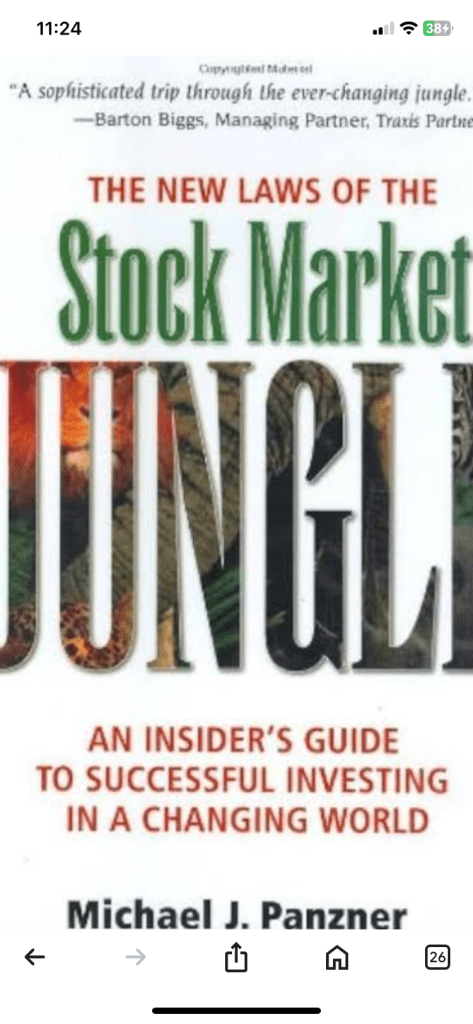
Sharemarket as jungle of money:
The analogy of the share market as a “jungle of money” is quite apt, as it evokes a sense of both opportunity and peril, much like a real jungle. Let’s break down why this comparison holds true:
Why it’s a “jungle”:
- Diversity of Species (Companies): Just as a jungle teems with various plants and animals, the share market is populated by an immense variety of companies, each with its own characteristics, growth potential, risks, and cycles. You have large, established “elephants” (blue-chip companies), nimble “deer” (growth stocks), and even dangerous “predators” (speculative or struggling companies).
- Survival of the Fittest (Competition): Companies are constantly competing for market share, innovation, and investor capital. Only the strongest, most adaptable, and well-managed companies tend to thrive and survive in the long run.
- Unpredictable Environment (Volatility): Jungles can be subject to sudden storms, droughts, or shifts in the ecosystem. Similarly, the share market is highly volatile, influenced by economic news, political events, global crises, and investor sentiment. Prices can swing wildly, creating both opportunities and significant risks.
- Hidden Dangers and Traps (Risks): Just as a jungle can have quicksand, venomous creatures, or treacherous terrain, the share market has its own hidden dangers:
- Market Manipulation: Unscrupulous individuals or groups can try to artificially inflate or deflate stock prices.
- Fraud and Scams: There are always risks of companies engaging in deceptive practices.
- Information Asymmetry: Some investors may have access to more or better information than others.
- Emotional Biases: Fear and greed can lead investors to make irrational decisions, falling into “traps” of FOMO (Fear Of Missing Out) or panic selling.
- Opportunities for Growth and Discovery (Wealth Creation): Despite the dangers, a jungle is also a place of immense natural wealth and opportunity. The share market, for those who understand its dynamics and approach it strategically, offers unparalleled potential for wealth creation and financial growth.
- Need for Knowledge and Skill (Navigation and Survival): You wouldn’t venture into a real jungle without a guide, knowledge of the terrain, and survival skills. Similarly, navigating the share market requires knowledge of financial principles, research skills, risk management, and a disciplined approach. Blindly investing is like walking into a jungle without a map.
- Ecosystem of Interdependence: The various parts of the market (companies, sectors, indices, global economies) are interconnected, much like the delicate balance of an ecosystem. A change in one area can have ripple effects throughout the market.
“Of money”:
The “of money” part is self-explanatory. The share market is essentially a vast system where capital is exchanged, invested, and hopefully, grown. It’s where money is put to work, creating returns for some and losses for others.
In conclusion:
The “sharemarket as a jungle of money” is a powerful metaphor that highlights its dynamic, competitive, and often perilous nature, while also emphasizing its immense potential for those who learn to navigate it wisely. It underscores the need for knowledge, caution, and a well-thought-out strategy to survive and thrive in this financial ecosystem.
Please like subscribe comment your precious comment on universe discoveries
Full article source google
https://www.amazon.in/b?_encoding=UTF8&tag=555101-21&link
This is Amazon link if you want to buy anything from Amazon you can click on link to help my website universe discoveries grow freinds
https://www.buymeacoffee.com/Satyam55
Please donate me a coffee to help grow my website universe discoveries freinds
 Universe discoveries
Very interesting read.
LikeLiked by 1 person
🙏🙈🙉🙊
Aum Shanti
LikeLike