
Who is your favorite historical figure?
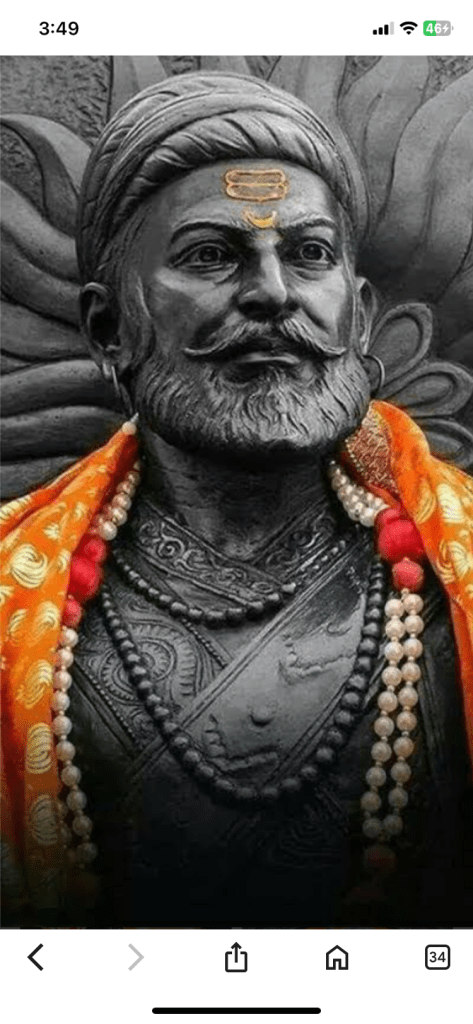
Chhatrapati Shivaji Maharaj (born February 19, 1630, Shivneri Fort, near Pune, Maharashtra – died April 3, 1680, Raigad) was an iconic Indian ruler and the founder of the Maratha Empire. His life and reign are a testament to his exceptional courage, strategic brilliance, and administrative acumen.
Early Life and Influences:
Shivaji was born to Shahaji Bhonsle, a prominent Maratha general serving the Deccan Sultanates (primarily Bijapur), and Jijabai, a deeply pious and strong-wwilled woman. Jijabai played a profound role in shaping Shivaji’s character, instilling in him a sense of justice, pride in his Hindu heritage, and the dream of establishing “Hindavi Swarajya” (self-rule of Hindu people) free from foreign domination. He was brought up in Poona (now Pune) under her guidance and the tutelage of Dadaji Kondadev, who trained him in military warfare, administration, and moral values.
The Genesis of Swarajya:
In the 17th century, India was largely under Muslim rule, with the powerful Mughal Empire in the north and the Sultanates of Bijapur and Golconda in the south. Shivaji, observing the prevailing oppression and religious persecution of Hindus, felt a strong conviction to liberate his people.
He began his military career at a young age, around 1645, by seizing weaker Bijapur outposts. His early conquests included strategically important forts like Torna and Kondana (later known as Sinhagad). These early successes marked the beginning of his defiance against the Adilshahi Sultanate of Bijapur.
Military Prowess and Guerrilla Warfare:
Shivaji is renowned for his innovative military tactics, particularly his mastery of guerrilla warfare (also earning him the moniker “Mountain Rat”). He leveraged his deep understanding of the rugged Deccan terrain to conduct surprise attacks, ambushes, and swift maneuvers against numerically superior enemy forces. This allowed him to defeat armies from Bijapur and the formidable Mughal Empire.
Some of his notable military engagements and feats include:
- Defeating Afzal Khan (1659): This was a pivotal moment where Shivaji famously confronted and killed the Bijapur general Afzal Khan, leading to a decisive victory for the Marathas at the Battle of Pratapgad.
- Sack of Surat (1664, 1670): Shivaji twice raided the wealthy Mughal port city of Surat, enriching his treasury and signaling his growing power.
- Treaty of Purandar (1665): After suffering a defeat against Mughal general Mirza Raja Jai Singh, Shivaji was forced to sign the Treaty of Purandar, ceding many forts. However, this period also saw him visit Aurangzeb’s court in Agra, where he was put under house arrest but famously escaped.
- Battle of Sinhagad (1670): A fierce battle where his brave general Tanaji Malusare sacrificed his life to recapture the strategically important Kondana fort, which was then renamed Sinhagad (“Lion’s Fort”) in his honor.
- Battle of Salher (1672): A significant victory against the Mughals, demonstrating the growing strength of the Maratha army.
Coronation and Administration:
In 1674, Shivaji formally crowned himself as Chhatrapati (Emperor) of his realm at Raigad Fort. This coronation was a landmark event, signifying the establishment of an independent Hindu kingdom and challenging the existing imperial order. He assumed the title of ‘Haidava Dharmodharka’ (Protector of Hindu faith).
Shivaji was not just a warrior but also an exceptional administrator. He established a competent and progressive civil rule with a well-structured administrative system, which included: - Ashtapradhan Mandal (Council of Eight Ministers): A council of eight ministers who advised him on matters of state, though the ultimate decision-making power rested with him.
- Revenue System: He implemented a just and efficient land revenue system.
- Military Organization: He created a highly disciplined military, comprising infantry, cavalry, and a strong navy. He is often called the “Father of the Indian Navy” for his foresight in recognizing the importance of naval power and building a fleet and coastal forts (like Sindhudurg and Vijaydurg) to protect his maritime interests.
- Religious Tolerance: Despite being a devout Hindu and a protector of his religion, Shivaji was known for his policy of religious toleration. His army included Muslim soldiers, and he treated all religious communities with respect.
- Promotion of Marathi and Sanskrit: He encouraged the use of Marathi and Sanskrit in court and administration, moving away from the Persian language prevalent in the Mughal and Deccan Sultanate courts.
Legacy:
Chhatrapati Shivaji Maharaj passed away on April 3, 1680, at Raigad Fort. His legacy is immense and continues to inspire millions. He is remembered as: - The founder of the Maratha Empire, which played a crucial role in the decline of the Mughal Empire and the rise of indigenous power in India.
- A master of guerrilla warfare and an innovative military strategist.
- A visionary ruler who established a just and efficient administration.
- A protector of Hindu dharma who also practiced religious tolerance.
- A symbol of resistance, courage, and self-rule (Swarajya), particularly in Maharashtra, where he is revered as a national hero.
His achievements laid the groundwork for the Maratha Confederacy, which continued to be a major force in Indian politics for over a century after his death.
Shivaji empire and maratha empire
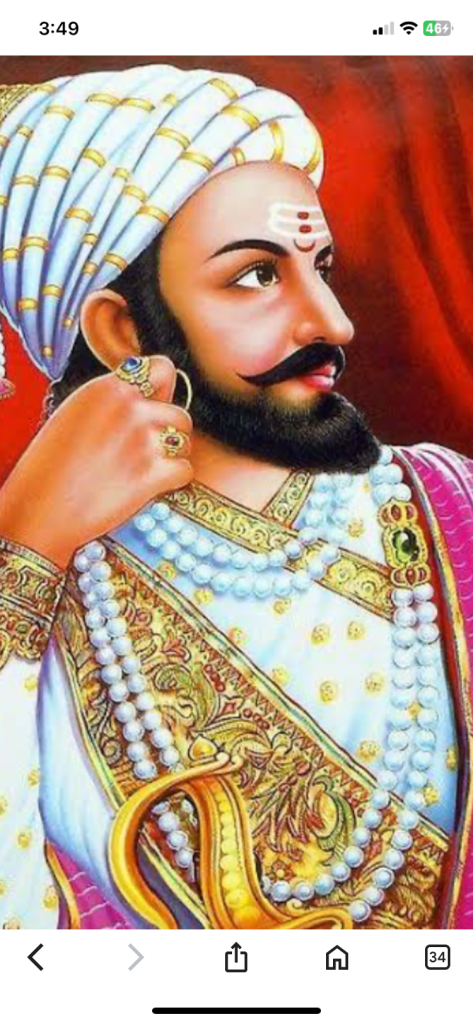
While the terms “Shivaji’s Empire” and “Maratha Empire” are often used interchangeably, there’s a crucial distinction in their scope and evolution. Think of Shivaji’s Empire as the foundational kingdom that eventually blossomed into the much larger and more widespread Maratha Empire.
Here’s a breakdown:
- Shivaji’s Kingdom (1674 – 1680):
- Founder: Chhatrapati Shivaji Maharaj.
- Period: His reign as the crowned Chhatrapati from 1674 until his death in 1680.
- Extent: At the time of his death, Shivaji’s kingdom was a formidable power concentrated primarily in the Deccan region, specifically modern-day Maharashtra and parts of Karnataka and Tamil Nadu (due to his southern campaigns). It was a well-organized, compact state with a strong military, efficient administration (Ashtapradhan Mandal), and a network of strategically built and maintained forts. His kingdom was relatively centralized, with ultimate authority resting with him.
- Nature: It was the genesis of Maratha power, establishing the concept of “Hindavi Swarajya” (self-rule) and demonstrating the ability of Marathas to resist powerful external forces like the Bijapur Sultanate and the Mughal Empire. He carved this kingdom out through brilliant guerrilla warfare and shrewd political maneuvering.
- Key Achievement: Establishing an independent, sovereign Maratha state, defending it against larger empires, and creating a strong administrative and military framework.
- The Maratha Empire (Early 18th Century – 1818):
- Evolution: This refers to the much larger and more expansive entity that emerged after Shivaji’s death, particularly under the Peshwas (hereditary prime ministers) and various Maratha chieftains.
- Period: From the early 18th century, especially after the death of Aurangzeb and the subsequent Mughal decline, until its eventual defeat by the British in the Anglo-Maratha Wars (ending in 1818).
- Extent: At its peak in the mid-18th century, the Maratha Empire dominated a vast swathe of the Indian subcontinent, stretching from the Deccan to parts of central and northern India. It covered significant portions of present-day Maharashtra, Madhya Pradesh, Gujarat, Karnataka, Odisha, and even exercised influence over Rajasthan, Punjab, and parts of Uttar Pradesh.
- Nature: It transformed into a confederacy or a loose empire, with powerful Maratha families (like the Scindias of Gwalior, Holkars of Indore, Gaekwads of Baroda, and Bhonsales of Nagpur) ruling semi-autonomous regions under the nominal leadership of the Chhatrapati (who mostly remained at Satara) and the de facto control of the Peshwas from Pune.
- Key Achievement: Replacing the Mughals as the dominant power in much of India, spreading Maratha influence across a huge geographical area, and becoming a formidable force that the British East India Company had to contend with for decades.
In essence: - Shivaji’s Empire was the kingdom founded by Shivaji, a relatively compact and well-governed state in the Deccan, built on principles of self-rule and strong administration.
- The Maratha Empire was the expansive, confederate entity that grew out of Shivaji’s initial kingdom after his death, particularly under the Peshwas, dominating a large part of India in the 18th century.
Shivaji’s vision, military tactics, and administrative structure provided the foundational blueprint. His successors, especially the Peshwas, capitalized on the weakening Mughal Empire to expand Maratha power significantly, transforming Shivaji’s kingdom into a sprawling, albeit sometimes fragmented, empire.
Please like subscribe comment your precious Comment on universe discoveries
Full article source google
 Universe discoveries
Right
LikeLiked by 1 person
Nice 🙏🌹👍
Aum Shanti
LikeLiked by 1 person
Mughal Emperor Humayun, the second ruler of the Mughal dynasty, remains a significant yet often overshadowed figure in Indian history. Born on March 6, 1508, in Kabul, he was the eldest son of Babur, the founder of the Mughal Empire. Humayun’s reign was marked by both setbacks and recoveries, shaping the foundations upon which his son, Akbar the Great, would later build one of the most powerful empires in South Asia.
https://www.indianetzone.com/humayun
LikeLike