
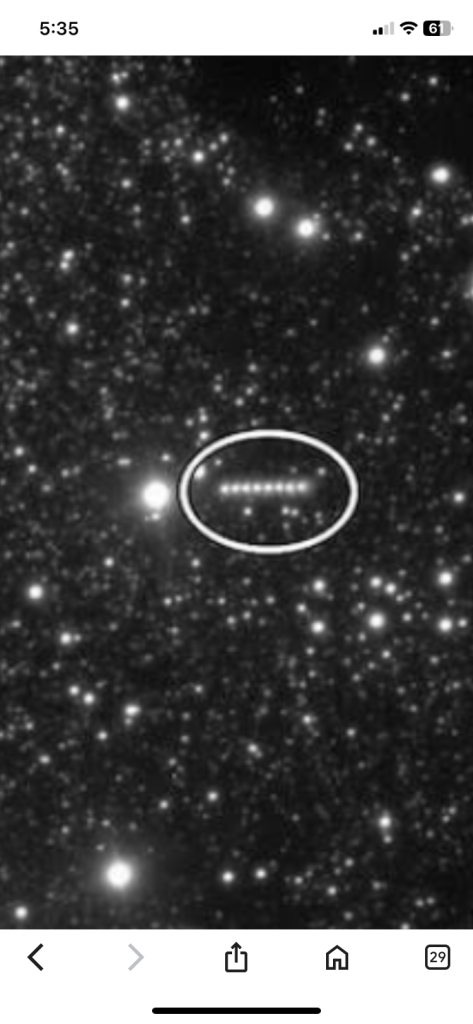
Based on the information available, there is a scientific proposal to extend the mission of NASA’s Juno spacecraft to observe a newly discovered interstellar object named 3I/ATLAS.
Here’s a breakdown of the situation and the “spying on us” question:
- The Interstellar Object: 3I/ATLAS was discovered in July 2025. It is the third confirmed interstellar object to be detected in our solar system, and its trajectory will bring it relatively close to Jupiter. The object’s unusual speed and path have led to some speculation about its nature, with some, like Harvard scientist Avi Loeb, suggesting it could be an alien probe. However, this remains unconfirmed speculation. The primary scientific goal is to determine its composition and nature.
- The Juno Mission: The Juno spacecraft has been orbiting Jupiter since 2016, studying the planet’s atmosphere, magnetic field, and other characteristics. Its mission was originally planned to end in 2025 by deorbiting into Jupiter’s atmosphere.
- The Proposal: A recent proposal suggests a maneuver to prevent Juno from deorbiting and instead use its remaining fuel to adjust its trajectory. This would allow it to intercept 3I/ATLAS as it passes near Jupiter. This would be a unique opportunity for a close-up look at an object from another star system, providing data that can’t be gathered from Earth-based telescopes.
- The “Spying” Question: The headline “Is it spying on us?” refers to the speculative nature of 3I/ATLAS as a potential alien probe, not to the Juno spacecraft itself. The Juno spacecraft is a NASA mission built to study Jupiter, not Earth. Its cameras and other instruments are not designed or positioned to observe Earth. The idea of “spying” is tied to the unknown nature of the interstellar object, and the proposal is to use Juno to get a closer look at it, not for Juno to spy on Earth.
In short, the Juno spacecraft is a scientific instrument designed for studying Jupiter. The proposal to redirect it is a clever way to extend its scientific life and gather unprecedented data on a new interstellar visitor. The “spying” element is a sensationalist way to refer to the unproven theory that the interstellar object itself could be an alien probe.
The 3 atlas
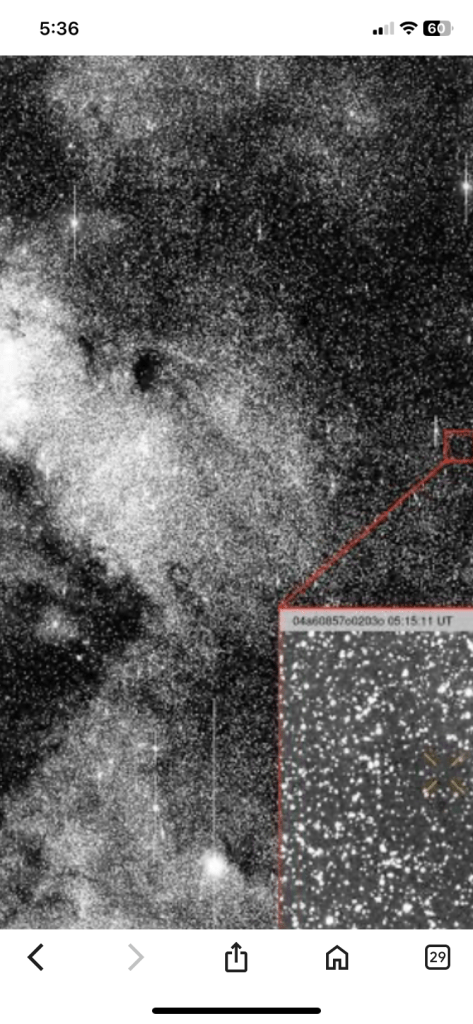
Discovered in July 2025, 3I/ATLAS is the third confirmed interstellar visitor traversing our solar system, following ‘Oumuamua and Comet Borisov.
In Short
- Juno is equipped with advanced instruments capable of probing 3I/ATLAS’s composition
- It could deepen understanding of interstellar visitor
- There is also speculative intrigue around the nature of 3I/ATLAS
Months after ground telescopes on Earth discovered the third interstellar object infiltrating our Solar System, scientists are raising concerns that it may be more than that.
The object named 3I/ATLAS is set to make a close pass near Jupiter on March 16, 2026, at approximately 53.5 million kilometers. The arrival of this rare visitor from beyond our solar system has spurred scientists to consider an unprecedented move: rerouting Nasa’s Juno spacecraft, currently orbiting Jupiter, to intercept and study the object up close.
Discovered in July 2025, 3I/ATLAS is the third confirmed interstellar visitor traversing our solar system, following ‘Oumuamua and Comet Borisov. It is notable for its large nucleus, estimated at around 5.6 kilometers in diameter, and its high speed of 58 km/s relative to the Sun
Unlike prior interstellar visitors, 3I/ATLAS’s trajectory will bring it relatively close to Jupiter, offering a unique opportunity for direct scientific investigation.
The plan, proposed in a draft paper, involves a precise engine burn by Juno on September 9, 2025, to adjust its orbit around Jupiter. Utilising a gravity-assisted “Jupiter Oberth Manoeuvre,” Juno would gain the velocity and directional change needed to intercept 3I/ATLAS about two days before the comet’s closest approach to Jupiter, potentially as near as 27 million kilometers.
The juno and it’s equipment’s

The Juno spacecraft is a highly specialized scientific probe designed to study Jupiter, and it is equipped with a suite of instruments tailored for this purpose. The mission’s primary objectives are to understand the origin and evolution of Jupiter, which can provide insights into the formation of our entire solar system.
Here is a breakdown of the key instruments and their functions:
- JunoCam:
- This is a visible-light camera that provides stunning images of Jupiter’s cloud tops and poles.
- It’s designed for public outreach, and the public can actually vote on which features to photograph.
- The camera uses a “push-broom” imager, which means it builds an image by sweeping the sensor over an area as the spacecraft rotates.
- It has four filters: red, green, blue, and a narrowband methane filter, which helps scientists measure the height of clouds.
- Microwave Radiometer (MWR):
- This instrument is designed to peer deep into Jupiter’s atmosphere, below the visible cloud tops.
- It measures the thermal radiation emitted from various depths to determine the amount of water and ammonia in the atmosphere.
- This data is crucial for understanding Jupiter’s composition and how it formed.
- Jovian Infrared Auroral Mapper (JIRAM):
- JIRAM is a spectrometer and imager that studies the planet’s aurorae and the upper layers of its atmosphere.
- It can observe clouds and hot spots in the atmosphere and helps scientists understand the complex dynamics of Jupiter’s weather systems.
- Magnetometer (MAG):
- This instrument is a suite of two magnetometers designed to map Jupiter’s immense magnetic field.
- By studying the magnetic field, scientists can gain insights into the planet’s interior structure, including the presence and nature of a possible solid core.
- Gravity Science (GS):
- This isn’t a single instrument but a technique that uses the spacecraft’s radio signals.
- By precisely measuring subtle changes in Juno’s velocity as it flies past Jupiter, scientists can map the planet’s gravitational field.
- This data helps to reveal the distribution of mass within Jupiter and whether it has a dense core.
- Jovian Auroral Distributions Experiment (JADE) and Jupiter Energetic Particle Detector Instrument (JEDI):
- These two instruments work together to measure the charged particles and plasma in Jupiter’s auroral regions.
- They help to explain how Jupiter’s powerful magnetic field creates the spectacular aurorae at its poles.
- Ultraviolet Imaging Spectrograph (UVS) and Waves:
- UVS studies Jupiter’s ultraviolet auroral emissions.
- The Waves instrument measures radio and plasma waves in Jupiter’s magnetosphere.
All of these instruments are protected from Jupiter’s deadly radiation by a titanium “radiation vault,” a first-of-its-kind feature designed to shield the spacecraft’s sensitive electronics. The combination of these instruments provides a comprehensive picture of Jupiter’s interior, atmosphere, and magnetosphere, which is why a potential new mission to observe an interstellar object would be so exciting—it would apply these advanced tools to an entirely new and different type of target.
Please like subscribe comment your precious comment on universe discoveries
Full article source google
 Universe discoveries
🙏🌹
Aum Shanti
LikeLiked by 3 people