
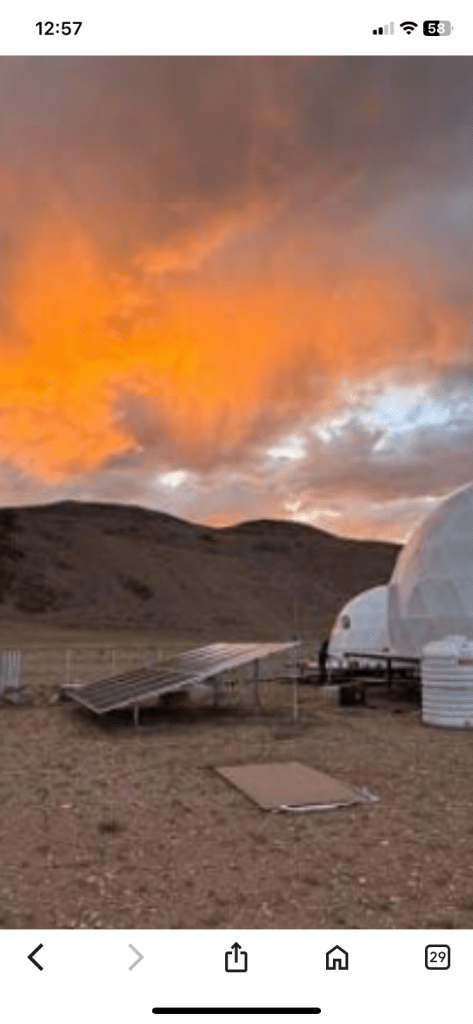
Two scientists, aerospace engineer Rahul Mogalapalli and astrobiologist Yaman Akot, have entered a space bubble in Ladakh for a 10-day analogue mission to test human endurance for future interplanetary missions.
This mission, called the Himalayan Outpost for Planetary Exploration (HOPE), is a collaboration between the Indian Space Research Organisation (ISRO) and the Bengaluru-based firm Protoplanet. The facility is located at Tso Kar, Ladakh, at an altitude of approximately 14,000 feet, an environment chosen for its similarities to the Moon and Mars, including high UV flux, low air pressure, extreme cold, and saline permafrost.
The two scientists will live in a specially designed habitat module, simulating the isolation and conditions of a real space mission. The primary goal is to study the genetic and psychosocial changes in humans under high-altitude stress. Researchers will collect various biological samples and monitor the crew’s physiological and psychological responses to validate health-monitoring protocols and refine mission procedures.
The HOPE mission is part of India’s larger space ambitions, including the Gaganyaan program and long-term plans for crewed lunar and planetary missions. The data gathered from this experiment will be crucial for designing future human exploration missions and developing the necessary infrastructure and technologies.
Bengaluru-based space tech company Protoplanet, along with the Indian Space Research Organisation (ISRO), has developed the analogue station, called the Human Outer Planet Exploration (HOPE) station, with the aim of conducting “critical research for future crewed interplanetary journeys”, according to a statement by the firm.
The station marks a significant step towards India’s human space exploration ambitions, helping scientists and researchers understand the physiological and psychological aspects of long-duration space travel.
The site at Tso Kar, located at an altitude of over 14,500 feet, was chosen because of its terrain and environment, which closely mimics conditions on the Moon and Mars. “The coming together of this site has taken over nine years of work,” the Bengaluru-based company said.
An analogue research station is a site with conditions closest to a planet or planetary body with regard to the topography, environment, etc. These stations usually act as testing grounds for relevant technologies, help advance technology readiness levels (TRL) and engineering integration, and facilitate human studies, crew training and research around geological, geomorphological, habitability, and life detection.
The similarity in conditions helps scientists replicate interplanetary mission experiments and train astronauts under specific conditions.
Currently, there are 33 analogue research stations in the world. Some of the prominent ones are the BIOS-3 in Russia, which is a closed-loop biodome located at the Institute of Biophysics; HERA at the US’ Johnson Space Centre, a two-storey, four-port habitat; SHEE in Europe, a self-deployable portable habitat for extreme conditions; and the Mars Desert Research Station (MDRS) in the US’ Utah, a private property developed for research with multiple observatories and an analogue habitat.
The pilot crew

Mogalapalli and Akot are the first batch of scientists to undertake HOPE’s pilot mission. They were selected from a pool of 135 applicants who had volunteered for the project
During their 10-day stay, they will be tested in isolated conditions designed to test and refine astronaut training for long-duration interplanetary missions. The outcome of their experience will be used to refine protocols for human spaceflights.
To prepare for the pilot, both crew members had to undergo training in confined habitat simulations. They were also put through medical tests and check-ups to ensure they were medically fit to carry out the mission. Before the final mission, the duo were also part of a 15-day pre-mission endurance training.
A senior ISRO official told ThePrint that such sites will be essential in advancing India’s human spaceflight ambitions. “We will be encouraging more private players to enter the field and develop infrastructure that can be used for advancing India’s space missions. If you see, this is the same model that is followed by the US.”
Hope mission can add to mars missions
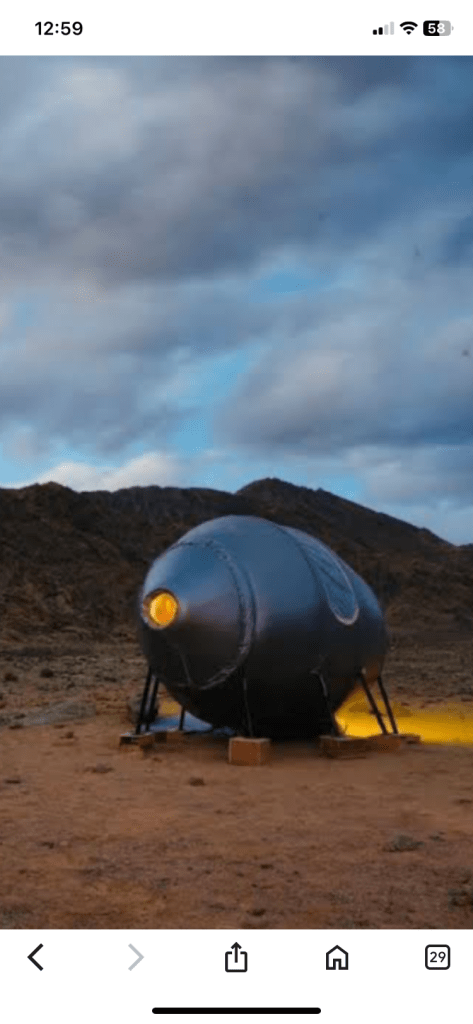
The HOPE (Himalayan Outpost for Planetary Exploration) mission in Ladakh is a significant step in preparing for future human missions to Mars. The mission is designed as a “rehearsal” for interplanetary travel, and the data it gathers will be crucial for several aspects of a Mars mission.
Here’s how the HOPE mission can contribute to Mars missions:
- Simulating Martian Conditions: The location in Ladakh’s Tso Kar valley was specifically chosen for its striking environmental parallels to Mars. The high altitude, low atmospheric pressure, extreme cold, high UV radiation, and saline permafrost create a perfect analogue environment to test technologies and human endurance.
- Human Factors Research: One of the main goals of the HOPE mission is to study the genetic, physiological, and psychological responses of the crew members under extreme stress and isolation. A mission to Mars would involve long periods of isolation and confinement, and understanding how these conditions affect the human body and mind is critical for ensuring the crew’s well-being and mission success. The research will also help in validating health-monitoring protocols and developing countermeasures for the challenges of long-duration spaceflight.
- Validating Technology and Protocols: The mission allows for the testing of various technologies and operational protocols in a simulated space environment. This includes life-support systems, habitation modules, crew workflows, and procedures for planetary surface operations like sample collection and microbial analysis. The insights gained will be used to design the infrastructure and procedures for future Indian human exploration missions.
- Preparing for India’s Future Space Ambitions: The HOPE mission is part of India’s larger space program, which includes the Gaganyaan program for human spaceflight and a long-term goal of a crewed lunar landing by 2040. The knowledge and experience gained from this and similar analogue missions are fundamental to building the capabilities required for more ambitious interplanetary missions to Mars and beyond.
The HOPE mission is not an isolated effort; it joins a global trend of analogue research missions aimed at preparing humanity for a sustainable presence on other planets. The valuable data generated from this mission will contribute to the international knowledge base for future planetary exploration.
Please like subscribe comment your precious comment on universe discoveries
Full article source google
https://www.amazon.in/b?_encoding=UTF8&tag=555101-21&link
https://www.buymeacoffee.com/Satyam55
https://youtube.com/shorts/_Ie1UKRrvPs?si=_RuY4c5KrQPW8kKt
Click on the above link to watch hope mission video
 Universe discoveries
🙏🌹
Aum Shanti
LikeLike
💯💓🌷
LikeLiked by 1 person
Thanks
LikeLiked by 1 person