

Astronomers have detected key components of life’s building blocks, including potential precursors to sugars and amino acids, in the protoplanetary disk of a young star. The star, V883 Orionis, is about 1,350 light-years away. This finding suggests that the chemical ingredients for life may be more common in the universe than previously thought. The molecules were detected using the Atacama Large Millimeter/submillimeter Array (ALMA) in Chile. The intense energy from the “baby” star’s growth spurt is believed to have heated the surrounding disk, releasing the molecules from the ice grains where they were trapped.
The fundamental building blocks of life on Earth are macromolecules, which include nucleic acids (DNA and RNA), proteins, lipids, and glycans. These complex molecules are constructed from smaller units:
- Nucleotides make up nucleic acids, which store and transmit genetic information.
- Amino acids form proteins, which carry out a vast array of functions within a cell.
- Lipids form cell membranes and store energy.
- Glycans, or carbohydrates, are used for energy and structural support.
What You Need to Know About the Building Blocks of Life
This video provides an overview of the essential building blocks of life and their potential origins in space.
Our results suggest that protoplanetary disks inherit complex molecules from earlier stages,” explains astrochemist Kamber Schwarz of the Max Planck Institute for Astronomy (MPIA) in Germany, “and the formation of complex molecules can continue during the protoplanetary disk stage
Stars and their planets are born from dense clouds of cold molecular gas and dust that drift through galaxies. When a clump of gas becomes dense enough, it collapses under its own gravity to form a spinning, dense mass.
Material continues to fall in from the cloud as the newly formed sun grows, angular momentum forcing surrounding dust to arrange itself in the shape of a disk that spools into and feeds the star
Eventually, stellar winds and radiation pressure will push the material away from gravitational reach; what’s left of the disk is what the planets form out of. You are literally made of star leftovers… that’s a fun thought.
The processes involved in this formation, in addition to rampant flare activity from a tempestuous new star, have been considered a barrier to the survival of biomolecules within the protoplanetary disk. Thus, any biomolecules that contribute to planet formation must, in theory, have formed after the star has undergone its destructive shenanigans.
This brings us to a still-forming protostar called V883 Orionis, a star about 1,350 light-years away that is still in its destructive phase. Using the Atacama Large Millimeter/submillimeter Array (ALMA) in Chile, a team led by MPIA astronomer Abubakar Fadul has studied the spectrum of light, and found evidence of at least 17 complex organic molecules.
Those molecules include ethylene glycol (a simple sugar alcohol from which more complex molecules can form) and glycolonitrile (a precursor of the amino acids glycine and alanine, and the nucleobase adenine).
Their presence in the protoplanetary disk of an outbursting protostar suggests that they are inherited from the molecular cloud, filling in an evolutionary gap between pre- and post-stellar disk biochemistry.
Our finding points to a straight line of chemical enrichment and increasing complexity between interstellar clouds and fully evolved planetary systems,” Fadul says.
What are building blocks of life in universe
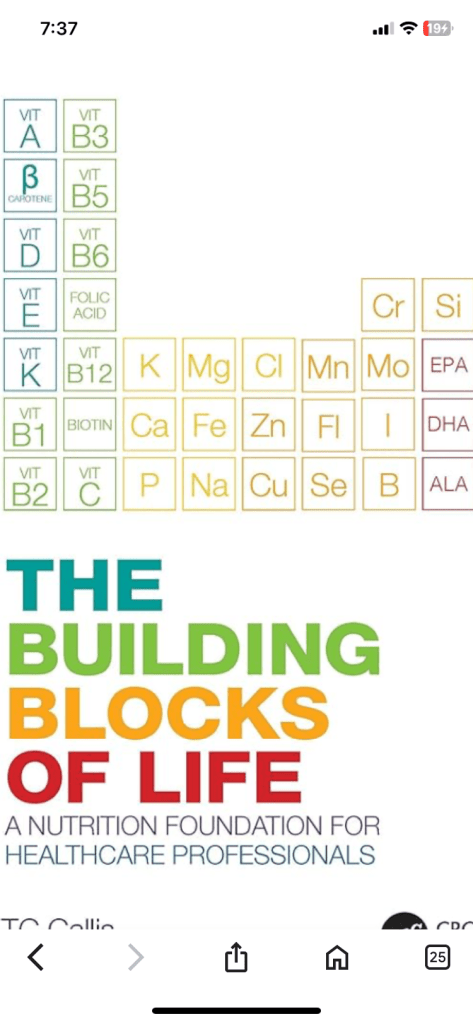
The primary building blocks of life are the elements carbon, hydrogen, nitrogen, oxygen, phosphorus, and sulfur, often abbreviated as CHNOPS. These elements, particularly carbon, are essential for forming the complex organic molecules that constitute life as we know it.
Origin of Building Blocks
The CHNOPS elements, along with other atoms, are forged in the fiery hearts of stars and dispersed throughout the universe when those stars die in massive explosions called supernovae. This interstellar material, enriched with the necessary ingredients, then forms new generations of stars and planetary systems.
Astronomers have found evidence of these “prebiotic” molecules—molecules that are precursors to life’s building blocks—in various cosmic environments:
- Interstellar clouds: These vast clouds of gas and dust are stellar nurseries. Researchers have detected simple organic molecules, such as methanol and carbon monoxide, that can act as the foundation for more complex molecules.
- Protoplanetary disks: These are the swirling disks of gas and dust around young stars where planets are forming. Recently, astronomers detected complex organic molecules, including precursors to sugars and amino acids, in a protoplanetary disk around the star V883 Orionis. This suggests that the chemical ingredients for life may be inherited by planets as they form.
- Comets and asteroids: Some theories propose that life’s building blocks were delivered to early Earth by these celestial bodies. Evidence from meteorites has shown the presence of amino acids and other organic compounds, supporting the idea that the components of life may have originated in space.
Please like subscribe comment your precious thoughts on universe discoveries
Full article source google
https://www.amazon.in/b?_encoding=UTF8&tag=555101-21&link
https://www.buymeacoffee.com/Satyam55
https://youtube.com/shorts/rcJu9Me9VRw?si=wBc4EqZpw9x5Ugtm
Please click on the above link to see video on building blocks of life
 Universe discoveries
Nice information.
LikeLiked by 1 person
🙏🌹
Aum Shanti
LikeLiked by 1 person
Nice post 💯
LikeLiked by 1 person
Finding evidence of at least 17 complex organic molecules is quite impressive. Interesting post.
LikeLiked by 2 people
Thanks thomas 🎸
LikeLiked by 1 person