
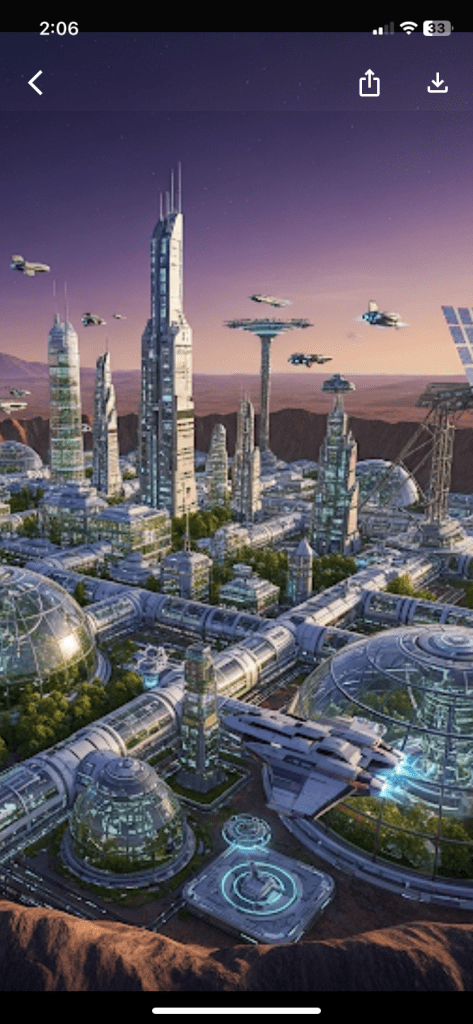
The concept of space colonies, once a staple of science fiction, is now moving from theoretical to the realm of serious scientific and engineering consideration. While no permanent space settlements have been established yet, various governments and private companies are actively developing the technologies and plans that could make them a reality.
Proposed Locations for Space Colonies
The leading candidates for future space settlements are:
• Earth’s Moon: Its proximity to Earth makes it an accessible and logical first step for long-term human presence in space. The Moon offers resources like oxygen, silicon, and metals, and its poles may contain water ice. The Artemis program by NASA aims to establish a sustainable human presence on the Moon.
• Mars: As the most Earth-like planet in our solar system, Mars is a primary long-term goal for human exploration and colonization. It has all the necessary materials for a colony, including water, carbon, and nitrogen. SpaceX has made Mars colonization a core part of its mission.
• Orbital Settlements: Rather than living on a planetary body, these colonies would be large, self-contained habitats in orbit around Earth or other celestial bodies. A key advantage is that they can be built to rotate, creating artificial gravity to mitigate the health effects of microgravity. These settlements would likely be built with materials mined from the Moon or asteroids, as launching from Earth is incredibly expensive.
• Asteroids: These celestial bodies are rich in valuable resources like metals, water, carbon, and nitrogen. They could be a source of materials for both Earth-based industries and the construction of orbital colonies.
Key Challenges and Considerations
Building and sustaining a space colony presents a vast array of challenges:
• Radiation: Outside of Earth’s protective atmosphere and magnetic field, space is a hostile environment with lethal levels of cosmic rays and solar flares. Colonies would require substantial shielding, likely using materials like lunar regolith or asteroid matter.
• Life Support: A space colony must be a closed ecological system, capable of endlessly recycling all resources, including oxygen, water, and waste. This requires highly reliable technology to maintain a breathable atmosphere, grow food, and manage waste.
• Human Health: Prolonged exposure to low or no gravity can cause significant health problems, including muscle atrophy and bone density loss. Rotating habitats that create artificial gravity are a proposed solution for orbital colonies, but the challenge remains for colonies on the Moon or Mars.
• Psychological Toll: The isolation, confinement, and close proximity of living in a small community in an extreme environment can have a severe psychological impact on colonists.
• Logistics and Cost: Launching materials from Earth is prohibitively expensive. This means that a viable space colony would need to be largely self-sufficient, using a process called in-situ resource utilization (ISRU) to create structures, fuel, and other necessities from local materials.
• Governance and Ethics: As humanity expands into space, complex questions will arise about governance, property rights, and the ethical implications of mining and settling other celestial bodies. Current international space law prohibits territorial claims, but the emergence of private enterprises with commercial interests may test these agreements.
The Vision for the Future
Despite the immense challenges, the push for space colonization is driven by several motivations:
• Human Survival: Proponents argue that becoming a multi-planetary species is a way to ensure the long-term survival of humanity in the face of potential catastrophes on Earth.
• Scientific Discovery: A permanent presence in space would unlock unprecedented opportunities for scientific research, from understanding the universe to discovering new resources.
• Economic Benefits: The potential for new industries like space tourism, asteroid mining, and solar power generation could drive a new space-based economy.
• Technological Advancement: The need to solve the complex problems of space colonization will inevitably lead to breakthroughs in engineering, robotics, medicine, and environmental science that could also benefit life on Earth.
Space colonies in Star Trek
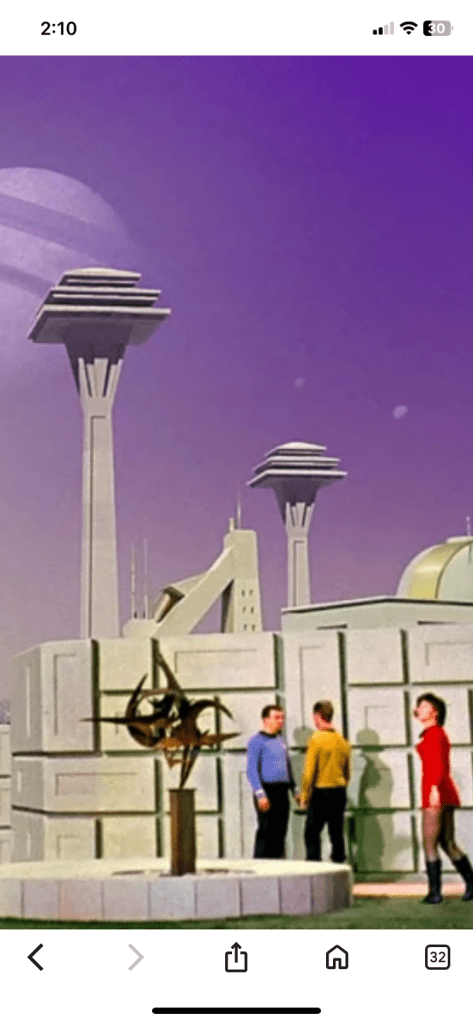
In the universe of Star Trek, space colonies are a fundamental part of the United Federation of Planets and other galactic powers. They are the building blocks of interstellar civilization, serving a variety of purposes from strategic outposts to serene, idyllic settlements. Unlike the often-struggling, nascent colonies envisioned in real-world proposals, Star Trek’s colonies are typically well-established and integrated into the fabric of their respective societies.
Here’s a breakdown of space colonies in Star Trek:
Types of Colonies
• Federation Colonies: These are the most common type of colony seen in the franchise. The Federation’s philosophy is one of peaceful exploration and expansion, and their colonies reflect this. They are often established on M-Class (Earth-like) planets that are uninhabited or where the native species is pre-warp and can be left to develop on its own. These colonies are generally prosperous, self-sufficient, and often home to a mix of different species, showcasing the Federation’s ideal of multicultural unity. Examples include the settlements on planets like New Providence or Turkana IV (though the latter had a more troubled history).
• Frontier Outposts and Border Colonies: Not all Federation colonies are utopian. Many are located in politically sensitive areas, such as the Neutral Zones bordering the Klingon Empire, Romulan Star Empire, or Cardassian Union. These colonies often represent a “frontier” existence, where colonists must be more resilient and self-reliant. The tensions of living on the edge of two major powers are a recurring theme, as seen with the Maquis, a group of Federation colonists who became a resistance movement against the Cardassians after their homes were ceded in a treaty.
• Space Stations as Colonies: The concept of a space station serving as a permanent home for a large population is a key feature of Star Trek. Deep Space 9 is the most prominent example. Initially a Cardassian mining station called Terok Nor, it was taken over by the Federation and served as a crucial hub for trade, diplomacy, and defense at the mouth of the Bajoran Wormhole. These stations are essentially large-scale, mobile, and self-contained colonies that serve a strategic purpose.
• Specialized Facilities: Some “colonies” in Star Trek are more like large-scale industrial or research facilities. A prime example is the Utopia Planitia Fleet Yards in orbit around Mars. It’s a massive shipbuilding complex, but it also has residential areas and facilities for the thousands of engineers, designers, and construction workers who live and work there.
Challenges and Themes
While Star Trek’s colonies are generally successful, they are not without their challenges, which often form the basis for episodic plots:
• Natural Disasters: Colonies on planets can be susceptible to natural phenomena. The Enterprise crew frequently responds to distress calls from colonies facing issues like plagues, environmental collapse, or geological instability.
• Alien Threats: Colonies are often on the front lines of conflict. They can be attacked by hostile aliens, as seen in the conflicts with the Borg or the Dominion, or become the site of political conflicts between the Federation and other powers.
• Social and Ideological Conflicts: Some episodes explore what happens when colonies develop their own distinct cultures and values, sometimes clashing with Federation ideals. The Ba’ku in Star Trek: Insurrection are an example of a colony that chose to live a simpler life, rejecting advanced technology. The Tarsus IV massacre, a dark moment in Federation history, showed what could happen when a colony’s leadership broke down under extreme duress.
In essence, space colonies in Star Trek represent the successful outcome of the dream of interstellar expansion. They are not just outposts of humanity but vibrant, diverse communities that extend the Federation’s influence and ideals throughout the galaxy.
Can our future be same as shown in star trek
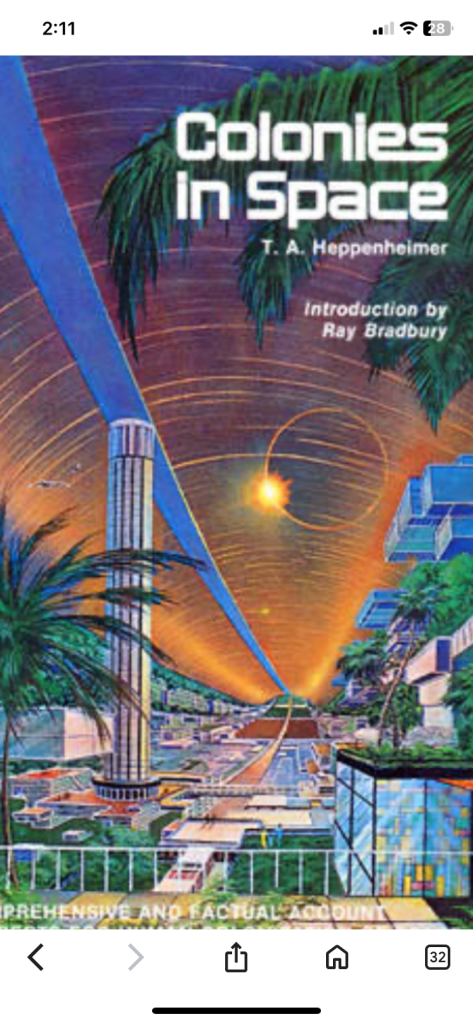
The future depicted in Star Trek is a fascinating and inspiring vision, but whether our real-world future can be the same is a complex question with both optimistic and highly skeptical answers. It’s helpful to break this down into two key areas: the technology and the society.
The Technology: Fiction and Reality
Star Trek has an impressive track record of predicting technology that has since become commonplace, but many of its core concepts remain in the realm of science fiction.
Technologies that are (or are becoming) a reality:
• Communicators: The flip-phone communicator is the most obvious example. Martin Cooper, the inventor of the first handheld cellular phone, cited Star Trek as a direct inspiration. Today’s smartphones, with their ability to handle voice, video, and data from anywhere, are a direct descendant of the Star Trek commbadge and PADD (Personal Access Display Device).
• Tablets: PADDs are essentially a a less colorful version of the iPad and other modern tablets.
• Voice-activated computers: “Computer, lights on.” We now have Siri, Alexa, and Google Assistant.
• Medical Tricorders: While not as advanced, modern handheld diagnostic devices can measure heart rate, oxygen levels, and perform scans, and there are ongoing efforts to develop comprehensive “tricorder-style” tools.
• Replicators: This is a stretch, but 3D printers, especially those that can print food or biological materials, are the rudimentary ancestors of the replicator.
Technologies that are a long way off (and may be impossible):
• Warp Drive: Faster-than-light travel is a fundamental pillar of Star Trek’s universe, but it’s currently considered impossible under the known laws of physics. While theoretical concepts like the Alcubierre warp drive exist, they require a negative energy source and an amount of energy that is far beyond our current capabilities.
• Transporters: The idea of converting a person into a stream of energy and reassembling them elsewhere is a logistical and ethical nightmare. The amount of energy and computational power needed is staggering. Furthermore, the question of whether a person being “beamed” is the original person or a perfect copy raises deep philosophical questions.
• Holodecks: Creating a fully immersive, interactive reality that can create matter out of energy is a phenomenal technological challenge. We have virtual reality (VR) and augmented reality (AR) today, but they are a long way from the seamless, full-sensory experience of a holodeck.
The Society: Utopia or Pipedream?
This is perhaps the biggest and most difficult question. The Federation in Star Trek is a post-scarcity, post-capitalist society where people work not for money but for personal fulfillment and the betterment of humanity.
The “Star Trek” social vision includes:
• No Money: Replicators provide all material needs, eliminating scarcity. This frees humanity to pursue art, science, and exploration.
• Global Unity: Earth is a single, unified government, with nations and ethnic conflicts a thing of the past.
• Rationality and Compassion: Problems are solved through logic, diplomacy, and a strong ethical code (the Prime Directive). Xenophobia is seen as a sign of an undeveloped civilization.
• Diversity and Inclusion: The Federation is a welcoming home for beings of countless species, with a focus on mutual respect and understanding.
The challenges to achieving this in our future:
• The End of Scarcity: While 3D printers and automation may one day meet many material needs, it’s hard to imagine a world where the motivation for work and innovation shifts entirely from monetary gain. Capitalism and consumerism are deeply ingrained in our global society.
• Political and Social Unity: Our world is currently grappling with nationalism, ethnic conflicts, and vast political divides. The idea of a single, unified Earth seems incredibly far-fetched in the near future.
• Human Nature: Star Trek’s vision of a rational, altruistic humanity is optimistic. The show itself often explores the dark side of human nature, showing that even in a post-scarcity world, greed, prejudice, and power struggles can still exist. The Maquis colonists, for example, were a group of Federation citizens who took up arms when they felt abandoned by their government.
In conclusion, our future will likely not be exactly like Star Trek. The technological challenges of things like warp drive and transporters are immense, and the social transformation required to become a unified, post-scarcity society is arguably even more daunting.
However, Star Trek’s true value may not be in its technological predictions, but in its vision. It serves as a powerful and inspiring goal: a future where humanity has overcome its internal conflicts and works together to explore the universe, driven not by profit or conquest, but by curiosity and the spirit of discovery. In this sense, the spirit of Star Trek is something we can strive for, even if the technology remains out of reach.
Please like subscribe comment your precious comment on universe discoveries
Full article source google
https://www.amazon.in/b?_encoding=UTF8&tag=555101-21&link
https://www.buymeacoffee.com/Satyam55
https://youtu.be/gOIEbqim9KM?si=ooh4KGotmj9aGhKt
Please click on the above link to watch future space colonies video


Very interesting read.
LikeLiked by 1 person
Thanks sir space colonies are our future as earth 🌍 Is facing so much crisis and fear 😧 of world war this space colonies can unite humanity and we can become a interstellar species 🎸
LikeLiked by 1 person
🙏🌹
Aum Shanti
LikeLiked by 1 person
Interesting read 💯
LikeLiked by 1 person