
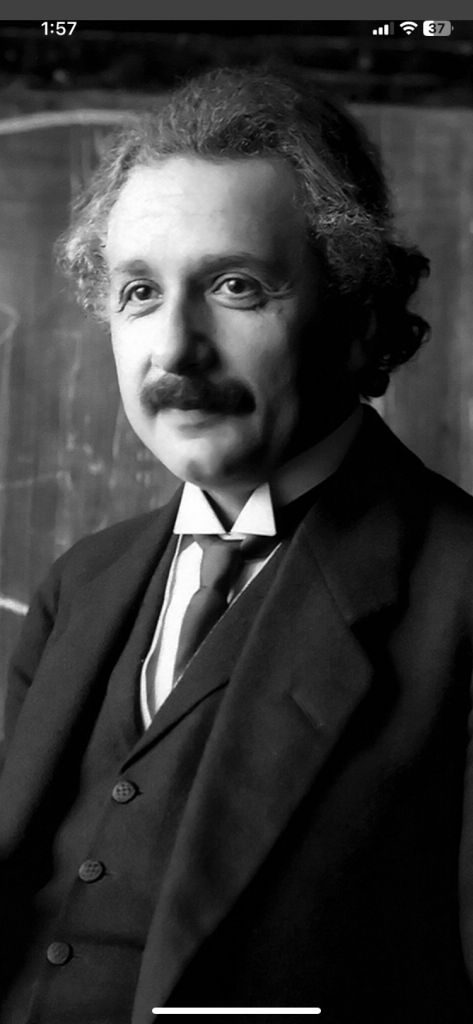
The period from 1800 to 2025 is perhaps the most revolutionary era in scientific history, marked by the establishment of modern biology, the birth of quantum mechanics and relativity, and the dawn of the Information Age. The most influential scientists from this time fundamentally redefined our understanding of the universe, life, and technology
🔬 19th Century Titans (1800–1899)
This century laid the foundation for virtually all modern science:
Charles Darwin (1809–1882) Biology
Michael Faraday (1791–1867) Physics, Chemistry
Louis Pasteur (1822–1895)
Microbiology, Chemistry
James Clerk Maxwell (1831–1879
Physics
Dmitri Mendeleev (1834–1907) Chemistry
Gregor Mendel (1822–Genetics
⚛️ 20th Century Pioneers (1900–1999)
The 20th century saw radical shifts in physics and the emergence of modern genetics and computing.
Albert Einstein (1879–1955) Theoretical Physics
Marie Curie (1867–1934). Physics, Chemistry
Max Planck (1858–Theoretical Physics
Alan Turing (1912–Computer Science, Math
Rosalind Franklin (1920–1958). Biophysics
James Watson (b. 1928) Molecular Biology
💻 21st Century Innovators (2000–2025)
The early 21st century is defined by advances in gene editing, nanotechnology, and computation.
• Jennifer Doudna (b. 1964) & Emmanuelle Charpentier (b. 1968): Nobel laureates for developing the CRISPR-Cas9 method of gene editing, which allows for precise and affordable modification of genetic material.
• Shinya Yamanaka (b. 1962): Discovered how to generate Induced Pluripotent Stem Cells (iPS cells) from adult somatic cells, opening new avenues for regenerative medicine.
• Tim Berners-Lee (b. 1955): Though his primary work on the World Wide Web was in the late 1980s, his continuing advocacy for an open web and decentralized data remains profoundly influential in the 21st century.
Future scientists like Einstein

It’s incredibly difficult to predict who among contemporary scientists will achieve the truly revolutionary, paradigm-shifting influence of an Albert Einstein, whose work fundamentally redefined physics. However, several scientists, particularly in the fields of Artificial Intelligence (AI), quantum technology, and genetics, are leading breakthroughs that have the potential for a similarly profound societal and scientific impact.
The “future Einsteins” are often found in areas that bridge multiple disciplines and challenge established paradigms.
🧠 Artificial Intelligence and Theoretical Computing
The current pace of AI development suggests that the scientists shaping its foundation will have the greatest impact on human civilization.
• Pioneers in Deep Learning and Generative AI: Researchers like Demis Hassabis (CEO of Google DeepMind) and others behind major models have created tools that are already accelerating scientific discovery, from protein folding (AlphaFold) to complex physics simulations. Their work is a fundamental step toward Artificial General Intelligence (AGI).
• Theorists of Consciousness and AI Safety: Figures like Max Tegmark are addressing the profound philosophical and existential questions raised by advanced AI, focusing on the physics and nature of intelligence itself. The conceptual frameworks they build are critical for navigating the future of human-machine interaction.
🧬 Genomics and Biological Engineering
The ability to directly edit the code of life is arguably the most fundamental biological discovery since Darwin’s theory of evolution.
Please like subscribe comment your precious comment on universe discoveries
.full article source google
 Universe discoveries
🙏🌹
Aum Shanti
LikeLiked by 1 person