

The incident the Siege of Ramshej Fort (also spelled Ramsej or Ramsej), which took place in Maharashtra, India, between the Maratha Empire and the Mughal Empire under Emperor Aurangzeb.
The siege is a legendary story of disproportionate resistance and is often cited with the figures you mentioned:
• Maratha Defenders: Approximately 600 soldiers (often referred to as ‘Mavalas’), initially under the command of Suryaji Jedhe (or Suryaji Jadhav), defending the fort for Chhatrapati Sambhaji Maharaj.
• Mughal Army: A massive army initially estimated at 35,000 to 40,000 troops, led by generals like Shahabuddin Khan (Ghaziuddin Firoze Jung), Bahadur Khan Kokaltash, and others.
Key Aspects of the Siege:
• Duration: The siege was incredibly long, lasting for an estimated 6 to 7 years (approximately 1682 to 1688). Aurangzeb’s generals had initially vowed to capture the small fort in a matter of hours.
• Maratha Tactics: Despite being vastly outnumbered and initially lacking metal cannons, the Marathas showed immense ingenuity and courage. They used:
• Improvised Weapons: Slingshots, rolling boulders, and ignited hay bales.
• Wooden Cannons: They famously built cannons out of wood, lined with animal hides, which inflicted heavy losses on the besieging army.
• Nightly Repairs: When the Mughal artillery breached the walls, the Marathas would rebuild the entire section overnight.
• Ambushes: They successfully ambushed Mughal detachments and prevented reinforcements from nearby forts from being cut off completely.
• Outcome:
• The Marathas successfully defended the fort for many years, inflicting heavy casualties and frustrating Aurangzeb and his top generals.
• The continuous failures led to the replacement of multiple Mughal commanders.
• Ultimately, the fort was captured by the Mughals in late 1688, but historical accounts suggest it was achieved not through military force but by bribing the new Maratha commander (Killedar) of the fort.
The Siege of Ramshej Fort remains a powerful symbol of Maratha resilience and the difficulty the Mughal Empire faced in subduing the Deccan region.
The rise of maratha empire
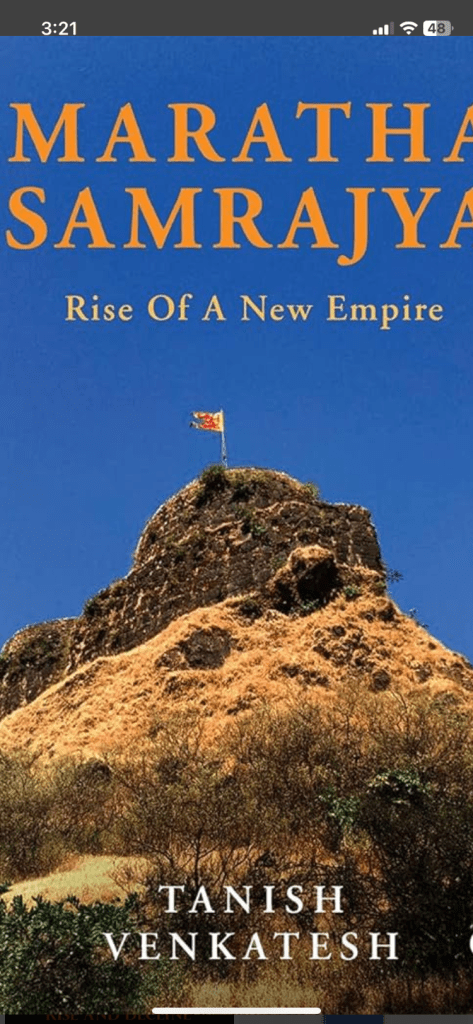
The rise of the Maratha Empire is one of the most significant and dramatic developments in Indian history, transforming them from a regional power to the dominant force across much of the Indian subcontinent in the 18th century.
The story is generally divided into two major phases:
1. The Foundation (17th Century): Chhatrapati Shivaji Maharaj
The Maratha rise began under the visionary leadership of Chhatrapati Shivaji Maharaj (1630–1680), who is considered the founder of the Maratha Kingdom (later the Empire).
Key Factors and Events under Shivaji:
• Political Context: The Deccan region was a political vacuum, with the declining Bijapur Sultanate and the expanding, but distant, Mughal Empire. Shivaji utilized the rugged terrain and the local people for his cause.
• The Vision of Hindavi Swarajya: Shivaji provided the Maratha people—primarily Marathi-speaking peasants (Mavalas)—with a unifying political and religious goal: self-rule (Swarajya) in defiance of the established Muslim rulers.
• Military Strategy (Guerrilla Warfare): Shivaji mastered “Ganimi Kava” (guerrilla warfare), using the mountainous Western Ghats to his advantage. His highly mobile, light cavalry and infantry were highly effective against the slow, heavy armies of the Mughals and Bijapur.
• Forts: He strategically captured and built nearly 300 forts (like Torna, Raigad, and Sinhagad), which were the nerve centers of his administration and defense.
• **Coronation (1674): Shivaji formally established the Maratha Kingdom and was crowned Chhatrapati (Sovereign) at Raigad, marking the official birth of the Maratha state.
• Administration: He established a structured administration with the Ashtapradhan Mandal (Council of Eight Ministers), laying the framework for efficient governance.
2. The Expansion (18th Century): The Peshwa Era
After a period of fierce resistance against the Mughal Emperor Aurangzeb (led by Sambhaji, Rajaram, and Tarabai), the Maratha Kingdom was revitalized and transformed into a vast Maratha Empire under the Peshwas (Prime Ministers).
The Rise of the Peshwas:
• Chhatrapati Shahu Maharaj (grandson of Shivaji) was released from Mughal captivity in 1707. He appointed Balaji Vishwanath as his first hereditary Peshwa in 1713.
• The Shift in Power: Under Shahu, the hereditary Peshwas of the Bhat family (Chitpavan Brahmins) gradually concentrated all effective political and military power in their hands, while the Chhatrapati remained the nominal head at Satara. Their capital shifted to Pune (Poona).
The Great Expansion under Bajirao I (1720–1740):
• The son of Balaji Vishwanath, Peshwa Bajirao I, is considered the greatest expansionist. His motto was “Let us strike at the trunk of the withering tree and the branches will fall off themselves.”
• He championed the aggressive expansion into North India, conquering Malwa and Gujarat and even raiding Delhi in 1737.
• He relied on Maratha military leaders (Sardars) who were granted territories to govern, leading to the formation of the Maratha Confederacy.
The Maratha Confederacy:
The Maratha Empire reached its territorial peak by the mid-18th century, becoming a vast confederacy composed of powerful, semi-autonomous Maratha houses:
Climax and Decline:
The Maratha Empire became the single largest power in the subcontinent, displacing the Mughal authority. However, this expansion was checked by the devastating Third Battle of Panipat in 1761, where they were defeated by an invading Afghan army led by Ahmad Shah Durrani.
• This defeat severely weakened the Peshwa’s central authority, but the different Maratha Confederacy houses (especially under Madhavrao I and Mahadji Shinde) continued to rebuild and remain a dominant force in India for the next four decades.
• The Empire was ultimately defeated and dissolved by the British East India Company in the Anglo-Maratha Wars (1775–1818).
In anglo maratha war why maratha empire come to an end

The Maratha Empire came to an end after the Third Anglo-Maratha War (1817–1818), primarily due to a combination of internal disunity and the superior diplomatic, military, and economic strength of the British East India Company.
The final collapse was not due to a single event but the culmination of internal weaknesses that the British skillfully exploited over the course of the three Anglo-Maratha Wars (1775–1818).
⚔️ Key Causes for the Maratha Empire’s End
1. Internal Disunity and Political Fragmentation
The Maratha Empire was structured as a confederacy of powerful, semi-autonomous Maratha chiefs (Scindia, Holkar, Gaekwad, Bhonsle) with the Peshwa (Prime Minister) as the nominal head in Pune. This structure led to fatal weaknesses:
• Rivalries among Chiefs: The major Maratha houses were perpetually engaged in mutual jealousy and internal quarrels over territory, power, and prestige. This meant they rarely presented a united front against the British.
• Weak Central Authority: The authority of the later Peshwas (especially Bajirao II) was weak and ineffective. The chiefs often acted independently, and the British expertly exploited these divisions, often by forming alliances with one chief against another.
• **The Treaty of Bassein (1802): Following a defeat by the Holkar chief, Peshwa Bajirao II sought protection from the British, signing the humiliating Treaty of Bassein. This essentially placed the Peshwa under British military protection (Subsidiary Alliance) and was viewed as a betrayal by the other Maratha chiefs, leading directly to the Second Anglo-Maratha War.
2. Inept Leadership and Lack of Foresight
After the death of powerful leaders like Peshwa Madhavrao I and Nana Fadnavis (the wise minister), the subsequent Maratha leadership lacked the vision, competence, and military acumen to stand against the British.
• Bajirao II, the last Peshwa, was indecisive and weak, relying on British support, which ultimately cost him his throne.
• The Maratha strategy often relied on the outdated, decentralized system of guerrilla warfare (Ganimi Kava) and raids, which proved less effective against the disciplined, centralized forces and superior artillery of the British on the plains.
3. Superiority of the British East India Company
The British had distinct advantages that the Marathas could not overcome:
• Centralized Command: The British East India Company had a unified administrative and military command structure under the Governor-General, ensuring strategic consistency across all theaters of war.
• Advanced Military System: The British had superior artillery, better-trained and disciplined infantry, and more modern tactics. While the Marathas did adopt some European-style forces, the quality, production, and consistency of their armaments were inferior.
• Economic Stability: The British maintained a stable economy based on international trade and a predictable land revenue system, allowing them to fund sustained, long-term warfare, while the Maratha state often relied on plunder (Chauth and Sardeshmukhi) which created external enemies and economic instability.
The Third Anglo-Maratha War saw the final defeat of the Peshwa’s forces at battles like Kirkee and the annexation of the Peshwa’s territories, formally ending the Maratha Empire in 1818 and establishing British supremacy over most of the subcontinent.
You might be interested in this video discussing how the British managed to destroy the Maratha Empire: How British Destroyed Maratha Empire? | Anglo Maratha Wars | Dhruv Rathee.
https://youtu.be/XWcI1oVNKa4?si=GaeintgNmxZFOsNU
Click on the above link to see video of ramsej war ( fantastic video)
https://youtu.be/mDAvWi0_wr8?si=cr1f2MhPi2qthcr5
Click on the above link to see rise of maratha empire
 Universe discoveries
Interesting! Greetings from Italy
LikeLiked by 1 person
Thanks dear friend 🕺🎸
LikeLiked by 1 person
🙏🌹
Aum Shanti
LikeLiked by 1 person