

After decades of focus on Mars, a “new era” of Venus exploration is officially underway. Major space agencies and private companies have greenlit several high-profile missions slated to launch within the next few years.
Major Upcoming Venus Missions
- ISRO’s Venus Orbiter Mission (VOM/Shukrayaan): Formally approved in September 2024, this Indian mission is scheduled to launch on 29 March 2028. It will use an LVM3 rocket to place a satellite in orbit to study the planet’s surface, subsurface, and atmosphere.
- NASA’s DAVINCI: This “Discovery” mission, scheduled for the early 2030s, features a descent probe that will plunge through Venus’s thick atmosphere to measure its composition and capture high-resolution surface images.
- NASA’s VERITAS: Also targeting the 2030s, VERITAS will map the entire planet’s surface with radar to understand its geological history and whether plate tectonics or active volcanoes still exist.
- ESA’s EnVision: The European Space Agency’s orbiter is planned for launch in 2031. It aims to provide a holistic view of the planet, investigating everything from its inner core to its upper atmosphere.
- Rocket Lab’s Venus Life Finder: This is a privately funded mission potentially launching as early as 2026. It will send a small probe to search for organic molecules in the more “habitable” cloud layers.
- Russia’s Venera-D: A planned mission consisting of an orbiter and a lander, aimed for launch around 2029–2031 to study the surface and atmosphere in extreme detail.
Why the sudden rush?
Scientists are racing to understand why Venus, which may have once had oceans and an Earth-like climate, turned into a “hothouse” planet with surface temperatures hot enough to melt lead. These missions aim to find clues about planetary habitabilityand the evolution of greenhouse effects.
Was Venus once habitable
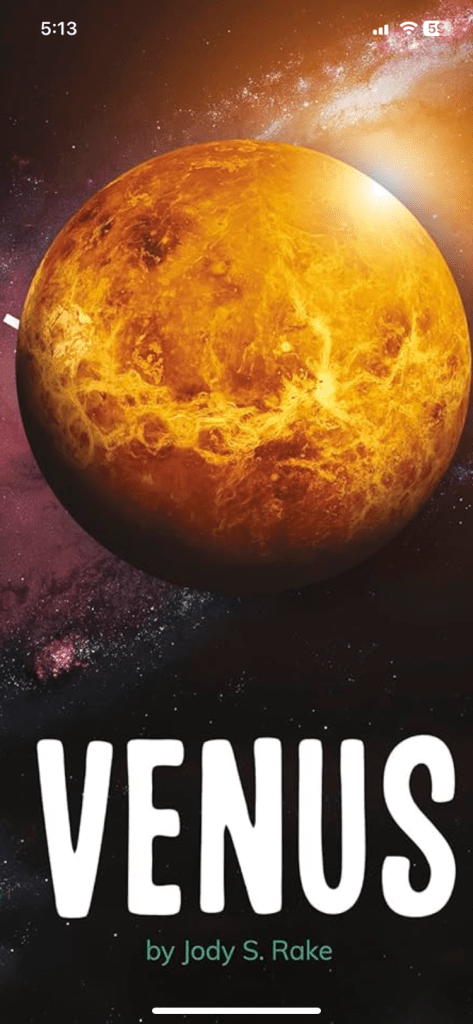
Whether Venus was once habitable is one of the biggest debates in planetary science right now. Scientists are split into two main camps: those who think it was an “Earth-like twin” and those who believe it was “born hot” and never had a chance.
The “Habitable Past” Theory
For years, the leading theory was that Venus spent up to 2 to 3 billion years as a temperate world.
- Liquid Oceans: Computer models from NASA’s GISS suggested ancient Venus had shallow liquid-water oceans and surface temperatures between 20°C and 50°C.
- Cloud Shields: Despite being closer to the Sun, researchers hypothesized that thick clouds on the planet’s dayside acted like a giant umbrella, keeping the surface cool enough for life.
- The Catastrophe: This “wet” phase supposedly ended roughly 700 million years ago when a massive volcanic event released enough CO2 to trigger a runaway greenhouse effect, boiling the oceans away.
The “Always Hellish” Theory (Recent Research)
Newer studies, including a major one published in Nature Astronomy in December 2024, challenge the ocean idea.
- Dry Interior: By analyzing the chemical composition of the modern atmosphere, researchers at the University of Cambridge found that Venusian volcanic gases are almost entirely dry (less than 6% steam).
- No Condensation: These scientists argue that Venus was so hot early on that water vapor never had the chance to condense into rain or oceans. Instead, it likely remained a “steam world” until the water escaped into space.
Why don’t we know for sure?
Unlike Mars, where we can see dried-up riverbeds, Venus’s surface was completely “paved over” by volcanic activity hundreds of millions of years ago. This makes finding ancient fossils or geological proof incredibly difficult.
The upcoming DAVINCI and VERITASmissions aim to settle this by measuring noble gases and mapping rock types that only form in the presence of water.
Why it’s called women are from Venus

It’s all thanks to the massive 1992 bestseller
“Men Are from Mars, Women Are from Venus” by relationship counselor John Gray.
The book used the “different planets” metaphor to explain common psychological friction between the sexes. Here’s the breakdown:
- The Metaphor: Gray imagined a fictional past where men lived on Mars and women lived on Venus. They met, fell in love, and moved to Earth—but then developed “amnesia” and forgot they were from different worlds with different ways of communicating.
- The Symbolism: The choice of planets wasn’t random; it’s rooted in Roman Mythology.
- Venus is the Roman goddess of love, beauty, and fertility.
- Mars is the Roman god of war and aggression.
- The Message: The core idea was that men are “task-oriented” (Mars) while women are “relationship-oriented” (Venus). By recognizing these “innate” differences, Gray argued, couples could stop blaming each other for not acting the same way.
Please like subscribe comment your precious comment on universe discoveries
Full article source google
 Universe discoveries
🙏🌹
Aum Shanti
LikeLike
Very informative knowledge about Venus orbating.
LikeLiked by 1 person