
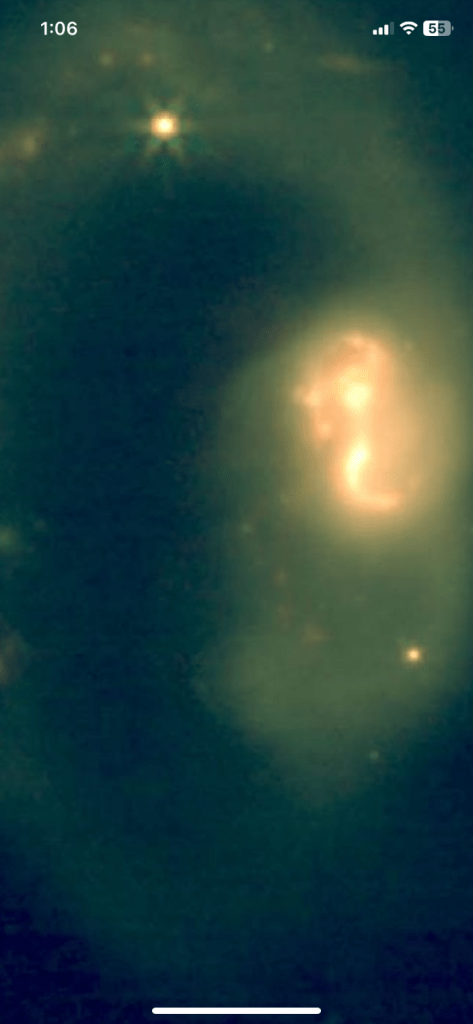
In a groundbreaking discovery published in February 2026, the James Webb Space Telescope (JWST) detected an “extraordinarily rich” inventory of complex organic molecules within the obscured nucleus of the ultra-luminous infrared galaxy IRAS 07251–0248.
Key Scientific Findings
- The Discoveries: Researchers identified a diverse array of small organic molecules, including benzene (
C6H6𝐶6𝐻6), methane (
- First-Time Detection: The methyl radical(
- Cosmic Factories: The study, led by the Center for Astrobiology (CAB), suggests that deeply hidden galactic nuclei act as chemical hubs. High-energy cosmic raysappear to fragment larger carbon grains, releasing these organic precursors into the gas phase.
- Building Blocks for Life: While not “life” itself, these molecules are vital prebioticingredients. They represent essential steps toward forming amino acids and nucleotides, which are the foundations of biological life.
Earlier Milestones (2023–2025)
This 2026 discovery builds on a series of significant extragalactic chemical detections:
- Icy “Seeds of Life” (Oct 2025): JWST found ethanol, acetic acid (vinegar), and acetaldehyde frozen in ice around the protostar ST6 in the Large Magellanic Cloud.
- Most Distant “Smoke” (June 2023):Astronomers used gravitational lensingto detect polycyclic aromatic hydrocarbons (PAHs)—similar to smoke or soot—in a galaxy 12 billion light-yearsaway.
Building blocks of life in universe
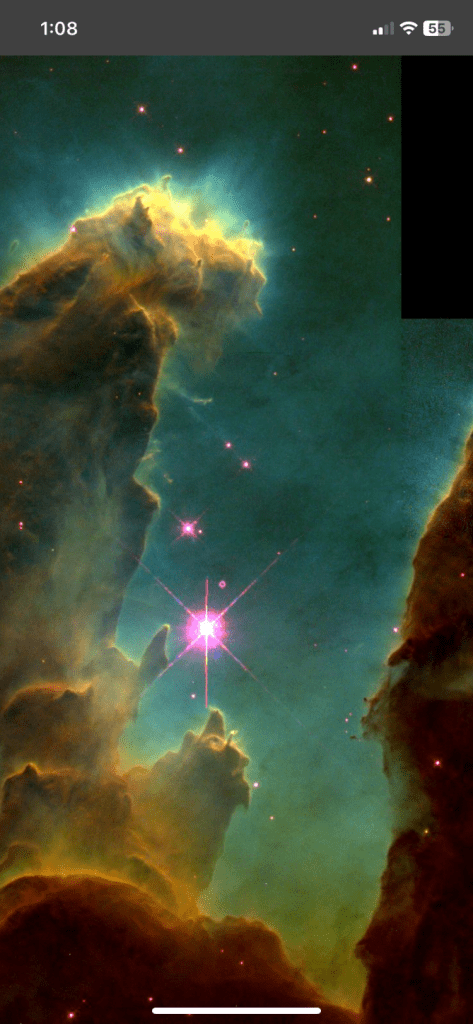
The “building blocks of life” refer to
the fundamental elements and organic molecules required for biological life as we know it. Recent observations by the James Webb Space Telescope (JWST) have confirmed that these ingredients are not unique to Earth but are widespread throughout the universe, even in the most distant and harsh environments.
1. The Atomic Foundation (CHNOPS)
Almost all living organisms on Earth depend on six essential elements, often abbreviated as CHNOPS: NASA Astrobiology (.gov) +1
- Carbon: The backbone of all organic molecules.
- Hydrogen: The most abundant element in the universe.
- Nitrogen: A key part of proteins and DNA.
- Oxygen: Essential for cellular respiration and water.
- Phosphorus: Vital for energy transfer (ATP) and genetic structures.
- Sulfur: Important for protein structure and life
2. Major JWST Discoveries (2023–2026)
JWST has shifted our understanding from theoretical “ingredients” to confirmed “prebiotic chemistry” across the cosmos:
- Frozen “Seeds of Life” (Oct 2025):Astronomers detected methanol, ethanol, acetaldehyde, and acetic acid (vinegar) frozen in ice around the protostar ST6 in the Large Magellanic Cloud. This was the first detection of these molecules in ice outside our galaxy.
- Deep Galactic Nuclei (Feb 2026): In the galaxy IRAS 07251–0248, JWST found an extraordinary concentration of benzene, methane, and acetylene. It also marked the first detection of the methyl radical (
- Distant Smoke (June 2023): Complex organic molecules resembling smoke or soot were found in a galaxy 12 billion light-years away, showing that the universe could form these intricate structures within its first 1.5 billion years.
- Potential Biosignatures: On the exoplanet K2-18b, JWST detected methane and carbon dioxide, along with possible traces of dimethyl sulfide (DMS), which on Earth is produced by marine life.
SciTechDaily +10
3. Cosmic Sources
These building blocks are forged and distributed through massive celestial events:
- Stellar Nurseries: Cold molecular clouds like Chamaeleon I act as chemical laboratories where organic molecules form on icy dust grains before stars even exist.
- Supernovae & Cosmic Rays: Dying stars explode, scattering heavy elements into space. High-energy cosmic rays then fragment larger carbon grains to release simpler organic molecules back into the gas phase.
Please like subscribe comment your precious comment on universe discoveries
Full article source google
 Universe discoveries
🙏🌹
Aum Shanti
LikeLiked by 1 person
Fascinating and beautifully presented! The way you highlight the discoveries from the James Webb Space Telescope makes the science feel both monumental and intimate at once. I especially love how you connect these complex molecules to the bigger story of life’s origins—it turns distant galaxies into cosmic laboratories of possibility. Truly inspiring insight into how the universe keeps revealing its hidden chemistry.
LikeLike