
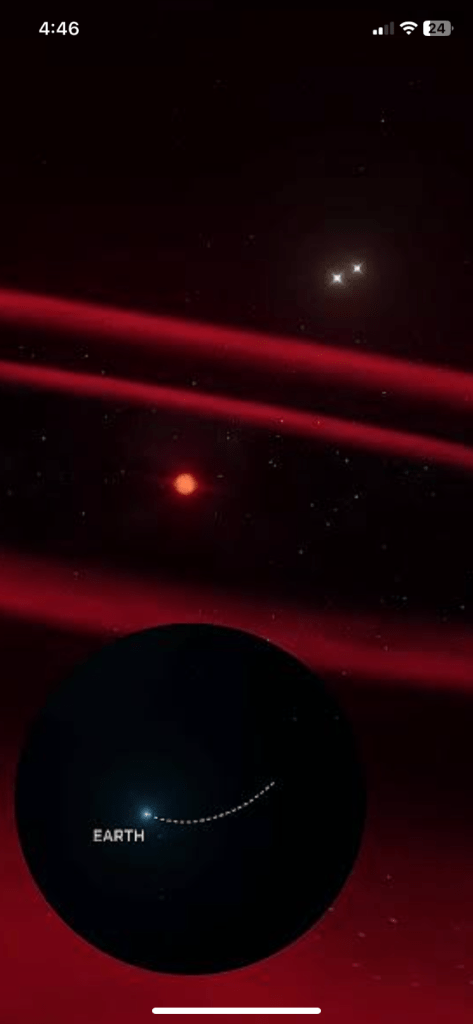
Free-floating planets could host moons with tidal heating and thick, hydrogen-rich atmospheres that may be able to create billions of years of potentially habitable surface conditions.
A world, cold and alone, drifting through the inky blackness between star systems. Sounds pretty desolate, right? We’re talking about free-floating planets, those cosmic wanderers that don’t bother with orbiting a sun, just cruising solo through the void.
While it sounds like a cosmic paradox, the “loneliest” regions of the universe—vast, nearly empty spaces called
cosmic voidsand the orbits of rogue planets—may actually offer unique advantages for the development and stability of life.
1. Rogue Planets: Life in the Dark
Rogue planets are worlds that do not orbit a star, wandering instead through the “lonely” interstellar medium. Despite being far from any sun, they could be surprisingly “cozy” for life:
- Insulation: Thick, hydrogen-rich atmospheres can act like a heavy blanket, trapping enough internal heat to maintain liquid water on the surface for billions of years.
- Exomoons & Tidal Heating: Moons orbiting these rogue planets can stay warm through tidal heating—the constant gravitational squeezing and stretching from their host planet—potentially supporting subsurface oceans similar to Jupiter’s moon Europa.
Protection: Without a nearby star, these worlds are safe from the violent solar flares and radiation bursts that can strip atmospheres off planets in traditional solar systems
2. Cosmic Voids: The “Pristine” Neighborhoods
Cosmic voids are immense regions of “nothingness” that make up roughly 90% of the universe’s volume but contain very few galaxies.
- Environmental Stability: These areas are relatively untouched by the chaotic mergers and gravitational disruptions common in dense galaxy clusters.
- Reduced “Distractions”: For scientists, these voids are “pristine laboratories” because they lack the complex baryonic (normal matter) interference found in crowded regions, potentially allowing life to evolve in a much quieter, more stable environment.
- Local Habitability: Even in the Boötes Void—the “loneliest place in the universe”—there are still dozens of galaxies, suggesting that even the deepest voids aren’t entirely barren.
3. Icy Moons: Isolated but Teeming?
Within our own solar system, the best candidates for life are some of the most isolated:
- Enceladus & Europa: These moons are tucked away in the cold, dark outer reaches of the solar system, but their subsurface oceans, protected by miles of ice, are considered top contenders for
The loneliest places in the universe might actually be some of the best …
Space
Vast Space Voids Help Fill in the Blanks of Cosmic Mysteries
Space
The life and death of cosmic voids – Oxford Academic
The wild thought

It’s a wild thought, but current estimates suggest there are
trillions of these “orphan” worlds in the Milky Way alone.
Recent data from missions like Euclid and ground-based surveys indicate that rogue planets might outnumber stars by a ratio of 20-to-1. These planets aren’t all giants, either; most are likely earth-sized or smaller, ejected from their original solar systems during the chaotic “billiard ball” phase of early planetary formation
Here is why they are such strong candidates for life:
- Longevity: A rogue planet with a thick atmosphere or an icy crust can stay geologically active for billions of years, long after a traditional star might have expanded and toasted its inner planets.
- Stability: They don’t have to worry about supernovas or gamma-ray bursts from neighbors, as they’ve drifted into the quiet “empty” suburbs of the galaxy.
- Internal Heat: Since they don’t rely on a sun, life would likely thrive around hydrothermal vents on the ocean floor, powered entirely by the planet’s own radioactive core.
Detecting a world that emits no light and orbits no star is one of the most difficult challenges in astronomy. Since these planets are effectively invisible to traditional telescopes, scientists rely on “the light of others” and the laws of physics to find them
1. Gravitational Microlensing: The “Magnifying Glass” Trick
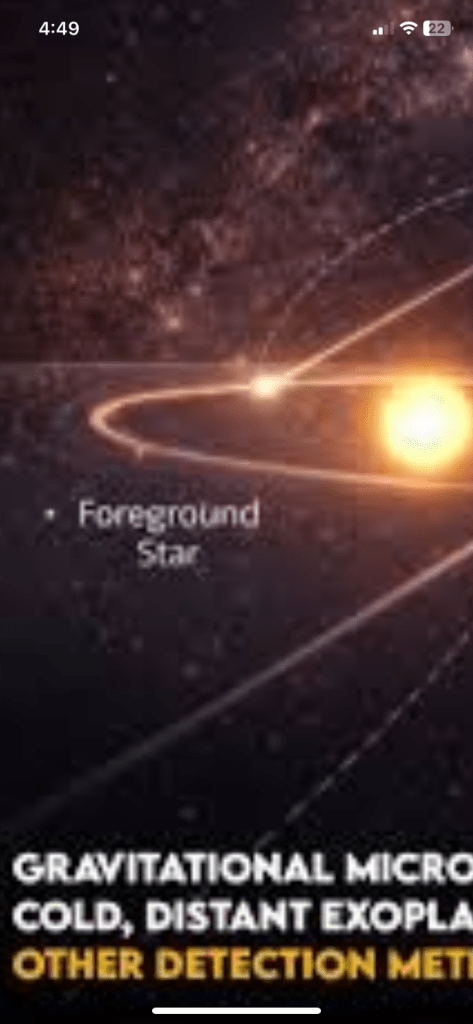
This is the primary way we find rogue planets.
- The Alignment: It happens when a rogue planet passes directly between Earth and a distant background star.
- The Lens: The planet’s gravity acts like a natural magnifying glass, bending and amplifying the light from the distant star.
- The Signal: Astronomers see the background star briefly “blink” or brighten for a few hours to a few days.
- Recent Breakthrough: In January 2026, scientists used “cosmic stereo vision”—simultaneous data from Earth and the Gaia Space Telescope—to precisely measure the mass of a Saturn-sized rogue planet for the first time.
2. Infrared Imaging: Hunting for “Baby” Rogues
While older rogue planets are cold and dark, “young” ones (only a few million years old) are still glowing with the heat of their own formation
- Telescopes like the James Webb Space Telescope (JWST) can detect this faint infrared heat.
- Recently, JWST found six rogue planets in a star-forming region, some of which even have their own dusty disks, suggesting they might be forming their own mini-moons
3. Magnetic Field Detection
Some rogue planets can be found by “listening” to them rather than looking for them.
- Scientists can track the faint radio crackleproduced when a planet’s magnetic fieldinteracts with the surrounding interstellar medium
4. Future Missions: The Roman Space Telescope
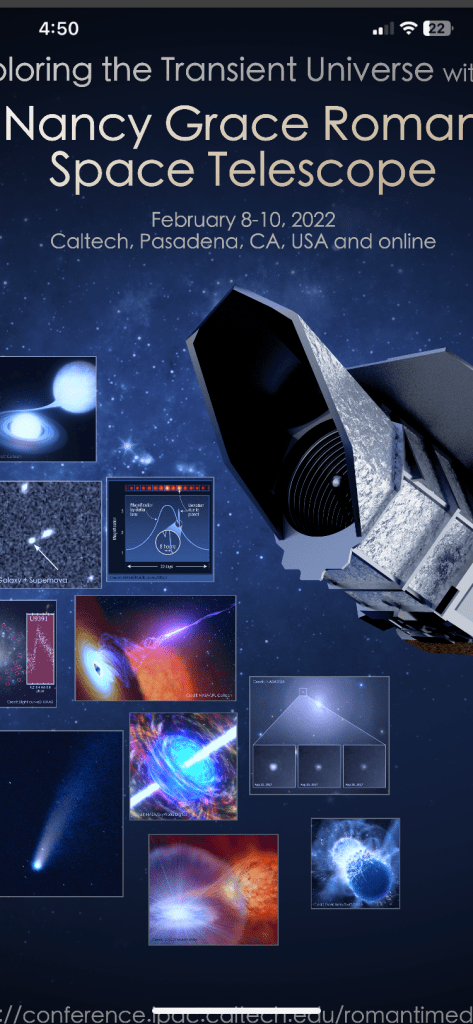
NASA’s upcoming Nancy Grace Roman Space Telescope (expected launch by May 2027) is designed to be a “rogue planet hunter
- It will monitor 100 million stars simultaneously.
- It is expected to find hundreds of rogue planets as small as Mars, giving us the first-ever census of these lonely wanderers
Please like subscribe comment your precious comment on universe discoveries
 Universe discoveries
🙏🌹
Aum Shanti
LikeLike